 Hi readers, it seems you use Catholic Online a lot; that's great! It's a little awkward to ask, but we need your help. If you have already donated, we sincerely thank you. We're not salespeople, but we depend on donations averaging $14.76 and fewer than 1% of readers give. If you donate just $5.00, the price of your coffee, Catholic Online School could keep thriving. Thank you. Help Now >
Whithorn Priory
FREE Catholic Classes
Located in Wigtownshire, Scotland, founded about the middle of the twelfth century, in the reign of David I, by Fergus, Lord of Galloway, for Premonstratensian, or White, Canons. The canons of Whithorn formed the chapter of the Diocese of Galloway, which was re-established about the same time, also by Fergus, the old succession of bishops having died out about 796. The prior stood next in rank to the bishop, as we see from the order of signatories to an espiscopal charter early in the thirteenth century; and he and his community enjoyed the right of electing the bishop, although this right was occasionally overruled in favour of the secular clergy by the Archbishop of York, of which see Galloway was a suffragan for several centuries. The full list of priors has not been preserved; among them were: Maurice, who swore fealty to King Edward I of England in 1296; Gavin Dunbar (1514), who rose to be Archbishop of Glasgow ; and James Beaton, successively Archbishop of Glasgow and of St. Andrews, and chancellor of the kingdom. Whithorn was long a noted place of pilgrimage, owing to its connection with the venerated memory of St. Ninian . Many Scottish sovereigns, among them Margaret (queen of James III), James IV, and James V, made repeated pilgrimages to the saint's shrine, and left rich offerings behind them. The monastery, thus endowed, became opulent, and its income at the dissolution was estimated at over £1000. The last prior (Fleming) was committed to prison in 1563 for the crime of saying Mass. The whole property of the priory was vested in the Crown by the annexation act of 1587, and was granted in 1606 by James VI to the occupant of the See of Galloway when he established Episcopalianism in Scotland in 1606. It continued to belong to the bishopric until the revolution of 1688, at which date that see was the richest in the kingdom next to St. Andrews and Glasgow. The priory church, which served also as the cathedral of the diocese, had a long nave without aisles, a choir of about the same length, and a lady chapel beyond. In 1684 the nave and western tower were still intact; but the existing remains consist only of the roofless nave and the extensive vaulted crypts constructed under the eastern end of the church. Such restoration as was possible has been carefully carried out by the third Marquis of Bute .


We ask you, humbly: don't scroll away.
Hi readers, it seems you use Catholic Online a lot; that's great! It's a little awkward to ask, but we need your help. If you have already donated, we sincerely thank you. We're not salespeople, but we depend on donations averaging $14.76 and fewer than 1% of readers give. If you donate just $5.00, the price of your coffee, Catholic Online School could keep thriving. Thank you.Help Now >
Join the Movement
When you sign up below, you don't just join an email list - you're joining an entire movement for Free world class Catholic education.


-

-
Mysteries of the Rosary
-
St. Faustina Kowalska
-
Litany of the Blessed Virgin Mary
-
Saint of the Day for Wednesday, Oct 4th, 2023
-
Popular Saints
-
St. Francis of Assisi
-
Bible
-
Female / Women Saints
-
7 Morning Prayers you need to get your day started with God
-
Litany of the Blessed Virgin Mary

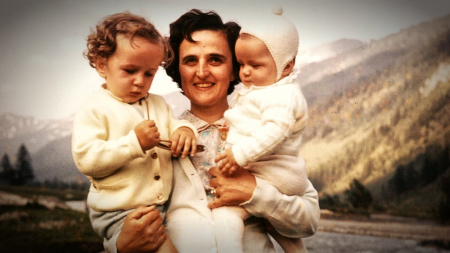
Sacrifices of Faith: The Pro-Life Legacies of St. Gianna and Jessica Hanna
-
How to love God by caring for our bodies
-
Pope Francis calls for negotiations to End Russia-Ukraine War
-
Pope Francis Contemplates Return to U.S. for United Nations Assembly Address
-
Pope Francis Calls on Faithful to Embrace Faith, Hope, and Charity in New Teaching Series


Daily Catholic
- Daily Readings for Monday, April 29, 2024
- St. Catherine of Siena: Saint of the Day for Monday, April 29, 2024
- Prayer for the Dead # 3: Prayer of the Day for Monday, April 29, 2024
- Daily Readings for Sunday, April 28, 2024
- St. Peter Chanel: Saint of the Day for Sunday, April 28, 2024
- Prayer before a Crucifix: Prayer of the Day for Sunday, April 28, 2024
 Daily Readings for Monday, April 29, 2024
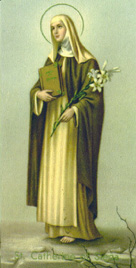 St. Catherine of Siena: Saint of the Day for Monday, April 29, 2024
 Prayer for the Dead # 3: Prayer of the Day for Monday, April 29, 2024
Hi readers, it seems you use Catholic Online a lot; that's great! It's a little awkward to ask, but we need your help. If you have already donated, we sincerely thank you. We're not salespeople, but we depend on donations averaging $14.76 and fewer than 1% of readers give. If you donate just $5.00, the price of your coffee, Catholic Online School could keep thriving. Thank you. Help Now >
Prayer for the Dead # 3: Prayer of the Day for Monday, April 29, 2024
Hi readers, it seems you use Catholic Online a lot; that's great! It's a little awkward to ask, but we need your help. If you have already donated, we sincerely thank you. We're not salespeople, but we depend on donations averaging $14.76 and fewer than 1% of readers give. If you donate just $5.00, the price of your coffee, Catholic Online School could keep thriving. Thank you. Help Now >


Copyright 2024 Catholic Online. All materials contained on this site, whether written, audible or visual are the exclusive property of Catholic Online and are protected under U.S. and International copyright laws, © Copyright 2024 Catholic Online. Any unauthorized use, without prior written consent of Catholic Online is strictly forbidden and prohibited.
Catholic Online is a Project of Your Catholic Voice Foundation, a Not-for-Profit Corporation. Your Catholic Voice Foundation has been granted a recognition of tax exemption under Section 501(c)(3) of the Internal Revenue Code. Federal Tax Identification Number: 81-0596847. Your gift is tax-deductible as allowed by law.