We have one question for you.
Has Catholic Online given you $5 worth of value this year? Maybe you came here for a prayer. Maybe you read today's Mass readings. Maybe you researched a saint. Maybe you needed an answer about the Catholic Faith. Maybe your child used Catholic Online School. If the answer is no, you don't owe us anything. Keep using Catholic Online. But if the answer is yes, we're asking you to give $5 today.
Catholic Online School has served 2.2 million student enrollments in 193 countries, and we continue working to make Catholic education available regardless of a family's financial circumstances. We don't need every reader to give. We need the readers who recognize the value of what they've received to stand behind it. Is Catholic Online worth $5 to you?
GIVE TODAY >>Franz Michael Vierthaler
FREE Catholic Classes
A distinguished Austrian pedagogue, b. at Mauerkirchen, Upper Austria, 25 September, 1758; d. at Vienna, 3 October, 1827. As his parents were poor, he was a choir-boy at the Benedictine Abbey of Michaelbeuren and at Salzburg. At Salzburg he also attended the gymnasium and from 1776-77, he took the law course at the university, though his favourite study was classic languages. In 1783 he became instructor at the Virgilian college for nobles at Salzburg. By teaching history he was led to write his "Philosophische Geschichte der Menschheit" (7 vols., 1787-1819). The first volume attracted attention and gained for Vierthaler, in 1790, the position of director of the seminary for teachers at Salzburg, which the archbishop had established for the betterment of the primary schools. In the same year he began a course of catechetical instruction for the students of the seminary for boys, and in 1791 pedagogical lectures at the university. In 1796 he was made court librarian. During 1800-02 he edited the "Salzburger Literaturzeitung" and from 1799-1806 the "Salzburger Staatszeitung". He married in 1802; in 1803 he was appointed supervisor of the public schools in the Duchy of Salzburg, and in 1804 supervisor of the two orphan asylums. Three years later, when Salzburg was made part of Austria, the Austrian Government called him to Vienna, where he took charge of the orphan asylum.
Vierthaler was a strong advocate of practical training in teaching. He kept up a correspondence with the young teachers from the seminary and encouraged their zeal. He prepared a unified plan of studies for schools that he visited, sought to provide good and cheap school-books and other aids to study, and succeeded in arousing public interest in the cause of the schools. His three chief pedagogical works are: "Elemente der Methodik und Padagogik" (1791); "Geist der Sokratik" (1793); "Entwurf der Schuler- ziehungskunde" (1794). He was a master in his calling, distinguished by the clearness, simplicity, and practicalness of his teachings. He laid more emphasis than other teachers of his era on the principle that instruction should subserve education. The aim of his pedagogical method was a "noble humanity transfigured by God ". The basis of all his efforts was the Catholic Faith which he placed above everything else. Like Overberg he regarded the personality of the teacher as the most important thing in education. In many respects he was ahead of his times, e.g. in his high estimation of the teaching of the natural sciences and of physical training; also in his opposition to corporal punishment. Besides his pedagogical writings Vierthaler wrote a large number of school-books and books for children; among these are an edition of the Gospels and Epistles and a geography of Salzburg.

Come Grow With Us
Sign up and walk the Catholic journey with millions around the world.
Receive inspiring emails on saints, daily readings, and free faith-building resources—no cost, ever.
Catholic Online Is Free. But We Need Your Help.
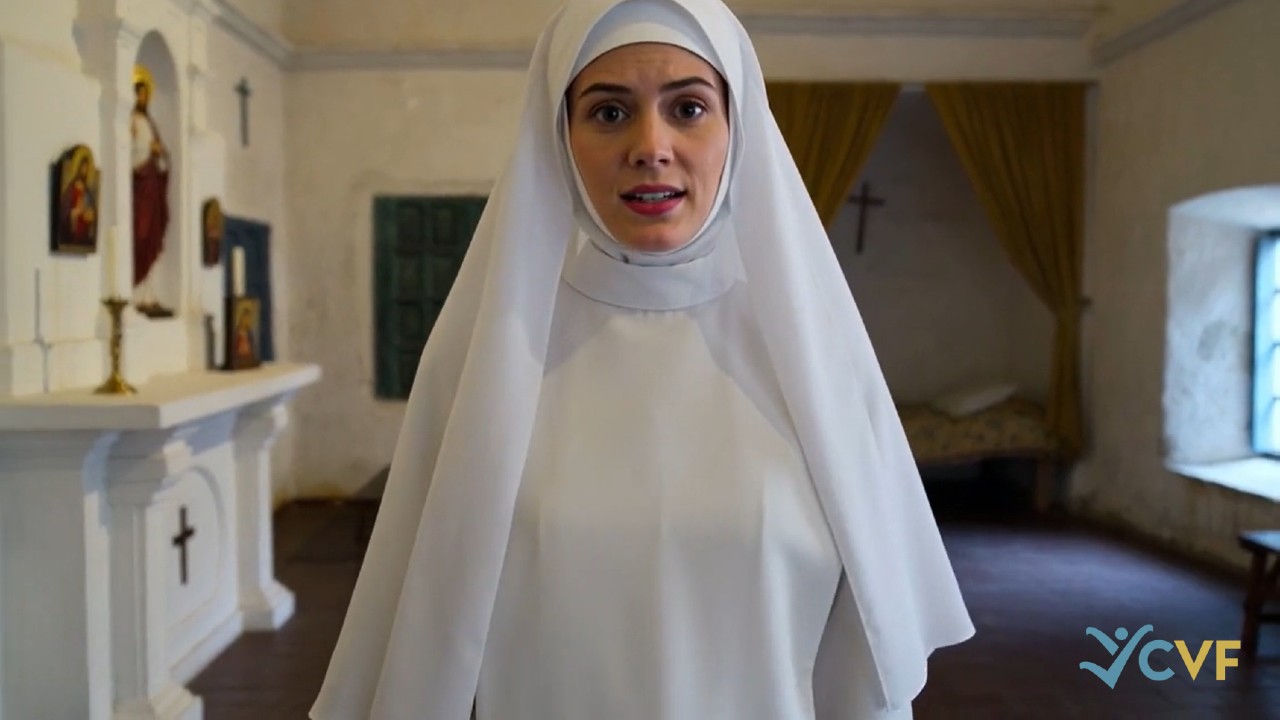
Please Watch
- 7 Morning Prayers
- Mysteries of the Rosary
- Litany of the Bl. Virgin Mary
- Popular Saints
- Popular Prayers
- Female Saints
- Saint Feast Days by Month
- Stations of the Cross
- St. Francis of Assisi
- St. Michael the Archangel
- The Apostles' Creed
- Unfailing Prayer to St. Anthony
- Pray the Rosary






Copyright 2026 Catholic Online. All materials contained on this site, whether written, audible or visual are the exclusive property of Catholic Online and are protected under U.S. and International copyright laws, © Copyright 2026 Catholic Online. Any unauthorized use, without prior written consent of Catholic Online is strictly forbidden and prohibited.
Catholic Online is a Project of Your Catholic Voice Foundation, a Not-for-Profit Corporation. Your Catholic Voice Foundation has been granted a recognition of tax exemption under Section 501(c)(3) of the Internal Revenue Code. Federal Tax Identification Number: 81-0596847. Your gift is tax-deductible as allowed by law.
