 Hi readers, it seems you use Catholic Online a lot; that's great! It's a little awkward to ask, but we need your help. If you have already donated, we sincerely thank you. We're not salespeople, but we depend on donations averaging $14.76 and fewer than 1% of readers give. If you donate just $5.00, the price of your coffee, Catholic Online School could keep thriving. Thank you. Help Now >
Gil Vicente
FREE Catholic Classes
Portuguese dramatist, b. about 1470; he was living in 1536. He took up the study of law but abandoned it for literature. As a lyric poet he is represented by some humorous poems in the "Cancioneiro" of Garcia de Resende. He owes his fame to his plays, and with good reason he is styled the father of the Portuguese drama. He wrote in all no fewer than 42 pieces, of which 10 are in Spanish 14 in Portuguese, and the rest in mingled Spanish and Portuguese. It had already become the fashion for the leading Portuguese authors to write in Spanish as wll as in their native tongue, and this fashion was to continue throughout the Renaissance. Many of Vicente's plays were composed for the purpose of celebrating religious and national festivals; others commemorate events in the life of the royal family ; still others are quite popular in their tone and were intended by him to serve the ends of entertainment only. The first of his plays was the "Visitacao" (in Spanish ), which celebrates the birth of John III, King of Portugal (1502). He recited it himself in the chamber of the Spanish mother of John III. It is known that ladies and gentlemen of the Court, as well as the poet himself, played parts in his dramas when they were produced in the palace. Like the classic dramas of Spain, they are regularly in verse, and they contain lyrics of his own with melodies composed also by him, as well as other popular lyrics and melodies introduced for particular effect. For the sake of convenience the plays may be grouped under the headings of autos (the more peculiarly religious pieces), comedias and tragi- comedias, and farces. The 17 autos are usually called his "Obras de devocao". They reveal an influence of the contemporaneous Spanish dramatist, Juan del Encina, while contemporaneous Spaniards, like Lucas Fernandez and Torres Naharro, may possibly have inspired his profane compositions. But he was never a servile imitator; the life of the time is reflected again and again by him in an original and interesting manner, and, in spite of uncouthness of form, his little dramas remain very readable. Of course, only a genuinely devout Catholic could have written his "Obras de devocao". The first edition of his works was published at Lisbon in 1561-2.



Join the Movement
When you sign up below, you don't just join an email list - you're joining an entire movement for Free world class Catholic education.


-

-
Mysteries of the Rosary
-
St. Faustina Kowalska
-
Litany of the Blessed Virgin Mary
-
Saint of the Day for Wednesday, Oct 4th, 2023
-
Popular Saints
-
St. Francis of Assisi
-
Bible
-
Female / Women Saints
-
7 Morning Prayers you need to get your day started with God
-
Litany of the Blessed Virgin Mary

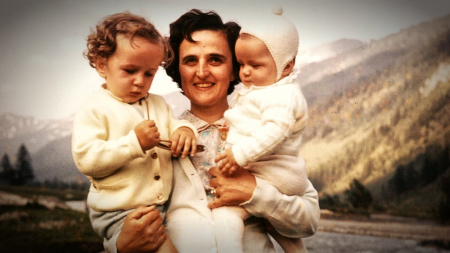
Sacrifices of Faith: The Pro-Life Legacies of St. Gianna and Jessica Hanna
-
How to love God by caring for our bodies
-
Pope Francis calls for negotiations to End Russia-Ukraine War
-
Pope Francis Contemplates Return to U.S. for United Nations Assembly Address
-
Pope Francis Calls on Faithful to Embrace Faith, Hope, and Charity in New Teaching Series


Daily Catholic
- Daily Readings for Monday, April 29, 2024
- St. Catherine of Siena: Saint of the Day for Monday, April 29, 2024
- Prayer for the Dead # 3: Prayer of the Day for Monday, April 29, 2024
- Daily Readings for Sunday, April 28, 2024
- St. Peter Chanel: Saint of the Day for Sunday, April 28, 2024
- Prayer before a Crucifix: Prayer of the Day for Sunday, April 28, 2024
 Daily Readings for Monday, April 29, 2024
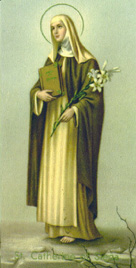 St. Catherine of Siena: Saint of the Day for Monday, April 29, 2024
 Prayer for the Dead # 3: Prayer of the Day for Monday, April 29, 2024


Copyright 2024 Catholic Online. All materials contained on this site, whether written, audible or visual are the exclusive property of Catholic Online and are protected under U.S. and International copyright laws, © Copyright 2024 Catholic Online. Any unauthorized use, without prior written consent of Catholic Online is strictly forbidden and prohibited.
Catholic Online is a Project of Your Catholic Voice Foundation, a Not-for-Profit Corporation. Your Catholic Voice Foundation has been granted a recognition of tax exemption under Section 501(c)(3) of the Internal Revenue Code. Federal Tax Identification Number: 81-0596847. Your gift is tax-deductible as allowed by law.