 Hi readers, it seems you use Catholic Online a lot; that's great! It's a little awkward to ask, but we need your help. If you have already donated, we sincerely thank you. We're not salespeople, but we depend on donations averaging $14.76 and fewer than 1% of readers give. If you donate just $5.00, the price of your coffee, Catholic Online School could keep thriving. Thank you. Help Now >
Psychological Assimilation
FREE Catholic Classes
As applied to a mental process, assimilation derives all its force and meaning from the analogy which many educationists have found to exist between the way in which food is incorporated into the living tissue and the manner in which truth is acquired by the growing mind. That education means the assimilation of truth is almost a commonplace in modern pedagogy. Few, however, have felt the full force of the comparison or realized how completely the psychological in this as in other instances follows on the lines of the physiological. Just as the living cell cannot delegate the task of assimilation, so the mind cannot by any contrivance of educational methods evade the task of performing the assimilative process for itself. All that the teacher can do is to prepare the material and to stimulate the mind of the pupil; the pupil himself must perform the final act of acquiring knowledge, namely the act of incorporating into his mind the truth presented to him. In the second place, the mind cannot take over into its own substance a complex truth as such. The truth must first be broken up into less complex component parts, which are assimilable by the mind in its present condition of development.
We ask you, humbly: don't scroll away.
Hi readers, it seems you use Catholic Online a lot; that's great! It's a little awkward to ask, but we need your help. If you have already donated, we sincerely thank you. We're not salespeople, but we depend on donations averaging $14.76 and fewer than 1% of readers give. If you donate just $5.00, the price of your coffee, Catholic Online School could keep thriving. Thank you.Help Now >
There is little profit, for example, in placing before the pupil a finished essay, unless the pupil is taught to analyze the finished literary product into its constituent elements, and to reconstruct those elements into a living whole. This, of course, implies much more than the task of summarizing each paragraph and labelling it more or less happily. When the term assimilation is used with reference to mental development, it is well to remember that, while it originally referred to the building up of anatomical elements, these elements, once constructed, have an immediate psychological bearing. Each particle of matter that is lifted into the living tissue acquires thereby a functional unity, that is, it is brought into functional relation with every other particle of the organism. Similarly, a truth once incorporated into the mind sheds its light on the entire mental content, and is in turn illuminated by every previously assimilated truth. Acting on these principles, the up-to-date educationist insists: first, that each new truth should be not only an addition to the stock of knowledge of the pupil, but also a functional acquisition, something that stimulates the pupil's mind to increased activity; secondly, that in every educational endeavor the centre of orientation should be shifted from the logical centre of the body of truth to be imparted to the present needs and capacities of the growing mind.


Join the Movement
When you sign up below, you don't just join an email list - you're joining an entire movement for Free world class Catholic education.


-

-
Mysteries of the Rosary
-
St. Faustina Kowalska
-
Litany of the Blessed Virgin Mary
-
Saint of the Day for Wednesday, Oct 4th, 2023
-
Popular Saints
-
St. Francis of Assisi
-
Bible
-
Female / Women Saints
-
7 Morning Prayers you need to get your day started with God
-
Litany of the Blessed Virgin Mary


Sacrifices of Faith: The Pro-Life Legacies of St. Gianna and Jessica Hanna
-
How to love God by caring for our bodies
-
Pope Francis calls for negotiations to End Russia-Ukraine War
-
Pope Francis Contemplates Return to U.S. for United Nations Assembly Address
-
Pope Francis Calls on Faithful to Embrace Faith, Hope, and Charity in New Teaching Series


Daily Catholic
- Daily Readings for Sunday, April 28, 2024
- St. Peter Chanel: Saint of the Day for Sunday, April 28, 2024
- Prayer before a Crucifix: Prayer of the Day for Sunday, April 28, 2024
- Daily Readings for Saturday, April 27, 2024
- St. Zita: Saint of the Day for Saturday, April 27, 2024
- Prayer for the Dead # 2: Prayer of the Day for Saturday, April 27, 2024
 Daily Readings for Sunday, April 28, 2024
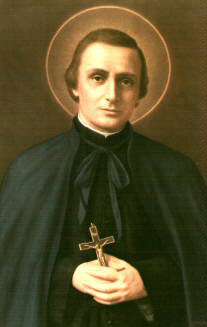 St. Peter Chanel: Saint of the Day for Sunday, April 28, 2024
 Prayer before a Crucifix: Prayer of the Day for Sunday, April 28, 2024



Copyright 2024 Catholic Online. All materials contained on this site, whether written, audible or visual are the exclusive property of Catholic Online and are protected under U.S. and International copyright laws, © Copyright 2024 Catholic Online. Any unauthorized use, without prior written consent of Catholic Online is strictly forbidden and prohibited.
Catholic Online is a Project of Your Catholic Voice Foundation, a Not-for-Profit Corporation. Your Catholic Voice Foundation has been granted a recognition of tax exemption under Section 501(c)(3) of the Internal Revenue Code. Federal Tax Identification Number: 81-0596847. Your gift is tax-deductible as allowed by law.