We ask you, humbly: don't scroll away.
Hi readers, it seems you use Catholic Online a lot; that's great! It's a little awkward to ask, but we need your help. If you have already donated, we sincerely thank you. We're not salespeople, but we depend on donations averaging $14.76 and fewer than 1% of readers give. If you donate just $5.00, the price of your coffee, Catholic Online School could keep thriving. Thank you.Help Now >
St. Theodore of Studium
FREE Catholic Classes
A zealous champion of the veneration of images and the last geat representative of the unity and independence of the Church in the East, b. in 759; d. on the Peninsula of Tryphon, near the promontory Akrita on 11 November, 826. He belonged to a very distinguished family and like his two brothers, one of whom, Joseph, became Archbishop of Thessalonica, was highly educated. In 781 theodore entered the monastery of Saccudion on the Asiatic side of the Bosphorus near Constantinople, where his uncle Plato was abbot. In 787 or 788 Theodore was ordained priest and in 794 succeeded his uncle. He insisted upon the exact observance of the monastic rules. During the Adulterine heresy dispute (see S AINT N ICEPHORUS ), concerning the divorce and remarriage of the Emperor Constantine VI, he was banished by Constantine VI to Thessalonica, but returned in triumph after the emperor's overthrow. In 799 he left Saccudion, which was threatened by the Arabs, and took charge of the monastery of the Studium at Constantinople. He gave the Studium an excellent organization which was taken as a model by the entire Byzantine monastic world, and still exists on Mount Athos and in Russian monasticism. He supplemented the somewhat theoretical rules of St. Basil by specific regulations concerning enclosure, poverty, discipline, study, religious services, fasts, and manual labour. When the Adulterine heresy dispute broke out again in 809, he was exiled a second time as the head of the strictly orthodox church part, but was recalled in 811. The administration of the iconoclastic Emperor Leo V brought new and more severe trials. Theodore courageously denied the emperor's right to interfere in ecclesiastical affairs. He was consequently treated with great cruelty, exiled, and his monastery filled with iconoclastic monks. Theodore lived at Metopa in Bithynia from 814, then at Bonita from 819, and finally at Smyrna. Even in banishment he was the central point of the opposition to Cæsaropapism and Iconoclasm. Michael II (810-9) permitted the exiles to return, but did not annul the laws of his predecessor. Thus Theodore saw himself compelled to continue the struggle. He did not return to the Studium, and died without having attained his ideals. In the Roman Martyrology his feast is placed on 12 November; in the Greek martyrologies on 11 November.
Theodore was a man of practical bent and never wrote any theological works, except a dogmatic treatise on the veneration of images. Many of his works are still unprinted or exist in Old Slavonic and Russian translations. Besides several polemics against the enemies of images, special mention should be made of the "Catechesis magna", and the "Catechesis parva" with their sonorous sermons and orations. His writings on monastic life are: the iambic verses on the monastic offices, his will addressed to the monks, the "Canones", and the "Pœnæ monasteriales", the regulations for the monastery and for the church services. His hymns and epigrams show fiery feeling and a high spirit. He is one of the first of hymn-writers in productiveness, in a peculiarly creative technic, and in elegance of language. 550 letters testify to his ascetical and ecclesiastico-political labours.

We ask you, humbly: don't scroll away.
Hi readers, it seems you use Catholic Online a lot; that's great! It's a little awkward to ask, but we need your help. If you have already donated, we sincerely thank you. We're not salespeople, but we depend on donations averaging $14.76 and fewer than 1% of readers give. If you donate just $5.00, the price of your coffee, Catholic Online School could keep thriving. Thank you.Help Now >
Join the Movement
When you sign up below, you don't just join an email list - you're joining an entire movement for Free world class Catholic education.


-

-
Mysteries of the Rosary
-
St. Faustina Kowalska
-
Litany of the Blessed Virgin Mary
-
Saint of the Day for Wednesday, Oct 4th, 2023
-
Popular Saints
-
St. Francis of Assisi
-
Bible
-
Female / Women Saints
-
7 Morning Prayers you need to get your day started with God
-
Litany of the Blessed Virgin Mary


Sacrifices of Faith: The Pro-Life Legacies of St. Gianna and Jessica Hanna
-
How to love God by caring for our bodies
-
Pope Francis calls for negotiations to End Russia-Ukraine War
-
Pope Francis Contemplates Return to U.S. for United Nations Assembly Address
-
Pope Francis Calls on Faithful to Embrace Faith, Hope, and Charity in New Teaching Series


Daily Catholic
- Daily Readings for Sunday, April 28, 2024
- St. Peter Chanel: Saint of the Day for Sunday, April 28, 2024
- Prayer before a Crucifix: Prayer of the Day for Sunday, April 28, 2024
- Daily Readings for Saturday, April 27, 2024
- St. Zita: Saint of the Day for Saturday, April 27, 2024
- Prayer for the Dead # 2: Prayer of the Day for Saturday, April 27, 2024
 Daily Readings for Sunday, April 28, 2024
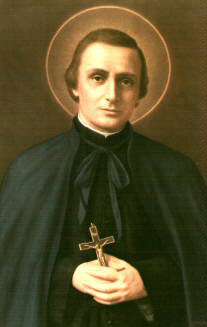 St. Peter Chanel: Saint of the Day for Sunday, April 28, 2024
 Prayer before a Crucifix: Prayer of the Day for Sunday, April 28, 2024
We ask you, humbly: don't scroll away.
Hi readers, it seems you use Catholic Online a lot; that's great! It's a little awkward to ask, but we need your help. If you have already donated, we sincerely thank you. We're not salespeople, but we depend on donations averaging $14.76 and fewer than 1% of readers give. If you donate just $5.00, the price of your coffee, Catholic Online School could keep thriving. Thank you.Help Now >

Copyright 2024 Catholic Online. All materials contained on this site, whether written, audible or visual are the exclusive property of Catholic Online and are protected under U.S. and International copyright laws, © Copyright 2024 Catholic Online. Any unauthorized use, without prior written consent of Catholic Online is strictly forbidden and prohibited.
Catholic Online is a Project of Your Catholic Voice Foundation, a Not-for-Profit Corporation. Your Catholic Voice Foundation has been granted a recognition of tax exemption under Section 501(c)(3) of the Internal Revenue Code. Federal Tax Identification Number: 81-0596847. Your gift is tax-deductible as allowed by law.