 Hi readers, it seems you use Catholic Online a lot; that's great! It's a little awkward to ask, but we need your help. If you have already donated, we sincerely thank you. We're not salespeople, but we depend on donations averaging $14.76 and fewer than 1% of readers give. If you donate just $5.00, the price of your coffee, Catholic Online School could keep thriving. Thank you. Help Now >
St. Theodore of Amasea
FREE Catholic Classes
Surnamed Tyro (Tiro), not because he was a young recruit, but because for a time he belonged to the Cohors Tyronum ( Nilles, Kal. man., I, 105), called of Amasea from the place where he suffered martyrdom, and Euchaita from the place, Euchais, to which his body had been carried, and where he was held in such veneration that the city was frequently spoken of as Theodoropolis. His martyrdom seems to have taken place 17 Feb., 306, under the Emperors Galerius Maximian and Maximian, for on this day the Menologies give his feast. The Greeks and Armenians honour him also on the first Saturday of Lent, while the Roman Martyrology records him on 9 Nov. In the twelfth century his body was transferred to Brindisi, and he is there honoured as patron; his head is enshrined at Gaeta. There are churches bearing his name at Constantinople, Jerusalem, Damascus, and other places of the East. An ancient church of Venice, of which he is titular, is said to have been built by Narses. At the foot of the Palatine in Rome is a very old church, circular in shape and dedicated to S. Teodoro, whom the Roman people call S. Toto, which was made a collegiate church by Felix IV. The people showed their confidence in the saint by bringing their sick children to his temple. His martyrdom is represented in the choir of the cathedral of Chartres by thirty-eight glass paintings of the thirteenth century ( Migne, "Dict. iconogr.", 599). He is invoked against storms. Emblems: temple, torch, crocodile, pyre, crown of thorns .
We ask you, humbly: don't scroll away.
Hi readers, it seems you use Catholic Online a lot; that's great! It's a little awkward to ask, but we need your help. If you have already donated, we sincerely thank you. We're not salespeople, but we depend on donations averaging $14.76 and fewer than 1% of readers give. If you donate just $5.00, the price of your coffee, Catholic Online School could keep thriving. Thank you.Help Now >
St. Gregory of Nyssa delivered a panegyric on his feast and gave several data concerning his life and martyrdom (P.G., XLVI, 741, and Ruinart, 505). The oldest text of the "Martyrium S. Theodori Tironis" was published by Delehaye in "Les legendes grecques des saints militaires", p. 227, but it is considered largely interpolated (Anal. Boll., XXX, 323). St. Theodore is said to have been born in the East (Syria or Armenia are mentioned by some writers). He enlisted in the army and was sent with his cohort to winter quarters in Pontus. When the edict against the Christians was issued by the emperors, he was brought before the Court at Amasea and asked to offer sacrifice to the gods. Theodore, however, denied their existence and made a noble profession of his belief in the Divinity of Jesus Christ. The judges, pretending pity for his youth, gave him time for reflection. This he employed in burning the Temple of Cybele. He was again taken prisoner, and after many cruel torments was burned at the stake.


Join the Movement
When you sign up below, you don't just join an email list - you're joining an entire movement for Free world class Catholic education.


-

-
Mysteries of the Rosary
-
St. Faustina Kowalska
-
Litany of the Blessed Virgin Mary
-
Saint of the Day for Wednesday, Oct 4th, 2023
-
Popular Saints
-
St. Francis of Assisi
-
Bible
-
Female / Women Saints
-
7 Morning Prayers you need to get your day started with God
-
Litany of the Blessed Virgin Mary

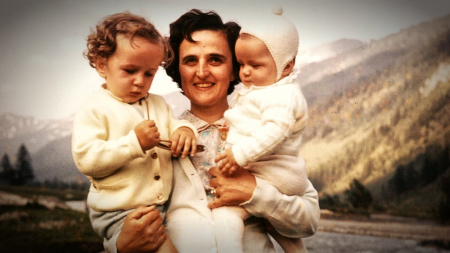
Sacrifices of Faith: The Pro-Life Legacies of St. Gianna and Jessica Hanna
-
How to love God by caring for our bodies
-
Pope Francis calls for negotiations to End Russia-Ukraine War
-
Pope Francis Contemplates Return to U.S. for United Nations Assembly Address
-
Pope Francis Calls on Faithful to Embrace Faith, Hope, and Charity in New Teaching Series


Daily Catholic
- Daily Readings for Sunday, April 28, 2024
- St. Peter Chanel: Saint of the Day for Sunday, April 28, 2024
- Prayer before a Crucifix: Prayer of the Day for Sunday, April 28, 2024
- Daily Readings for Saturday, April 27, 2024
- St. Zita: Saint of the Day for Saturday, April 27, 2024
- Prayer for the Dead # 2: Prayer of the Day for Saturday, April 27, 2024
 Daily Readings for Sunday, April 28, 2024
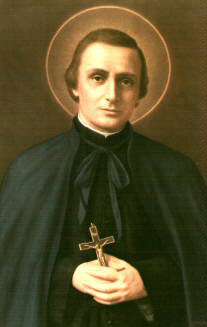 St. Peter Chanel: Saint of the Day for Sunday, April 28, 2024
 Prayer before a Crucifix: Prayer of the Day for Sunday, April 28, 2024
Hi readers, it seems you use Catholic Online a lot; that's great! It's a little awkward to ask, but we need your help. If you have already donated, we sincerely thank you. We're not salespeople, but we depend on donations averaging $14.76 and fewer than 1% of readers give. If you donate just $5.00, the price of your coffee, Catholic Online School could keep thriving. Thank you. Help Now >
Prayer before a Crucifix: Prayer of the Day for Sunday, April 28, 2024
Hi readers, it seems you use Catholic Online a lot; that's great! It's a little awkward to ask, but we need your help. If you have already donated, we sincerely thank you. We're not salespeople, but we depend on donations averaging $14.76 and fewer than 1% of readers give. If you donate just $5.00, the price of your coffee, Catholic Online School could keep thriving. Thank you. Help Now >
We ask you, humbly: don't scroll away.
Hi readers, it seems you use Catholic Online a lot; that's great! It's a little awkward to ask, but we need your help. If you have already donated, we sincerely thank you. We're not salespeople, but we depend on donations averaging $14.76 and fewer than 1% of readers give. If you donate just $5.00, the price of your coffee, Catholic Online School could keep thriving. Thank you.Help Now >

Copyright 2024 Catholic Online. All materials contained on this site, whether written, audible or visual are the exclusive property of Catholic Online and are protected under U.S. and International copyright laws, © Copyright 2024 Catholic Online. Any unauthorized use, without prior written consent of Catholic Online is strictly forbidden and prohibited.
Catholic Online is a Project of Your Catholic Voice Foundation, a Not-for-Profit Corporation. Your Catholic Voice Foundation has been granted a recognition of tax exemption under Section 501(c)(3) of the Internal Revenue Code. Federal Tax Identification Number: 81-0596847. Your gift is tax-deductible as allowed by law.