We ask you, urgently: don't scroll past this
Dear readers, Catholic Online was de-platformed by Shopify for our pro-life beliefs. They shut down our Catholic Online, Catholic Online School, Prayer Candles, and Catholic Online Learning Resources essential faith tools serving over 1.4 million students and millions of families worldwide. Our founders, now in their 70's, just gave their entire life savings to protect this mission. But fewer than 2% of readers donate. If everyone gave just $5, the cost of a coffee, we could rebuild stronger and keep Catholic education free for all. Stand with us in faith. Thank you.Help Now >
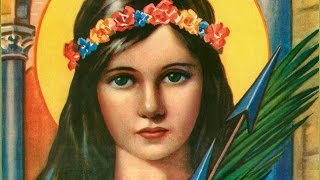
Sts. Tarachus, Probus, and Andronicus
FREE Catholic Classes
Martyrs of the Diocletian persecution (about 304). The "Martyrologium Hieronymian." contains the names of these three martyrs on four different days (the four days 8-11 October evidently signify no more than the date on a single day), with the topographical identification: "In Tarso Cilicie", on 27 Sept. (ed. De Rossi-Duchesne, 126), to which corresponds the expression, "In Cilicia", given on the two days of 5 April, and 8-11 October. The expression, "In Palestina", given under 13 May (ibid., 60), is either an error or refers to a special shrine of the martyrs in Palestine. There are two accounts of the glorious martyrdom of these three witnesses by blood, the first account being held by Ruinart (Acta Martyrum, ed. Ratisbon, 448 sq.) to be entirely authentic. According to these Acts, Tarachus, a native of Cladiopolis in Isauria, Probus of Side in Pamphylia, and Andronicus, who belonged to a prominent family of Ephesus, were tried and horribly tortured three times in various cities at Tarsus, and at Anazarbus of Cilicia. They were then condemned to death by wild beasts, and when the animals would not touch them in the amphitheatre they were put to death with the sword. Harnack, however, expressed doubts as to the genuineness of the account (Geschichte der altchristlichen Literatur, pt. II: Die Chronologie, I, 479 sq., note 5), and Delehaye (Les lxgendes hagiographiques, 135 sq.) puts the martyrdom in the class of legends of martyrs that he calls "historical romances". At the same time, however, there can be no doubt as to the actual existence of the three martyrs. Their feast is celebrated in the Latin Church on 11 October, and in the Greek Church on 12 October.

Come Grow With Us
Sign up and walk the Catholic journey with millions around the world.
Receive inspiring emails on saints, daily readings, and free faith-building resources—no cost, ever.
Sister Sara Has One Message for Every Catholic Family This June
- Easter / Lent
- 5 Lenten Prayers
- Ash Wednesday
- 7 Morning Prayers
- Mysteries of the Rosary
- Litany of the Bl. Virgin Mary
- Popular Saints
- Popular Prayers
- Female Saints
- Saint Feast Days by Month
- Stations of the Cross
- St. Francis of Assisi
- St. Michael the Archangel
- The Apostles' Creed
- Unfailing Prayer to St. Anthony
- Pray the Rosary








Copyright 2026 Catholic Online. All materials contained on this site, whether written, audible or visual are the exclusive property of Catholic Online and are protected under U.S. and International copyright laws, © Copyright 2026 Catholic Online. Any unauthorized use, without prior written consent of Catholic Online is strictly forbidden and prohibited.
Catholic Online is a Project of Your Catholic Voice Foundation, a Not-for-Profit Corporation. Your Catholic Voice Foundation has been granted a recognition of tax exemption under Section 501(c)(3) of the Internal Revenue Code. Federal Tax Identification Number: 81-0596847. Your gift is tax-deductible as allowed by law.