We ask you, humbly: don't scroll away.
Hi readers, it seems you use Catholic Online a lot; that's great! It's a little awkward to ask, but we need your help. If you have already donated, we sincerely thank you. We're not salespeople, but we depend on donations averaging $14.76 and fewer than 1% of readers give. If you donate just $5.00, the price of your coffee, Catholic Online School could keep thriving. Thank you.Help Now >
The Stradivari Family
FREE Catholic Classes
The name Stradivari goes back to the Middle Ages ; we find it spelt in various ways, Stradivare, Stradiverto, Stradivertus. Fetis professes to find it in the municipal archives of Cremona for the years 1127 and 1186. The name was certainly borne by more or less distinguished citizens of Cremona during the twelfth and thirteenth centuries. Signor Mandelli gives, as the earliest known mention of it, a document dated May, 1188, in which it is recorded that certain pieces of land were leased by the canon and chief warden of the cathedral of Cremona to one Giovanni Stradiverto and his heirs. Arisi, the Cremonese monk, who wrote concerning Antonio Stradivari in 1720, mentions: Galiero Stradivari, a learned Orientalist, who lived in the thirteenth century; Alessandro Stradivari, another Orientalist, about the end of the thirteenth century; Costanzo Stradivari, of about the same period, a monk, who wrote a treatise on the natural philosophy of Aristotle. Fetis also mentions: Guglielmus Stradivertus, an excellent lawyer, who died in 1439. It is certain that the name was a common one in Cremona, but we have no exact evidence to prove that Stradivari, the violin-maker, was directly connected with the above-mentioned persons. The earliest documentary record of his ancestry is to be found in the marriage registry of the cathedral of Cremona, where there is an entry, dated April, 1600, of the marriage of Giulio Cesare Stradivari, of the parish of S. Michele Vecchio, to Doralice Milani, of the parish of the cathedral. They had a son, Alessandro, christened in the church of S. Michele in January, 1602; and in the register of the parish of S. Prospero, is the entry of the marriage of this Alessandro Stradivari and Anna Moroni — the father and mother of Antonio.

Francesco Stradivari , son of Antonio, b. 1 Feb., 1671; d. 11 May, 1743. He followed his father's calling, and was the only one of Stradivari's sons to inherit any of the father's skill in making stringed instruments. He made very good violins; some are signed by himself, and others, made with the, help of his brother Omobono, are signed "sotto la disciplina d'Antonio Stradivari." His work is quite distinct in character from Antonio's. Both Francesco and Omobono were overshadowed by the genius of their father; they produced good work, if not work of the highest quality.
Omobono Stradivari , son of Antonio, b. 14 Nov., 1679; d. 8 June, 1742. He also followed his father's trade, and made some violins in conjunction with his brother Francesco. His work was chiefly confined to the repair and fitting up of instruments; possibly he made bows, instrument-cases — which were specially designed for wealthy patrons, and often things of great value and beauty — and various fittings, such as bridges, pegs, tail-pieces, etc.
Paolo Stradivari , the youngest son of Antonio by a second marriage, b. 26 Jan., 1708; d. 14 Oct., 1776. He was a cloth merchant, and the only son of the great Stradivari who married. On the death of Francesco, Paolo received the collection of tools, moulds, patterns, drawings, correspondence, and memoranda left by their father, and also several instruments, including the famous "Alard" Strad of 1715, and the unrivalled "Messie" violin of 1716. In 1775 this collection of relics was sold by Paolo to the Count Cozio de Salabue, and afterwards passed into the hands of the late Marquis Alessandro Dalla Valle. Cesare Stradivari, a grandson of Paolo, b. in 1789, was celebrated as a Physician.
We ask you, humbly: don't scroll away.
Hi readers, it seems you use Catholic Online a lot; that's great! It's a little awkward to ask, but we need your help. If you have already donated, we sincerely thank you. We're not salespeople, but we depend on donations averaging $14.76 and fewer than 1% of readers give. If you donate just $5.00, the price of your coffee, Catholic Online School could keep thriving. Thank you.Help Now >

Join the Movement
When you sign up below, you don't just join an email list - you're joining an entire movement for Free world class Catholic education.


-

-
Mysteries of the Rosary
-
St. Faustina Kowalska
-
Litany of the Blessed Virgin Mary
-
Saint of the Day for Wednesday, Oct 4th, 2023
-
Popular Saints
-
St. Francis of Assisi
-
Bible
-
Female / Women Saints
-
7 Morning Prayers you need to get your day started with God
-
Litany of the Blessed Virgin Mary

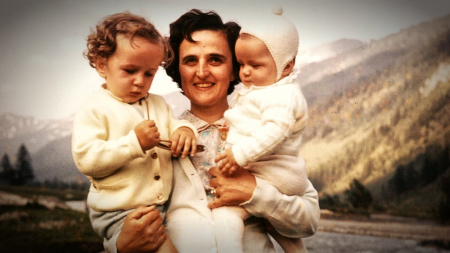
Sacrifices of Faith: The Pro-Life Legacies of St. Gianna and Jessica Hanna
-
How to love God by caring for our bodies
-
Pope Francis calls for negotiations to End Russia-Ukraine War
-
Pope Francis Contemplates Return to U.S. for United Nations Assembly Address
-
Pope Francis Calls on Faithful to Embrace Faith, Hope, and Charity in New Teaching Series


Daily Catholic
- Daily Readings for Sunday, April 28, 2024
- St. Peter Chanel: Saint of the Day for Sunday, April 28, 2024
- Prayer before a Crucifix: Prayer of the Day for Sunday, April 28, 2024
- Daily Readings for Saturday, April 27, 2024
- St. Zita: Saint of the Day for Saturday, April 27, 2024
- Prayer for the Dead # 2: Prayer of the Day for Saturday, April 27, 2024
 Daily Readings for Sunday, April 28, 2024
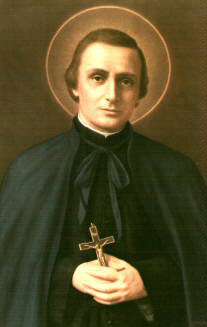 St. Peter Chanel: Saint of the Day for Sunday, April 28, 2024
 Prayer before a Crucifix: Prayer of the Day for Sunday, April 28, 2024


Copyright 2024 Catholic Online. All materials contained on this site, whether written, audible or visual are the exclusive property of Catholic Online and are protected under U.S. and International copyright laws, © Copyright 2024 Catholic Online. Any unauthorized use, without prior written consent of Catholic Online is strictly forbidden and prohibited.
Catholic Online is a Project of Your Catholic Voice Foundation, a Not-for-Profit Corporation. Your Catholic Voice Foundation has been granted a recognition of tax exemption under Section 501(c)(3) of the Internal Revenue Code. Federal Tax Identification Number: 81-0596847. Your gift is tax-deductible as allowed by law.
