We ask you, humbly: don't scroll away.
Hi readers, it seems you use Catholic Online a lot; that's great! It's a little awkward to ask, but we need your help. If you have already donated, we sincerely thank you. We're not salespeople, but we depend on donations averaging $14.76 and fewer than 1% of readers give. If you donate just $5.00, the price of your coffee, Catholic Online School could keep thriving. Thank you.Help Now >
Pope Stephen (II) III
FREE Catholic Classes
Unanimously elected in St. Mary Major's and consecrated on 26 March (or 3 April), 752; d. 26 April, 757. He had at once to face the Lombards who were resolved to bring all Italy under their sway. With the capture of Ravenna (751), they had put an end to the power of the Byzantine exarchs and were preparing to seize the Duchy of Rome. In vain did Stephen apply for help to Constantinople and freely spent his money to induce them to keep the peace they had made with him, and to refrain from hostilities. He accordingly devoted himself to prayer and endeavoured to obtain assistance from Pepin and the Franks. As a last resource he went himself to Gaul to plead his cause before the Frankish king. Receiving a most favourable reception, he crowned Pepin as King of the Franks, and at Kiersey was solemnly assured by him that he would defend him, and would restore the exarchate to St. Peter. Failing to make any impression on Aistulf, the Lombard king, by repeated embassies, Pepin forced the passes of the Alps, and compelled him to swear to restore Ravenna and the other cities he had taken (754). But no sooner had Pepin withdrawn from Lombardy than Aistulf roused the whole Lombard nation, appeared in arms before the walls of Rome (Jan., 756), ravaged the neighbourhood, and made a desparate attempt to capture the city. After receiving one appeal for help after another from the pope, Pepin crossed the Alps a second time (756), and again forced Aistulf to submission. This time Stephen was put in possession of the cities of the exarchate and of the Pentapolis, and became practically the first pope -king. Towards the close of this same year Aistulf died amid preparations for once more violating his engagements. On his death two rivals claimed the Lombard throne, Desiderius, Duke of Istria and Ratchis, brother of Aistulf, who in 749 had resigned the Lombard crown, and had taken the monastic habit in Monte Cassino. Desiderius at once invoked the assistance of the pope, and, on condition of his help, promised to restore to Rome certain cities in the exarchate and the Pentapolis which still remained in the hands of the Lombards, and to give the pope a large sum of money. Stephen at once sent envoys to both the rivals, and, impressing on Ratchis the duty of being true to his monastic vows, succeeded in bringing about peace, and preventing civil war. Ratchis returned to his monastery and Desiderius was recognized as king (about March, 757). The latter, however, did not fulfill his promise to the pope in its entirety. He gave up Faenza, Ferrara, and two small towns, but retained Bologna, Imola, and other towns in the Pentapolis till his overthrow by Charlemagne. Stephen had scarcely established a system of government in the exarchate when he had to quell the rebellion of Sergius, Archbishop of Ravenna, whom he had made its governor. He, however, caused the rebel to be brought to Rome, and kept him there whilst he lived. Stephen corresponded with the Emperor Constantine on the subject of the restoration of the sacred images, and himself restored many of the ancient churches of the city. Remarkable for his love of the poor, Stephen built hospitals for them near St. Peter's, in which church he was buried.


 Hi readers, it seems you use Catholic Online a lot; that's great! It's a little awkward to ask, but we need your help. If you have already donated, we sincerely thank you. We're not salespeople, but we depend on donations averaging $14.76 and fewer than 1% of readers give. If you donate just $5.00, the price of your coffee, Catholic Online School could keep thriving. Thank you. Help Now >
Join the Movement
When you sign up below, you don't just join an email list - you're joining an entire movement for Free world class Catholic education.


-

-
Mysteries of the Rosary
-
St. Faustina Kowalska
-
Litany of the Blessed Virgin Mary
-
Saint of the Day for Wednesday, Oct 4th, 2023
-
Popular Saints
-
St. Francis of Assisi
-
Bible
-
Female / Women Saints
-
7 Morning Prayers you need to get your day started with God
-
Litany of the Blessed Virgin Mary


Sacrifices of Faith: The Pro-Life Legacies of St. Gianna and Jessica Hanna
-
How to love God by caring for our bodies
-
Pope Francis calls for negotiations to End Russia-Ukraine War
-
Pope Francis Contemplates Return to U.S. for United Nations Assembly Address
-
Pope Francis Calls on Faithful to Embrace Faith, Hope, and Charity in New Teaching Series


Daily Catholic
- Daily Readings for Sunday, April 28, 2024
- St. Peter Chanel: Saint of the Day for Sunday, April 28, 2024
- Prayer before a Crucifix: Prayer of the Day for Sunday, April 28, 2024
- Daily Readings for Saturday, April 27, 2024
- St. Zita: Saint of the Day for Saturday, April 27, 2024
- Prayer for the Dead # 2: Prayer of the Day for Saturday, April 27, 2024
 Daily Readings for Sunday, April 28, 2024
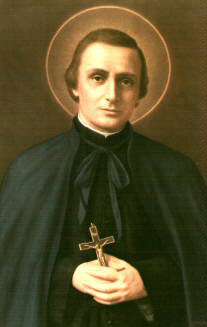 St. Peter Chanel: Saint of the Day for Sunday, April 28, 2024
 Prayer before a Crucifix: Prayer of the Day for Sunday, April 28, 2024
We ask you, humbly: don't scroll away.
Hi readers, it seems you use Catholic Online a lot; that's great! It's a little awkward to ask, but we need your help. If you have already donated, we sincerely thank you. We're not salespeople, but we depend on donations averaging $14.76 and fewer than 1% of readers give. If you donate just $5.00, the price of your coffee, Catholic Online School could keep thriving. Thank you.Help Now >


Copyright 2024 Catholic Online. All materials contained on this site, whether written, audible or visual are the exclusive property of Catholic Online and are protected under U.S. and International copyright laws, © Copyright 2024 Catholic Online. Any unauthorized use, without prior written consent of Catholic Online is strictly forbidden and prohibited.
Catholic Online is a Project of Your Catholic Voice Foundation, a Not-for-Profit Corporation. Your Catholic Voice Foundation has been granted a recognition of tax exemption under Section 501(c)(3) of the Internal Revenue Code. Federal Tax Identification Number: 81-0596847. Your gift is tax-deductible as allowed by law.