 Hi readers, it seems you use Catholic Online a lot; that's great! It's a little awkward to ask, but we need your help. If you have already donated, we sincerely thank you. We're not salespeople, but we depend on donations averaging $14.76 and fewer than 1% of readers give. If you donate just $5.00, the price of your coffee, Catholic Online School could keep thriving. Thank you. Help Now >
Dominic Soto
FREE Catholic Classes
Dominican, renowned theologian, b. at Segovia, 1494; d. at Salamanca, 15 Nov., 1560. His first studies were made in his native city. He next studied at the University of Alcalá under St. Thomas of Villanova , and later went to Paris, where he obtained his baccalaureate in philosophy. Having studied theology for a time at Paris, he returned to Alcalá about 1520, and was made professor of Philosophy in the College of San Ildelfonso. In this capacity he distinguished himself by securing a complete triumph of moderate Realism over the errors of Nominalism. Already enjoying a wide reputation as a professor, and apparently destined for higher honours, he was suddenly moved in 1524 to abandon his chair as teacher and join a religious order. Straightway he made a retreat at the Benedictine monastery of Montserrat, and then sought admission into the Order of Preachers at Burgos, where he was received and entered upon his novitiate in the Convent of St. Paul. The following year (23 July, 1525) he was admitted to profession, and was made at once professor of dialects in his convent. In 1529 appeared his first work called "Summulae", which in simplicity, precision, and clearness was a decided improvement on the manuals of logic then in use. After teaching in his convent for seven years, he was called to a chair of theology in the University of Salamanca on 27 Nov., 1532, and continued to teach there till 1545, when he was chosen by Charles V imperial theologian at the Council of Trent. During his labours at the council he rendered great service in helping to formulate dogmatic decrees and in solving theological difficulties. The general of his order, Albertus Casaus, having died just before the opening of the council, it fell to Soto to represent his order during the first four sessions. In the following sessions he represented the newly-elected general, Franciscus Romaeus. It was at Trent that Soto wrote and dedicated to the fathers of the council his treatise "De natura et gratia", in which he clearly and ably expounds the Thomistic teaching on original sin and grace. When the council was interrupted in 1547, Soto was summoned by Charles V to Germany as his confessor and spiritual director. He refused the Bishopric of Segovia offered him by the emperor, and in 1550 was permitted to return to his convent at Salamanca, where he was elected prior the same year. Two years later he succeeded Melchior Cano in the principal chair of theology at the University of Salamanca, at that time the metropolis of the intellectual world. In 1556 Soto resigned his professorial chair. Chief among his philosophical works, besides the "Summulae", are: "In dialecticam Aristotelis commentarii" (Salamanca, 1544); "In VIII libros physicorum" (Salamanca, 1545). The following are his best-known theological works: "De natura et gratia libri III (Venice, 1547); "De ratione tegendi et detegendi secretum" (Salamanca, 1541); "De justitia et jure libri X" (Salamanca, 1556); "Comment. in Ep. ad Romanos" (Antwerp, 1550); "In IV sent. libros comment." (Salamanca, 1555-56).

Join the Movement
When you sign up below, you don't just join an email list - you're joining an entire movement for Free world class Catholic education.


-

-
Mysteries of the Rosary
-
St. Faustina Kowalska
-
Litany of the Blessed Virgin Mary
-
Saint of the Day for Wednesday, Oct 4th, 2023
-
Popular Saints
-
St. Francis of Assisi
-
Bible
-
Female / Women Saints
-
7 Morning Prayers you need to get your day started with God
-
Litany of the Blessed Virgin Mary

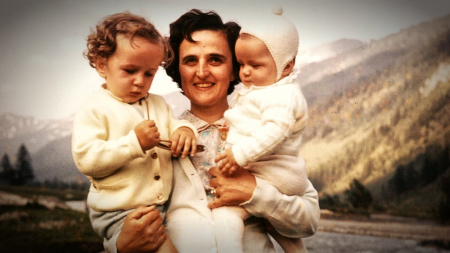
Sacrifices of Faith: The Pro-Life Legacies of St. Gianna and Jessica Hanna
-
How to love God by caring for our bodies
-
Pope Francis calls for negotiations to End Russia-Ukraine War
-
Pope Francis Contemplates Return to U.S. for United Nations Assembly Address
-
Pope Francis Calls on Faithful to Embrace Faith, Hope, and Charity in New Teaching Series

Daily Catholic
- Daily Readings for Sunday, April 28, 2024
- St. Peter Chanel: Saint of the Day for Sunday, April 28, 2024
- Prayer before a Crucifix: Prayer of the Day for Sunday, April 28, 2024
- Daily Readings for Saturday, April 27, 2024
- St. Zita: Saint of the Day for Saturday, April 27, 2024
- Prayer for the Dead # 2: Prayer of the Day for Saturday, April 27, 2024
 Daily Readings for Sunday, April 28, 2024
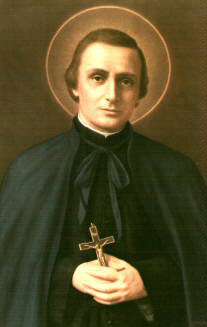 St. Peter Chanel: Saint of the Day for Sunday, April 28, 2024
 Prayer before a Crucifix: Prayer of the Day for Sunday, April 28, 2024
 Hi readers, it seems you use Catholic Online a lot; that's great! It's a little awkward to ask, but we need your help. If you have already donated, we sincerely thank you. We're not salespeople, but we depend on donations averaging $14.76 and fewer than 1% of readers give. If you donate just $5.00, the price of your coffee, Catholic Online School could keep thriving. Thank you. Help Now >

Copyright 2024 Catholic Online. All materials contained on this site, whether written, audible or visual are the exclusive property of Catholic Online and are protected under U.S. and International copyright laws, © Copyright 2024 Catholic Online. Any unauthorized use, without prior written consent of Catholic Online is strictly forbidden and prohibited.
Catholic Online is a Project of Your Catholic Voice Foundation, a Not-for-Profit Corporation. Your Catholic Voice Foundation has been granted a recognition of tax exemption under Section 501(c)(3) of the Internal Revenue Code. Federal Tax Identification Number: 81-0596847. Your gift is tax-deductible as allowed by law.