We ask you, humbly: don't scroll away.
Hi readers, it seems you use Catholic Online a lot; that's great! It's a little awkward to ask, but we need your help. If you have already donated, we sincerely thank you. We're not salespeople, but we depend on donations averaging $14.76 and fewer than 1% of readers give. If you donate just $5.00, the price of your coffee, Catholic Online School could keep thriving. Thank you.Help Now >
Sardes
FREE Catholic Classes
A titular see of Lydia, in Asia Minor probably the ancient Hyde of Homer (Iliad, II, 844; XX, 385), at the foot of Mount Tmolus; see also Strabo (XIII, iv, 5); Pliny (Hist. nat., v, 29), Stephen of Byzantium, s.v. The name Sardes, which replaced that of Hyde, seems to have been derived from the Shardani, a people mentioned in the cuneiform inscriptions as inhabiting this region. At an early period Sardes was the capital of the Lydians, an early dynasty of whom reigned from 766 to 687 B.C.; a second, that of Mermnades founded by Gyges in 687 B.C., reigned until 546 B.C. Its last king, the celebrated Croesus, was dethroned by Cyrus. Thenceforth it was the residence of the Persian satraps, who administered the conquered kingdom. The capture of the city by the Ionians and the Athenians in 498 B.C. was the cause of wars between the Persians and Greeks. In 334 it surrendered without a struggle to Alexander the Great, after whose death it belonged to Antigonus until 301, when it fell into the power of the Seleucides. Antiochus III having been defeated at Magnesia by the Romans 190 B.C., Sardes was incorporated with the Kingdom of Pergamus, then with the Roman Empire, becoming the capital of the Province of Lydia. The famous river Pactolus flowed through its agora , or forum.
We ask you, humbly: don't scroll away.
Hi readers, it seems you use Catholic Online a lot; that's great! It's a little awkward to ask, but we need your help. If you have already donated, we sincerely thank you. We're not salespeople, but we depend on donations averaging $14.76 and fewer than 1% of readers give. If you donate just $5.00, the price of your coffee, Catholic Online School could keep thriving. Thank you.Help Now >
In the Apocalypse (iii, 1-3) a letter is written to the Church of Sardes by St. John, who utters keen reproaches against it and its bishop. Among its martyrs are mentioned the priest Therapon, venerated 27 May, and Apollonius (10 July). Among its bishops, of whom Le Quien (Oriens Christ., I, 859-66) gives a long list, were St. Meliton (second century), writer and apologist ; St. Euthymius , martyred for the veneration of images (26 Dec., 824); John, his successor who also suffered for the Faith ; Andronicus, who made several attempts for the reunion of the Churches. As religious metropolis of Lydia, Sardes ranked sixth in the hierarchy. As early as the seventh century (Gelzer, "Ungedruckte. . .Texte der Notitiae episcopatuum," 537), it had 27 suffragans, which number scarcely varied until the end of the tenth century. At the beginning of the fourteenth century the town, which was still very populous, was captured and destroyed by the Turks. In 1369 it ceased to exist, and Philadelphia replaced it as metropolis (Waeechter,"Der Verfall des Griechentums in Kleinaim XIV Jahrhundert," 44-46). Since then it has been a Greek titular metropolitan see. At present, under the name of Sart, it is but a miserable Turkish village in the sandjak of Saroukhan, and the vilayet of Smyrna. Not one well-preserved and important monument is found among the very extensive ruins.


Join the Movement
When you sign up below, you don't just join an email list - you're joining an entire movement for Free world class Catholic education.


-

-
Mysteries of the Rosary
-
St. Faustina Kowalska
-
Litany of the Blessed Virgin Mary
-
Saint of the Day for Wednesday, Oct 4th, 2023
-
Popular Saints
-
St. Francis of Assisi
-
Bible
-
Female / Women Saints
-
7 Morning Prayers you need to get your day started with God
-
Litany of the Blessed Virgin Mary


Sacrifices of Faith: The Pro-Life Legacies of St. Gianna and Jessica Hanna
-
How to love God by caring for our bodies
-
Pope Francis calls for negotiations to End Russia-Ukraine War
-
Pope Francis Contemplates Return to U.S. for United Nations Assembly Address
-
Pope Francis Calls on Faithful to Embrace Faith, Hope, and Charity in New Teaching Series


Daily Catholic
- Daily Readings for Sunday, April 28, 2024
- St. Peter Chanel: Saint of the Day for Sunday, April 28, 2024
- Prayer before a Crucifix: Prayer of the Day for Sunday, April 28, 2024
- Daily Readings for Saturday, April 27, 2024
- St. Zita: Saint of the Day for Saturday, April 27, 2024
- Prayer for the Dead # 2: Prayer of the Day for Saturday, April 27, 2024
 Daily Readings for Sunday, April 28, 2024
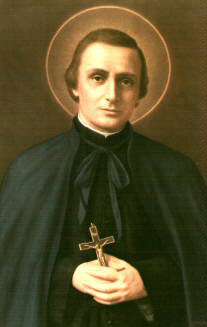 St. Peter Chanel: Saint of the Day for Sunday, April 28, 2024
 Prayer before a Crucifix: Prayer of the Day for Sunday, April 28, 2024


Copyright 2024 Catholic Online. All materials contained on this site, whether written, audible or visual are the exclusive property of Catholic Online and are protected under U.S. and International copyright laws, © Copyright 2024 Catholic Online. Any unauthorized use, without prior written consent of Catholic Online is strictly forbidden and prohibited.
Catholic Online is a Project of Your Catholic Voice Foundation, a Not-for-Profit Corporation. Your Catholic Voice Foundation has been granted a recognition of tax exemption under Section 501(c)(3) of the Internal Revenue Code. Federal Tax Identification Number: 81-0596847. Your gift is tax-deductible as allowed by law.
