We ask you, humbly: don't scroll away.
Hi readers, it seems you use Catholic Online a lot; that's great! It's a little awkward to ask, but we need your help. If you have already donated, we sincerely thank you. We're not salespeople, but we depend on donations averaging $14.76 and fewer than 1% of readers give. If you donate just $5.00, the price of your coffee, Catholic Online School could keep thriving. Thank you.Help Now >
Sacristan
FREE Catholic Classes
An officer who is charged with the care of the sacristy, the church, and their contents. In ancient times many duties of the sacristan were performed by the doorkeepers ( ostiarii ), later by the mansionarii and the treasurers. The Decretals of Gregory IX (lib. I, tit. xxvi, "De officio sacristæ speak of the sacristan as if he had an honourable office attached to a certain benefice, and say that his duty was to care for the sacred vessels, vestments, lights, etc. Nowadays the sacristan is elected or appointed. The "Cæremoniale episcoporum" prescribed that in cathedral and collegiate churches the sacristan should be a priest, and describes his duties in regard to the sacristy, the Blessed Eucharist, the baptismal font, the holy oils, the sacred relics, the decoration of the church for the different seasons and feasts, the preparation of what is necessary for the various ceremonies, the pregustation in pontifical Mass, the ringing of the church bells, the preservation of order in the church, and the distribution of Masses; and finally it suggests that one or two canons be appointed each year to supervise the work of the sacristan and his assistants.
The under-sacristan ( custos ) is also mentioned in the Decretals (lib. I, tit. xxvii, "De officio custodis"). He was the assistant of the sacristan, was subject to the archdeacon, and discharged duties very similar to those of the sacristan. Now the office is hardly ever attached to a benefice, but is usually a salaried position. The Council of Trent desired that, according to the old canons, clerics should hold such offices; but in most churches, on account of the difficulty or impossibility of obtaining clerics, laymen perform many of the duties of the sacristan and under-sacristan.
Altar Societies
There are altar societies in connection with most parish churches. The duties of members vary according to circumstances, in some instances including those which ordinarily fall within the sacristan's province, such as the vestments and altar vessels, making ready for the priest's Mass, and so on, but as a general thing they consist of the payment of yearly dues into a fund for the maintenance and repair of the accessories used in the ceremonies of the Church and usually also of a certain amount of labor for this purpose. Altar societies differ from tabernacle societies in that their work is for the benefit of the church to which they are attached. (See TABERNACLE SOCIETIES).
The Sodality of St. John Berchmans , known as the Pious Association of Servers of Mass and Sacristans, was founded by Vincent Basile, S.J., missionary Apostolic among the southern Slavs, for lay acolytes, choir boys, sacristans, and all who have any duty to perform in the services of the Church. Its object is to induce all its members to perform their duties piously and in a manner befitting the ceremonies in which they participate, for the glory of God and the edification of the faithful. The rules compiled by Father Basile bind the members to absolute silence in church, devout genuflexion when passing before the Blessed Sacrament, and the clear pronunciation of the words of the liturgical prayers. This same circumspection is expected to characterize their conduct even in the sacristy, and they are required to attend monthly meeting and to receive Holy Communion at least once a month. The director should be either the pastor or a priest appointed by him. Although it is not a confraternity properly so-called, this sodality was approved by Pope Pius IX, 21 Sept., 1865, and indulgences were accorded to its members, subject to the usual conditions.

We ask you, humbly: don't scroll away.
Hi readers, it seems you use Catholic Online a lot; that's great! It's a little awkward to ask, but we need your help. If you have already donated, we sincerely thank you. We're not salespeople, but we depend on donations averaging $14.76 and fewer than 1% of readers give. If you donate just $5.00, the price of your coffee, Catholic Online School could keep thriving. Thank you.Help Now >
Join the Movement
When you sign up below, you don't just join an email list - you're joining an entire movement for Free world class Catholic education.


-

-
Mysteries of the Rosary
-
St. Faustina Kowalska
-
Litany of the Blessed Virgin Mary
-
Saint of the Day for Wednesday, Oct 4th, 2023
-
Popular Saints
-
St. Francis of Assisi
-
Bible
-
Female / Women Saints
-
7 Morning Prayers you need to get your day started with God
-
Litany of the Blessed Virgin Mary


Sacrifices of Faith: The Pro-Life Legacies of St. Gianna and Jessica Hanna
-
How to love God by caring for our bodies
-
Pope Francis calls for negotiations to End Russia-Ukraine War
-
Pope Francis Contemplates Return to U.S. for United Nations Assembly Address
-
Pope Francis Calls on Faithful to Embrace Faith, Hope, and Charity in New Teaching Series


Daily Catholic
- Daily Readings for Sunday, April 28, 2024
- St. Peter Chanel: Saint of the Day for Sunday, April 28, 2024
- Prayer before a Crucifix: Prayer of the Day for Sunday, April 28, 2024
- Daily Readings for Saturday, April 27, 2024
- St. Zita: Saint of the Day for Saturday, April 27, 2024
- Prayer for the Dead # 2: Prayer of the Day for Saturday, April 27, 2024
 Daily Readings for Sunday, April 28, 2024
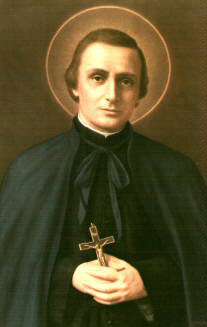 St. Peter Chanel: Saint of the Day for Sunday, April 28, 2024
 Prayer before a Crucifix: Prayer of the Day for Sunday, April 28, 2024



Copyright 2024 Catholic Online. All materials contained on this site, whether written, audible or visual are the exclusive property of Catholic Online and are protected under U.S. and International copyright laws, © Copyright 2024 Catholic Online. Any unauthorized use, without prior written consent of Catholic Online is strictly forbidden and prohibited.
Catholic Online is a Project of Your Catholic Voice Foundation, a Not-for-Profit Corporation. Your Catholic Voice Foundation has been granted a recognition of tax exemption under Section 501(c)(3) of the Internal Revenue Code. Federal Tax Identification Number: 81-0596847. Your gift is tax-deductible as allowed by law.