We ask you, urgently: don't scroll past this
Dear readers, Catholic Online was de-platformed by Shopify for our pro-life beliefs. They shut down our Catholic Online, Catholic Online School, Prayer Candles, and Catholic Online Learning Resources essential faith tools serving over 1.4 million students and millions of families worldwide. Our founders, now in their 70's, just gave their entire life savings to protect this mission. But fewer than 2% of readers donate. If everyone gave just $5, the cost of a coffee, we could rebuild stronger and keep Catholic education free for all. Stand with us in faith. Thank you.Help Now >
Fatima: Pope to Bishops, Calls for New Missionary Vigor, Affirms Ecclesial Movements
FREE Catholic Classes
'I confess to you the pleasant surprise that I had in making contact with the movements and the new ecclesial communities. Watching them, I had the joy and the grace to see how, at a moment of weariness in the Church, at a time when we were hearing about "the winter of the Church", the Holy Spirit was creating a new springtime.'
Highlights
Catholic Online (https://www.catholic.org)
5/13/2010 (1 decade ago)
Published in Vocations
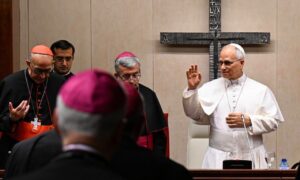
FATIMA, Portugal (Catholic Online) - At the end of a day filled with extraordinary graces and deeply inspired homilies and addresses, Pope Benedict XVI met with the Bishops of Portugal in the Conference Hall of the "Casa Nossa Senhora do Carmo". Here are the words which this Servant of the servants of God shared with his brother Bishops. They demonstrate his pastoral heart and his evangelical committment to leading the whole Church into a new missionary age. They also reveal a Pope whose energy continues to amaze observers. We particularly call our readers attention to his strong emphasis and endorsement of the New Ecclesial Movements as a resource for the task of the New Evangelization. Pope Benedict XVI, as a Cardinal, wrote extensively about these movements. He was an advocate for their place in the heart of the Church. As Pope, he has continued to propose to his brother Bishops that they are a resource which must be welcomed, properly pastored and enlisted in the task ahead in the Third Christian Millennium. We regularly feature the ecclesial movements on Catholic Online. We will continue to do so as we progress toward the feast of Pentecost.They are a work of the Holy Spirit for our time. The Pope recounted his first encounters with these ecclesial movements in these words " ...at a moment of weariness in the Church, at a time when we were hearing about "the winter of the Church", the Holy Spirit was creating a new springtime." Let us join with the Pope and pray for that new Springtime. ********** Pope Benedict XVI Addresses the Bishops of Portugal
Dear Brother Bishops, I thank God for giving me this occasion to meet all of you here at the Shrine of Fatima, the spiritual heart of Portugal, where multitudes of pilgrims from all over the world come looking to discover or to reinforce their certainty in the truths of Heaven. Among them has come from Rome the Successor of Peter, accepting the oft-repeated invitations and moved by a debt of gratitude to the Virgin Mary, who herself transmitted to her seers and pilgrims an intense love for the Holy Father which has borne fruit in a great multitude which prays, with Jesus as its guide: Peter, "I have prayed for you, that your faith may not fail; and when you have turned again, strengthen your brethren" (Lk 22:32). As you see, the Pope needs to open himself ever more fully to the mystery of the Cross, embracing it as the one hope and the supreme way to gain and to gather in the Crucified One all his brothers and sisters in humanity. Obeying the word of God, he is called to live not for himself but for the presence of God in the world. I am comforted by the determination with which you too follow me closely, fearing nothing except the loss of eternal salvation for your people, as was clearly expressed in the words of greeting spoken by Archbishop Jorge Ortiga upon my arrival in your midst, and which testify to the unconditional fidelity of the Bishops of Portugal to the Successor of Peter. From my heart I thank you. I thank you as well for all the attention that you have given to organizing my Visit. May God reward you, and pour out the Holy Spirit in abundance upon you and your Dioceses so that, with one heart and with one soul, you may bring to completion the pastoral work which you have begun, that is, offering each member of the faithful an exacting and attractive Christian initiation, one which communicates the integrity of the faith and genuine spirituality, rooted in the Gospel, and capable of forming free and generous labourers in the midst of public life. In truth, the times in which we live demand a new missionary vigour on the part of Christians, who are called to form a mature laity, identified with the Church and sensitive to the complex transformations taking place in our world. Authentic witnesses to Jesus Christ are needed, above all in those human situations where the silence of the faith is most widely and deeply felt: among politicians, intellectuals, communications professionals who profess and who promote a monocultural ideal, with disdain for the religious and contemplative dimension of life. In such circles are found some believers who are ashamed of their beliefs and who even give a helping hand to this type of secularism, which builds barriers before Christian inspiration. And yet, dear brothers, may all those who defend the faith in these situations, with courage, with a vigorous Catholic outlook and in fidelity to the magisterium, continue to receive your help and your insightful encouragement in order to live out, as faithful lay men and women, their Christian freedom. You maintain a strong prophetic dimension, without allowing yourselves to be silenced, in the present social context, for "the word of God is not fettered" (2 Tim 2:9). People cry out for the Good News of Jesus Christ, which gives meaning to their lives and protects their dignity. In your role as first evangelizers, it will be useful for you to know and to understand the diverse social and cultural factors, to evaluate their spiritual deficiencies and to utilize effectively your pastoral resources; what is decisive, however, is the ability to inculcate in all those engaged in the work of evangelization a true desire for holiness, in the awareness that the results derive above all from our union with Christ and the working of the Holy Spirit. In fact, when, in the view of many people, the Catholic faith is no longer the common patrimony of society and, often, seen as seed threatened and obscured by the "gods" and masters of this world, only with great difficulty can the faith touch the hearts of people by means of simple speeches or moral appeals, and even less by a general appeal to Christian values. The courageous and integral appeal to principles is essential and indispensable; yet simply proclaiming the message does not penetrate to the depths of people's hearts, it does not touch their freedom, it does not change their lives. What attracts is, above all, the encounter with believing persons who, through their faith, draw others to the grace of Christ by bearing witness to him. The words of Pope John Paul II come to mind: "The Church needs above all great currents, movements and witnesses of holiness among the 'Christifideles' because it is from holiness that is born every authentic renewal of the Church, all intelligent enrichment of the faith and of the Christian life, the vital and fecund reactualization of Christianity with the needs of man, a renewed form of presence in the heart of human existence and of the culture of nations (Address for the XX Anniversary of the Promulgation of the Conciliar Decree "Apostolicam Actuositatem", 18 November 1985). One could say, "the Church has need of these great currents, movements and witnesses of holiness..., but there are none!" In this regard, I confess to you the pleasant surprise that I had in making contact with the movements and the new ecclesial communities. Watching them, I had the joy and the grace to see how, at a moment of weariness in the Church, at a time when we were hearing about "the winter of the Church", the Holy Spirit was creating a new springtime, awakening in young people and adults alike the joy of being Christian, of living in the Church, which is the living Body of Christ. Thanks to their charisms, the radicality of the Gospel, the objective contents of the faith, the living flow of her tradition, are all being communicated in a persuasive way and welcomed as a personal experience, as adherence in freedom to the present event of Christ. The necessary condition, naturally, is that these new realities desire to live in the one Church, albeit with spaces in some way set aside for their own life, in such a way that this life becomes fruitful for all the others. The bearers of a particular charism must feel themselves fundamentally responsible for communion, for the common faith of the Church, and submit themselves to the leadership of their Bishops. It is they who must ensure the ecclesial nature of the movements. Bishops are not only those who hold an office, but those who themselves are bearers of charisms, and responsible for the openness of the Church to the working of the Holy Spirit. We, Bishops, in the sacrament of Holy Orders, are anointed by the Holy Spirit and thus the sacrament ensures that we too are open to his gifts. Thus, on the one hand, we must feel responsibility for welcoming these impulses which are gifts for the Church and which give her new vitality, but, on the other hand, we must also help the movements to find the right way, making some corrections with understanding - with the spiritual and human understanding that is able to combine guidance, gratitude and a certain openness and a willingness to learn. This is precisely what you must foster or confirm in your priests. In this Year for Priests now drawing to a close, rediscover, dear brothers, the role of the Bishop as father, especially with regard to your priests. For all too long the responsibility of authority as a service aimed at the growth of others and in the first place of priests, has been given second place. Priests are called to serve, in their pastoral ministry, and to be part of a pastoral activity of communion or oneness, as the Conciliar Decree Presbyterorum Ordinis reminds us, "No priest is sufficiently equipped to carry out his mission alone and as it were single-handed. He can only do so by joining forces with other priests, under the leadership of those who govern the Church" (No. 7). This is not a matter of turning back to the past, nor of a simple return to our origins, but rather of a recovery of the fervour of the origins, of the joy of the initial Christian experience, and of walking beside Christ like the disciples of Emmaus on the day of Easter, allowing his word to warm our hearts and his "broken bread" to open our eyes to the contemplation of his face. Only in this way will the fire of charity blaze strongly enough to impel every Christian to become a source of light and life in the Church and among all men and women. Before concluding, I would like to ask you, in your role as leaders and ministers of charity in the Church, to rekindle, in yourselves as individuals and as a group, a sense of mercy and of compassion, in order to respond to grave social needs. New organizations must be established, and those already existing perfected, so that they can be capable of responding creatively to every form of poverty, including those experienced as a lack of the meaningfulness in life and the absence of hope. The efforts you are making to assist the Dioceses most in need, especially in Portuguese-speaking countries, is praiseworthy. May difficulties, which today are more deeply felt, not make you shrink from the logic of self-giving. Let there continue and flourish in this country, your witness as prophets of justice and peace, and defenders of the inalienable rights of the person. Join your voice to the voices of the least powerful, whom you have wisely helped to gain a voice of their own, without ever being afraid of raising your voice on behalf of the oppressed, the downtrodden and those who have been mistreated. I entrust all of you to Our Lady of Fatima, and I ask her to sustain you with her maternal care amid the challenges which you face, so that you will be promoters of a culture and a spirituality of charity, peace, hope and justice, faith and service. To you, to the members of your families and to your diocesan communities I cordially impart my Apostolic Blessing.
---
'Help Give every Student and Teacher FREE resources for a world-class Moral Catholic Education'
Copyright 2021 - Distributed by Catholic Online

Come Grow With Us
Sign up and walk the Catholic journey with millions around the world.
Receive inspiring emails on saints, daily readings, and free faith-building resources—no cost, ever.
Sister Sara Has One Message for Every Catholic Family This June
- Easter / Lent
- 5 Lenten Prayers
- Ash Wednesday
- 7 Morning Prayers
- Mysteries of the Rosary
- Litany of the Bl. Virgin Mary
- Popular Saints
- Popular Prayers
- Female Saints
- Saint Feast Days by Month
- Stations of the Cross
- St. Francis of Assisi
- St. Michael the Archangel
- The Apostles' Creed
- Unfailing Prayer to St. Anthony
- Pray the Rosary









Copyright 2026 Catholic Online. All materials contained on this site, whether written, audible or visual are the exclusive property of Catholic Online and are protected under U.S. and International copyright laws, © Copyright 2026 Catholic Online. Any unauthorized use, without prior written consent of Catholic Online is strictly forbidden and prohibited.
Catholic Online is a Project of Your Catholic Voice Foundation, a Not-for-Profit Corporation. Your Catholic Voice Foundation has been granted a recognition of tax exemption under Section 501(c)(3) of the Internal Revenue Code. Federal Tax Identification Number: 81-0596847. Your gift is tax-deductible as allowed by law.