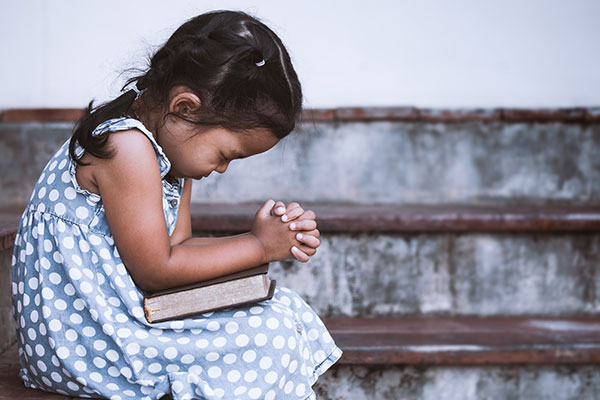
 Millions of people turn to Catholic Online for prayers, Daily Readings, saints, Catholic education and answers about their Faith. Most will never donate. But if Catholic Online has given you more than $5 worth of value this year, we're asking you to do something very simple: Give $5 today.
Your Catholic Voice Foundation also supports Catholic Online School, which has served 2.2 million student enrollments in 193 countries. We don't believe a family's ability to pay should determine whether a child can receive a Catholic education. If we've given you something of value, please give something back.
DONATE TODAY >>John Paul II for Dummies
FREE Catholic Classes
Subtitle: "The ABC's of JPII for me and you."
__________________________________________
(C) By Katrina J. Zeno
Have you ever picked up one of the pope's writings only to give up? Perhaps you've sludged through his difficult vocabulary for a time and chided yourself for not understanding better. Or maybe you haven't even attempted, knowing it was way beyond you. Well, take heart! John Paul II is difficult to understand not because you're dumb, but because you're normal. He's brilliant.
There are two other reasons why it's hard to understand the pope: First of all, he doesn't write in a linear fashion. Most articles and books proceed in a linear way: they have a beginning, middle, and end that progress in a straight line from thought to thought. But not the pope. The pope's writings are more spiral. He talks about something for awhile, goes away from it to talk about something else, and then comes back to his original thought, only on a deeper level. Instead of expecting the pope to always say something new, it helps to realize he often says the same thing, but only deeper.
Secondly, and this is the most obvious reason, the pope invents new vocabulary and terms such as the unity of the two, the nuptial meaning of the body, the feminine genius, and original solitude. Why isn't the pope content with using traditional vocabulary? Because he's an innovative thinker - he goes where no man has gone before. As a result, he creates new language to speak about new concepts and a new vision of the human person. And that's the purpose of this article: to provide a primer on the pope, to explain the ABC's of the pope's language.
___________________________________________________
A = ALL
___________________________________________________
A - it ALL begins with "gift." God created the world as gift. He created man and woman as gift. We are called to become gift. Why? Because God is Gift. The inner life of God is self-donating love: The Father pours himself out in Gift to the Son, the Son pours himself out in Gift to the Father, and the Holy Spirit bursts forth from their mutual, self-donating love. If we can get this image of the Trinity inscribed in our minds, then it can be our translator every time we encounter the word "gift."
And believe me, this word is everywhere. In fact, the pope's favorite passage from all of Vatican II contains the word "gift": "Man, who is the only creature on earth which God willed for himself, cannot fully find himself except through a sincere gift of self." (Gadium et Spes, No. 24). If John Paul II hadn't been elected pope, this passage might have receded into oblivion. Instead, the pope incorporates this passage into almost every document with the hope that it will eventually find its way into every day Catholic conversation.
But how are we to understand this phrase, "sincere gift of self"? By going back to the Trinity and using it as our translator. We are called to make a sincere gift of self in the same way as the Father and Son - in a way that is total, complete, holds nothing back, and bursts forth in fruitfulness. We can also see this gift of self on the cross for there Jesus' eternal gift of self to the Father is made visible for our eyes to see. His offering of self on the cross is total, complete, holds nothing back, and bursts forth in spiritual fruitfulness. This is the gift of self we are called to imitate.
While the holy father is quite fond of the phrase "sincere gift of self," frequently he uses his short-hand version: gift. When speaking about the way we mirror God's image in the world, he says: "To say that man is created in the image and likeness of God means that man is created to exist 'for' others, to become a gift." (On the Dignity and Vocation of Women, No. 7) When he describes a woman's vocation to motherhood, he says: "Motherhood is linked to the personal structure of the woman and the personal dimension of the gift." (On the Dignity and Vocation of Women, No. 18) And when he describes Adam and Eve's motivation for disobeying God he says: "This motivation clearly includes questioning the gift and the love from which creation has its origin as donation." (Blessed Are the Pure in Heart, General Audience of April 30, 1980) In other words, Adam and Eve questioned what was in the Father's heart, whether the Father's interior life was truly one of total self donation or whether he was motivated by the desire to withhold something good from them.
"Gift," then, for the pope, is his master key. If we understand it, we can unlock John Paul II's vision of the human person and access one of the greatest treasures of modern history.
___________________________________________________
B = Body
___________________________________________________
While ALL of John Paul II's thinking begins with gift, this gift is expressed through the BODY. In our culture, the body is either idolized or ignored, but the pope wants neither. For John Paul II, the body is sacramental - it's a visible expression of an invisible reality. Just as we would never dream of saying, "Let's do away with the bread and wine so that we can receive Jesus directly," so we can never say, "Let's do away with the body so we can image God directly." It doesn't work that way.
Here's how the pope says it: "The body and it alone is capable of making visible what is invisible: the spiritual and the divine. It was created to transfer into the visible reality of the world the mystery hidden in God." (Original Unity of Man and Woman, General Audience of Feb. 20, 1980)
What is this mystery hidden in God, the mystery that we can't see? It's the self-giving love of the Trinity. We can't see the Father loving the Son or vice-versa, nor can we see the Holy Spirit bursting forth as their mutual love. So then how does the human body make God's self-giving love visible in the world? It makes it visible by being created as male and female.
For the pope, gender is not accidental. Neither is it merely cultural. God didn't create the body as an embarrassing afterthought to cover the soul. No, gender and body are purposeful. They teach us about the mystery of God.
How? When Adam is created, he finds himself alone. He can't make a gift of self to a cheetah, lady bug, or anteater in a way that fulfills the meaning of his existence. So God creates Eve from Adam's side.
Why is this important to the pope? Because it shows that there is a deep and original unity between male and female. By describing woman as made from the side of Adam, Genesis is showing us, not telling us, that male and female are from the same nature, from the same body. Men are not from Mars and women are not from Venus. They share the same humanity.
For the pope, this establishes the absolute equality of men and women. We are equal because we share the same nature. However, equality does not mean sameness. Instead, this one nature takes on flesh in two ways, as male and female. The pope has a poetic way of describing this moment of unity and distinction: "The man ('adam') falls into that 'sleep' in order to wake up 'male' and 'female.'" (Original Unity of man and Woman, General Audience of Nov. 7, 1979)
Now things get exciting! Since this one nature is em-bodied in two ways, a new possibility exists - the possibility of union and communion. This is precisely what the next verse tells us: "Therefore a man shall leave his father and mother and cling to his wife and the two shall become one flesh." (Gen 2:24) The body is made for union! It has a nuptial meaning! The body is not just a miscellaneous collection of atoms and molecules that provide digestion, a pumping heart, and the mechanics for Tiger Woods to shoot 10 under par. The body is made for union, and not just genital union, but personal union.
This brings us to one of the pope's most original and oft-repeated terms: the nuptial meaning of the body. What's the translation of that phrase? The body is made for union. The body is made for a sincere gift of self. Here's the way I've committed it to memory. "We're made from one nature, embodied in two ways, for the purpose of union through a sincere gift of self." The human person isn't created just to be a doctor, lawyer, or pro football player, but to live a nuptial life, a life of union.
If ALL of John Paul II's thought begins with gift, and that gift is expressed humanly through the BODY, then what is the purpose of that gift?
___________________________________________________
The answer is "C" - COMMUNION.
___________________________________________________
The gift of self through the body is always directed toward union and communion with God, others, and even creation. This is the way it was in the beginning, before original sin, and the way it should be for us. The pope says: The complete and definitive creation of "man" is expressed in giving life to that communio personarum (communion of persons) that man and woman form. (Original Unity of Man and Woman, Nov. 14, 1979) In other words, we image God not so much when we are alone, but when we are in communion.
While these words may seem self-evident, we shouldn't fly by them too quickly. We live in an individualistic society. The Olympic measuring rod for personhood is self-sufficiency and self-reliant. We win the gold and everyone else's applause if we can do it on our own.
That's not the pope's mindset, nor the Christian one. The radical new revelation about God in the New Testament was that God was no longer just one (a solitude) but three - a Trinity. God is a communion of persons. He is one nature, three persons. We, as human beings, are no longer just one ('adam'), but two. We are one nature, two genders (male and female), and so we can live a communion of persons in imitation of the Trinity.
What does this communion of persons look like? It is the mutual gift of self. The pope writes: The communion of persons means existing in a mutual for, in a relationship of mutual gift. (Original Unity of Man and Woman, General Audience of Jan. 9, 1980). In fact, the pope says, we can't discover our humanity on our own. The reason adam needed a helper wasn't to clean and cook and do his laundry. It was to help him discover his own humanity, to be a sincere gift of self to him so that he would discover his own capacity for making a sincere gift of self to God and others.
We all need a 'helper' we all need someone to help us discover the nuptial meaning of our body. This can either be a parent, sibling, friend, or spouse who makes a gift of self to us while at the same time accepting and affirming us as a unique person. When this affirmation, acceptance, and gift of self goes both ways (i.e., is reciprocal), a communion of persons is established.
Note that the pope doesn't say that marriage, sexual intercourse, or romance creates the communion of persons. It is the reciprocal giving and acceptance of each other as gift. This communion of persons is always nuptial (for the purpose of union) but this is different from being sexual. Obviously, marriage is designed by God to be a communion of persons but so is the family, the neighborhood, the work place, and especially the Church. In each of these contexts, we make a sincere gift of self so that others can discover their own capacity to make a sincere gift of self to God and others.
___________________________________________________
The ABCs Applied
___________________________________________________
Now that we understand the pope's ABCs, we can create a brief glossary of terms to better understand his language. You might want to print it out, keep it by your bookshelf or night stand, and use it to remind you to make a more complete gift of self to God and others.
* Communio personarum = the communion of persons brought about through mutual self-giving.
* Eschatological vocation = the ultimate purpose of our lives, which is to be united to God, body and soul, in a complete and total gift of self for eternity.
* Feminine genius (or genius of woman) = the way a woman makes a feminine gift of self in all her fullness and originality as God intended her to be from the beginning.
* In the beginning = God's design before original sin.
* Nuptial meaning of the body = the body is made for union through a sincere gift of self.
* Original solitude = adam's initial experience of being alone based on the fact that he is different from the rest of creation.
* Original nakedness/innocence = Adam and Eve were naked and knew no shame because when they looked at each other's bodies, they saw the nuptial meaning of the body (i.e., that the body was created to make a sincere gift of self for the purpose of union).
* Original unity of man and woman (or "unity of the two") = male and female share a profound unity because they share the same nature, they are made from the same body.
* Self-donation = another way of saying sincere gift of self.
* Spiritual motherhood = nurturing the emotional, moral, cultural, and spiritual life of another.
* Theology of the body = the human body reveals God.
* whole/full/complete = the pope's shorthand way of evoking the full spectrum of reality, including both the visible and invisible, and Jesus Christ as the meaning, source, and redeemer of all history (i.e., "the full meaning of human life, the complete truth about the value of human life, the whole truth about man and the world¨).
___________________________________________________
Katrina J. Zeno, a freelance writer and speaker on topics such as the nature of men and women, singles and romance, the culture of life, the new feminism, prayer, and parenting, is also co-foundress of Women of the Third Millennium, an organization that promotes the dignity and vocation of women through one-day retreats.(http://www.wttm.org) Her articles and interviews have appeared numerous periodicals, including Our Sunday Visitor, New Covenant magazine, Catholic Parent, and Franciscan Way, and she has spoken in the U.S., Canada, England, and Trinidad. She is now a contributing writer for Catholic Online 'Featured Today' and "Your Catholic Voice" Magazine.
Contact
Women of the Third Millennium
http://www.wttm.org
VA, US
Katrina J. Zeno - Foundress, 757 546-9580
tangohio@aol.com
Keywords
Pope John Paul II

More Catholic PRWire
Showing 1 - 50 of 4,716
A Recession Antidote
Randy Hain
Monaco & The Vatican: Monaco's Grace Kelly Exhibit to Rome--A Review of Monegasque-Holy See Diplomatic History
Dna. Maria St. Catherine Sharpe, t.o.s.m., T.O.SS.T.
The Why of Jesus' Death: A Pauline Perspective
Jerom Paul
A Royal Betrayal: Catholic Monaco Liberalizes Abortion
Dna. Maria St.Catherine De Grace Sharpe, t.o.s.m., T.O.SS.T.
Embrace every moment as sacred time
Mary Regina Morrell
My Dad
JoMarie Grinkiewicz
Letting go is simple wisdom with divine potential
Mary Regina Morrell
Father Lombardi's Address on Catholic Media
Catholic Online
Pope's Words to Pontifical Latin American College
Catholic Online
Prelate: Genetics Needs a Conscience
Catholic Online
State Aid for Catholic Schools: Help or Hindrance?
Catholic Online
Scorsese Planning Movie on Japanese Martyrs
Catholic Online
2 Nuns Kidnapped in Kenya Set Free
Catholic Online
Holy See-Israel Negotiation Moves Forward
Catholic Online
Franchising to Evangelize
Catholic Online
Catholics Decry Anti-Christianity in Israel
Catholic Online
Pope and Gordon Brown Meet About Development Aid
Catholic Online
Pontiff Backs Latin America's Continental Mission
Catholic Online
Cardinal Warns Against Anti-Catholic Education
Catholic Online
Full Circle
Robert Gieb
Three words to a deeper faith
Paul Sposite
Relections for Lent 2009
chris anthony
Wisdom lies beyond the surface of life
Mary Regina Morrell
World Food Program Director on Lent
Catholic Online
Moral Clarity
DAN SHEA
Pope's Lenten Message for 2009
Catholic Online
A Prayer for Monaco: Remembering the Faith Legacy of Prince Rainier III & Princess Grace and Contemplating the Moral Challenges of Prince Albert II
Dna. Maria St. Catherine Sharpe
Keeping a Lid on Permissiveness
Sally Connolly
Glimpse of Me
Sarah Reinhard
The 3 stages of life
Michele Szekely
Sex and the Married Woman
Cheryl Dickow
A Catholic Woman Returns to the Church
Cheryl Dickow
Modernity & Morality
Dan Shea
Just a Minute
Sarah Reinhard
Catholic identity ... triumphant reemergence!
Hugh McNichol
Edging God Out
Paul Sposite
Burying a St. Joseph Statue
Cheryl Dickow
George Bush Speaks on Papal Visit
Catholic Online
Sometimes moving forward means moving the canoe
Mary Regina Morrell
Action Changes Things: Teaching our Kids about Community Service
Lisa Hendey

Easter... A Way of Life
Paul Spoisite
Papal initiative...peace and harmony!
Hugh McNichol
Proclaim the mysteries of the Resurrection!
Hugh McNichol
Jerusalem Patriarch's Easter Message
Catholic Online
Good Friday Sermon of Father Cantalamessa
Catholic Online
Papal Address at the End of the Way of the Cross
Catholic Online
Cardinal Zen's Meditations for Via Crucis
Catholic Online
Interview With Vatican Aide on Jewish-Catholic Relations
Catholic Online
Pope Benedict XVI On the Easter Triduum
Catholic Online
Holy Saturday...anticipation!
Hugh McNichol

Come Grow With Us
Sign up and walk the Catholic journey with millions around the world.
Receive inspiring emails on saints, daily readings, and free faith-building resources—no cost, ever.
Catholic Online Is Free. But We Need Your Help.
Please Watch
- 7 Morning Prayers
- Mysteries of the Rosary
- Litany of the Bl. Virgin Mary
- Popular Saints
- Popular Prayers
- Female Saints
- Saint Feast Days by Month
- Stations of the Cross
- St. Francis of Assisi
- St. Michael the Archangel
- The Apostles' Creed
- Unfailing Prayer to St. Anthony
- Pray the Rosary






Copyright 2026 Catholic Online. All materials contained on this site, whether written, audible or visual are the exclusive property of Catholic Online and are protected under U.S. and International copyright laws, © Copyright 2026 Catholic Online. Any unauthorized use, without prior written consent of Catholic Online is strictly forbidden and prohibited.
Catholic Online is a Project of Your Catholic Voice Foundation, a Not-for-Profit Corporation. Your Catholic Voice Foundation has been granted a recognition of tax exemption under Section 501(c)(3) of the Internal Revenue Code. Federal Tax Identification Number: 81-0596847. Your gift is tax-deductible as allowed by law.
