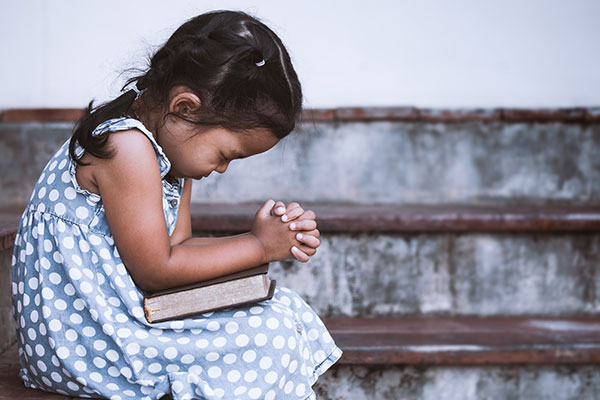
 Dear readers, Catholic Online was de-platformed by Shopify for our pro-life beliefs. They shut down our Catholic Online, Catholic Online School, Prayer Candles, and Catholic Online Learning Resources essential faith tools serving over 2.2 million students and millions of families worldwide. Our founders, now in their 70's, just gave their entire life savings to protect this mission. But fewer than 2% of readers donate. If everyone gave just $5, the cost of a coffee, we could rebuild stronger and keep Catholic education free for all. Stand with us in faith. Thank you. DONATE TODAY >
Theology and the Genius of Women
FREE Catholic Classes
Interview With Professor Josep-Ignasi Saranyana
PAMPLONA, Spain, OCT. 01, 2005 (Zenit) - Benedict XVI this week pointed out to some visiting bishops that a contradiction often exists between the theoretical exaltation of woman's "genius" and the discrimination they face in daily life.
Father Josep-Ignasi Saranyana, director of the Institute of Church History of the University of Navarre, in Spain, explained to us that many differences about the idea of woman also exist in theological currents.
The priest is the author of "TeologĂa de la Mujer, TeologĂa Feminista, TeologĂa Mujerista y Ecofeminismo en AmĂ©rica Latina (1975-2000)" (Theology of Woman, Feminist Theology, "Mujerista" Theology and Ecofeminism in Latin America [1975-2000]), published in Costa Rica by Promesa.
Q: How is feminist theology distinguished from the theology of woman?
Father Saranyana: I understand that the theology of woman is built "from above," from Revelation. It corresponds above all to the great tradition of the Church.
Feminist theology, on the contrary, comes "from below." It does not skirt Revelation, but considers it a secondary theological element. It is, rather, a religious sociology, if not a pure psychological analysis of feminine experiences and feelings.
It is interesting, but it isn't theology in the pure sense. Often, moreover, it has a vindicating and controversial character.
Q: There are Catholic feminists who move within the tradition. Why not call them feminist theologians instead of theologians of woman?
Father Saranyana: The adjectives are essential. There are two ways of thinking of woman: One is more proper of the new humanities, the other is more theological. The names may be changed, but the two disciplines must be distinguished with different syntagmata.
Q: What, in fact, is ecofeminism?
Father Saranyana: In a certain sense, it is a return to primitive forms of the religious phenomenon.
It considers that the earth, understood as the feminine, is the origin, or "mother," of everything. God, who would be the culturally masculine, is stripped of his creator character.
It claims a certain dualism that reminds one of forms of primitive gnosticism. At times, it even tends toward a telluric monism. To my mind, it implies a subversion of the genuine religious sentiment.
Q: What do you think of that analogy, established by ecofeminism, between the exploitation of nature and the exploitations suffered by woman?
Father Saranyana: Ecofeminism is such an exaggerated radicalization of feminist theology, that it has little of theology in the proper sense of the term.
It goes beyond not only dialectical speculation on gender -- feminist theology -- but also the consideration of gender understood as mere social product -- "mujerista" [womanly] theology. Obviously, it is in the antithesis of what I have called the theology of woman.
Q: Is the Holy See interested in these ecofeminist currents?
Father Saranyana: Please understand that it is very difficult to dialogue with such radical proposals, because there is hardly a common platform for understanding. Don't forget, however, that the Pontifical Council for Culture and the Pontifical Council for Interreligious Dialogue have studied some proposals of ecofeminism, in a document of 2003, entitled "Jesus Christ Bearer of Living Water."
The ecofeminists would have to be asked if they accept the absolute transcendence of God above all creation and, in consequence, if they admit that God is creator.
Q: Doctrinal controversies aside, what can the Church do to ease the marginalization of woman, denounced by feminists, even the most moderate?
Father Saranyana: Already the Book of Genesis, with divine wisdom, prophesied as punishment of original sin, a sexist dialectic, which would lead to the violent subjection of woman by man. It is undeniable that woman has been marginalized even in cultures of Christian inspiration.
The Church has been energetic in revising that situation, preaching the commandment of fraternal love.
Little by little, without causing major confrontations, it has brought about the abolition of slavery, been influential in the eradication of torture, softened the laws of war, modified labor relations and greatly improved the feminine condition.
Q: Yet many feminists complain that the Church does not promote woman, because it excludes woman from the ecclesiastical hierarchy.
Father Saranyana: Marxism's shadow is very long. Although the Iron Curtain has fallen, many dialectical approaches are still around. Because of this, it is difficult for some to understand that the Church harmonizes functional inequality with essential equality.
To recall this does not imply a return to the pre-modern estate society. It implies a deepening in the divine mystery of the Church.
The Church was founded by Christ. Her spousal condition is essential, as Revelation teaches: "Dressed as a bride adorned for her husband." The Pauline tradition also repeats it. Christ is the bridegroom of the Church, because he makes her fruitful with his blood.
Consequently, those who participate sacramentally in a privileged way in Christ's priesthood must be men. They are the sacramental continuity of that priesthood and, for the same reason, are also bridegrooms of the Church.
Q: One of the concerns of feminist theology is the image of God and the imprint of that image in each human person.
Father Saranyana: God is, in fact, the exemplar of all that exists. Every woman is the image of God, because she is woman; every man is the image of God, because he is man; every angel is also the image of God, because he is a pure spirit.
God is above the sexual condition. He is the cause, through creation, of the sexual differentiation itself. That is why he is neither man nor woman nor angel. The International Theological Commission spoke about all this last year.
Q: Yet religious language is "exclusive" with regard to the feminine gender. It says that God is Father. Do you think this might change?
Father Saranyana: That topic goes beyond the analytical possibilities of theology. I do not know if there is a language in which the feminine is inclusive and the masculine exclusive. It is obvious that such a possibility is not absurd.
However, at least in the Western world, languages have evolved so that ordinarily plurals are masculine when it is a question of a group of individuals of different gender, except in a few cases, as the well-known "Mensch" in German.
It could have been otherwise, but one must keep to what is, under the pain of "babelizing" ourselves. An artificial design of new ways of inclusive expression might complicate human communication infinitely, including theological communication.
Q: Pope John Paul II coined the term "feminine genius." Do you think Benedict XVI will make some further contribution in this connection?
Father Saranyana: I take the liberty to recommend the reading of a little-known important document, the letter of May 31, 2004, signed by Cardinal Ratzinger, addressed to the bishops of the Catholic Church, on the collaboration of man and woman in the Church and in the world.
It is a document that offers clues on hypothetical gestures of the magisterium in the forthcoming years. One must not forget, of course, "Mulieris Dignitatem," 1988, or the "Letter to Women," 1995.
Contact
Catholic Online
https://www.catholic.org
CA, US
Catholic Online - Publisher, 661 869-1000
info@yourcatholicvoice.org
Keywords
Women, Genius, Life, Men, Saranyana

More Catholic PRWire
Showing 1 - 50 of 4,716
A Recession Antidote
Randy Hain
Monaco & The Vatican: Monaco's Grace Kelly Exhibit to Rome--A Review of Monegasque-Holy See Diplomatic History
Dna. Maria St. Catherine Sharpe, t.o.s.m., T.O.SS.T.
The Why of Jesus' Death: A Pauline Perspective
Jerom Paul
A Royal Betrayal: Catholic Monaco Liberalizes Abortion
Dna. Maria St.Catherine De Grace Sharpe, t.o.s.m., T.O.SS.T.
Embrace every moment as sacred time
Mary Regina Morrell
My Dad
JoMarie Grinkiewicz
Letting go is simple wisdom with divine potential
Mary Regina Morrell
Father Lombardi's Address on Catholic Media
Catholic Online
Pope's Words to Pontifical Latin American College
Catholic Online
Prelate: Genetics Needs a Conscience
Catholic Online
State Aid for Catholic Schools: Help or Hindrance?
Catholic Online
Scorsese Planning Movie on Japanese Martyrs
Catholic Online
2 Nuns Kidnapped in Kenya Set Free
Catholic Online
Holy See-Israel Negotiation Moves Forward
Catholic Online
Franchising to Evangelize
Catholic Online
Catholics Decry Anti-Christianity in Israel
Catholic Online
Pope and Gordon Brown Meet About Development Aid
Catholic Online
Pontiff Backs Latin America's Continental Mission
Catholic Online
Cardinal Warns Against Anti-Catholic Education
Catholic Online
Full Circle
Robert Gieb

Three words to a deeper faith
Paul Sposite
Relections for Lent 2009
chris anthony
Wisdom lies beyond the surface of life
Mary Regina Morrell
World Food Program Director on Lent
Catholic Online
Moral Clarity
DAN SHEA
Pope's Lenten Message for 2009
Catholic Online
A Prayer for Monaco: Remembering the Faith Legacy of Prince Rainier III & Princess Grace and Contemplating the Moral Challenges of Prince Albert II
Dna. Maria St. Catherine Sharpe
Keeping a Lid on Permissiveness
Sally Connolly
Glimpse of Me
Sarah Reinhard
The 3 stages of life
Michele Szekely
Sex and the Married Woman
Cheryl Dickow
A Catholic Woman Returns to the Church
Cheryl Dickow
Modernity & Morality
Dan Shea
Just a Minute
Sarah Reinhard
Catholic identity ... triumphant reemergence!
Hugh McNichol
Edging God Out
Paul Sposite
Burying a St. Joseph Statue
Cheryl Dickow
George Bush Speaks on Papal Visit
Catholic Online
Sometimes moving forward means moving the canoe
Mary Regina Morrell
Action Changes Things: Teaching our Kids about Community Service
Lisa Hendey
Easter... A Way of Life
Paul Spoisite
Papal initiative...peace and harmony!
Hugh McNichol
Proclaim the mysteries of the Resurrection!
Hugh McNichol
Jerusalem Patriarch's Easter Message
Catholic Online
Good Friday Sermon of Father Cantalamessa
Catholic Online
Papal Address at the End of the Way of the Cross
Catholic Online
Cardinal Zen's Meditations for Via Crucis
Catholic Online
Interview With Vatican Aide on Jewish-Catholic Relations
Catholic Online
Pope Benedict XVI On the Easter Triduum
Catholic Online
Holy Saturday...anticipation!
Hugh McNichol

Come Grow With Us
Sign up and walk the Catholic journey with millions around the world.
Receive inspiring emails on saints, daily readings, and free faith-building resources—no cost, ever.
Sister Sara Has One Message for Every Catholic Family This June
- 7 Morning Prayers
- Mysteries of the Rosary
- Litany of the Bl. Virgin Mary
- Popular Saints
- Popular Prayers
- Female Saints
- Saint Feast Days by Month
- Stations of the Cross
- St. Francis of Assisi
- St. Michael the Archangel
- The Apostles' Creed
- Unfailing Prayer to St. Anthony
- Pray the Rosary









Copyright 2026 Catholic Online. All materials contained on this site, whether written, audible or visual are the exclusive property of Catholic Online and are protected under U.S. and International copyright laws, © Copyright 2026 Catholic Online. Any unauthorized use, without prior written consent of Catholic Online is strictly forbidden and prohibited.
Catholic Online is a Project of Your Catholic Voice Foundation, a Not-for-Profit Corporation. Your Catholic Voice Foundation has been granted a recognition of tax exemption under Section 501(c)(3) of the Internal Revenue Code. Federal Tax Identification Number: 81-0596847. Your gift is tax-deductible as allowed by law.
