We ask you, humbly: don't scroll away.
Hi readers, it seems you use Catholic Online a lot; that's great! It's a little awkward to ask, but we need your help. If you have already donated, we sincerely thank you. We're not salespeople, but we depend on donations averaging $14.76 and fewer than 1% of readers give. If you donate just $5.00, the price of your coffee, Catholic Online School could keep thriving. Thank you.Help Now >
Rerum Novarum
FREE Catholic Classes
The opening words and the title of the Encyclical issued by Leo XIII, 15 May, 1891, on the "Condition of Labour". Although the Encyclical follows the lines of the traditional teaching concerning the rights and duties of property and the relations of employer and employee, it applies the old doctrines specifically to modern conditions. Opening with a description of the grievances of the working classes, it proceeds to refute the false theories of the Socialists, and to defend the right of private ownership. The true remedy, continues the pope, is to be found in the combined action of the Church, the State, the employer and the employed. The Church is properly interested in the social question because of its religious and moral aspects; the State has the right and the duty to intervene on behalf of justice and individual and social well-being; and employers and workers should organize into both mixed and separate associations for mutual protection and for self protection. All this is set forth with sufficient detail to reach the principal problems and relations of industrial and social life.
Probably no other pronouncement on the social question has had so many readers or exercised such a wide influence. It has inspired a vast Catholic social literature, while many non-Catholics have acclaimed it as one of the most definite and reasonable productions ever written on the subject. Sometimes criticized as vague, it is as specific as any document could be written for several countries in different stages of industrial development. On one point it is strikingly definite: "Let it be taken for granted that workman and employer should, as a rule, make free agreements, and in particular should agree freely as to wages; nevertheless, there is a dictate of natural justice more imperious and ancient than any bargain between man and man, that remuneration should be sufficient to maintain the wage-earner in reasonable and frugal comfort. If through necessity or fear of a worse evil the workman accept harder conditions because an employer or contractor will afford him no better, he is made the victim of force and injustice.". Although this doctrine had been a part of the traditional teaching for many centuries, it had never been stated with such precision and authority. As the years go by and thoughtful men realize more and more how difficult it is to define the full requirements of justice in the matter of wages, a constantly increasing number of persons look up on this statement of Leo XIII as the most fruitful and effective principle of industrial justice that has ever been enunciated.



Join the Movement
When you sign up below, you don't just join an email list - you're joining an entire movement for Free world class Catholic education.


-

-
Mysteries of the Rosary
-
St. Faustina Kowalska
-
Litany of the Blessed Virgin Mary
-
Saint of the Day for Wednesday, Oct 4th, 2023
-
Popular Saints
-
St. Francis of Assisi
-
Bible
-
Female / Women Saints
-
7 Morning Prayers you need to get your day started with God
-
Litany of the Blessed Virgin Mary


Sacrifices of Faith: The Pro-Life Legacies of St. Gianna and Jessica Hanna
-
How to love God by caring for our bodies
-
Pope Francis calls for negotiations to End Russia-Ukraine War
-
Pope Francis Contemplates Return to U.S. for United Nations Assembly Address
-
Pope Francis Calls on Faithful to Embrace Faith, Hope, and Charity in New Teaching Series


Daily Catholic
- Daily Readings for Sunday, April 28, 2024
- St. Peter Chanel: Saint of the Day for Sunday, April 28, 2024
- Prayer before a Crucifix: Prayer of the Day for Sunday, April 28, 2024
- Daily Readings for Saturday, April 27, 2024
- St. Zita: Saint of the Day for Saturday, April 27, 2024
- Prayer for the Dead # 2: Prayer of the Day for Saturday, April 27, 2024
 Daily Readings for Sunday, April 28, 2024
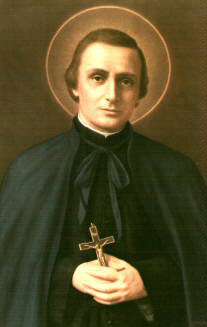 St. Peter Chanel: Saint of the Day for Sunday, April 28, 2024
 Prayer before a Crucifix: Prayer of the Day for Sunday, April 28, 2024



Copyright 2024 Catholic Online. All materials contained on this site, whether written, audible or visual are the exclusive property of Catholic Online and are protected under U.S. and International copyright laws, © Copyright 2024 Catholic Online. Any unauthorized use, without prior written consent of Catholic Online is strictly forbidden and prohibited.
Catholic Online is a Project of Your Catholic Voice Foundation, a Not-for-Profit Corporation. Your Catholic Voice Foundation has been granted a recognition of tax exemption under Section 501(c)(3) of the Internal Revenue Code. Federal Tax Identification Number: 81-0596847. Your gift is tax-deductible as allowed by law.