We ask you, humbly: don't scroll away.
Hi readers, it seems you use Catholic Online a lot; that's great! It's a little awkward to ask, but we need your help. If you have already donated, we sincerely thank you. We're not salespeople, but we depend on donations averaging $14.76 and fewer than 1% of readers give. If you donate just $5.00, the price of your coffee, Catholic Online School could keep thriving. Thank you.Help Now >
Erycius Puteanus
FREE Catholic Classes
(ERRIJCK DE PUT)
Born at Venloo, in Dutch Limbourg, 4 Nov., 1574; died at Louvain, 17 Sept., 1646. A Belgian humanist and philologist, he studied at the schools of Dordrecht and Cologne (Collège des Trois-Couronnes), where he took the degree of Master of Arts, 28 Feb., 1595. He then followed, at Louvain, the lectures on ancient history given by Justus Lipsius. In 1597 he repaired to Italy, and lived in intimacy with the learned men of that country, especially the famous Cardinal Federigo Borromeo, through whom he was appointed professor of Latin at the Palatine School of Milan from 1600 to 1606, when the States of Brabant offered him the chair left vacant by Lipsius at Louvain. He taught with éclat at the Collège des Trois-Langues for forty years, and was loaded with favours by reigning princes: the Archduke Albert appointed him his honorary counsellor (1612), and increased his annual pension by 200 ducats (1614), and added the reversion of Château-César. At the same time he filled, after 1603, the post of historiographer to King Philip IV, on behalf of the Milanese, with other appointments, often ill-paid in consequence of a treasury depleted by continual wars. His rash language provoked political animosities, and he was almost driven into exile by request of King James I of England, who wrongly believed him to be the author of an injurious lampoon.

His family numbered seventeen children, of whom four died in infancy. The services he rendered to his native Guelders, the Low Countries, and individuals were considerable. Puteanus was an encyclopedist; his ideal, which saw in numerous and varied acquirements the fullest measure of wisdom and the surest means of arriving at virtue the end of all knowledge, had been suggested to him by his master Justus Lipsius. During a certain period of his literary activity (1603-19), he detached himself from Lipsius by aiming at personal leadership of a school. He dreamed of re-establishing in Belgium the splendid classical period and the cult of eloquence which he had derived from Italy. When he saw the uselessness of his efforts, the indifference of a too utilitarian age inclined towards positive sciences, he again threw himself into encyclopedic authorship and produced his best chronological works. His merit as a philologist is somewhat limited; but his dissertations, reproduced in the Thesauri of Grævius and Gronovius, are of real value and may still be consulted. As a whole, his influence on Belgian philology has been unfortunate.
We ask you, humbly: don't scroll away.
Hi readers, it seems you use Catholic Online a lot; that's great! It's a little awkward to ask, but we need your help. If you have already donated, we sincerely thank you. We're not salespeople, but we depend on donations averaging $14.76 and fewer than 1% of readers give. If you donate just $5.00, the price of your coffee, Catholic Online School could keep thriving. Thank you.Help Now >

Join the Movement
When you sign up below, you don't just join an email list - you're joining an entire movement for Free world class Catholic education.


-

-
Mysteries of the Rosary
-
St. Faustina Kowalska
-
Litany of the Blessed Virgin Mary
-
Saint of the Day for Wednesday, Oct 4th, 2023
-
Popular Saints
-
St. Francis of Assisi
-
Bible
-
Female / Women Saints
-
7 Morning Prayers you need to get your day started with God
-
Litany of the Blessed Virgin Mary


Sacrifices of Faith: The Pro-Life Legacies of St. Gianna and Jessica Hanna
-
How to love God by caring for our bodies
-
Pope Francis calls for negotiations to End Russia-Ukraine War
-
Pope Francis Contemplates Return to U.S. for United Nations Assembly Address
-
Pope Francis Calls on Faithful to Embrace Faith, Hope, and Charity in New Teaching Series


Daily Catholic
- Daily Readings for Sunday, April 28, 2024
- St. Peter Chanel: Saint of the Day for Sunday, April 28, 2024
- Prayer before a Crucifix: Prayer of the Day for Sunday, April 28, 2024
- Daily Readings for Saturday, April 27, 2024
- St. Zita: Saint of the Day for Saturday, April 27, 2024
- Prayer for the Dead # 2: Prayer of the Day for Saturday, April 27, 2024
 Daily Readings for Sunday, April 28, 2024
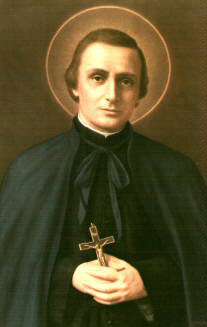 St. Peter Chanel: Saint of the Day for Sunday, April 28, 2024
 Prayer before a Crucifix: Prayer of the Day for Sunday, April 28, 2024


Copyright 2024 Catholic Online. All materials contained on this site, whether written, audible or visual are the exclusive property of Catholic Online and are protected under U.S. and International copyright laws, © Copyright 2024 Catholic Online. Any unauthorized use, without prior written consent of Catholic Online is strictly forbidden and prohibited.
Catholic Online is a Project of Your Catholic Voice Foundation, a Not-for-Profit Corporation. Your Catholic Voice Foundation has been granted a recognition of tax exemption under Section 501(c)(3) of the Internal Revenue Code. Federal Tax Identification Number: 81-0596847. Your gift is tax-deductible as allowed by law.