 Hi readers, it seems you use Catholic Online a lot; that's great! It's a little awkward to ask, but we need your help. If you have already donated, we sincerely thank you. We're not salespeople, but we depend on donations averaging $14.76 and fewer than 1% of readers give. If you donate just $5.00, the price of your coffee, Catholic Online School could keep thriving. Thank you. Help Now >
Odoric of Pordenone
FREE Catholic Classes
A Franciscan missionary of a Czech family named Mattiussi, born at Villanova near Pordenone, Friuli, Italy, about 1286; died at Udine, 14 Jan., 1331. About 1300 he entered the Franciscan Order at Udine. Towards the middle of the thirteenth century the Franciscans were commissioned by the Holy See to undertake missionary work in the interior of Asia. Among the missionaries sent there were John Piano Carpini, William Rubruquis , and John of Montecorvino . Odoric was called to follow them, and in April, 1318, started from Padua, crossed the Black Sea to Trebizond, went through Persia by way of the Tauris, Sultaniah, where in 1318 John XXII had erected an archbishopric, Kasham, Yezd, and Persepolis; he also visited Farsistan, Khuzistan, and Chaldea, and then went back to the Persian Gull. From Hormuz he went to Tana on the Island of Salsette, north of Bombay. Here he gathered the remains of Thomas of Tolentino, Jacopo of Padua, Pietro of Siena, and Demetrius of Tiflis, Franciscans who, a short time before, had suffered martyrdom, and took them with him so as to bury them in China. From Salsette he went to Malabar, Fondaraina (Flandrina) that lies north of Calicut, then to Cranganore that is south of Calicut, along the Coromandel Coast, then to Meliapur (Madras) and Ceylon. He then passed the Nicobar Islands on his way to Lamori, a kingdom of Sumoltra (Sumatra); he also visited Java, Banjarmasin on the southern coast of Borneo, and Tsiompa (Champa) in the southern part of Cochin China, and finally reached Canton in China. From Canton he travelled to Zaitoum, the largest Chinese seaport in the Middle Ages, and Che-kiang, and went overland by way of Fu-cheu, the capital of the province of Fokien, to Quinsay (Hangcheufu), celebrated by Marco Polo. He remained in China and went to Nanking, Yangchufu, and finally travelled by the great canal and the Hwangho River to Khan-balig or Peking, the capital of the Great Khan. At that time the aged Montecorvino was still archbishop in Peking, where Odoric remained three years. On his return journey he went overland by way of Chan-si through Tibet, from there apparently by way of Badachschan to the Tauris and Armenia, reaching home in 1330.

In May, 1330, at the request of his superior, Guidotto, Odoric dictated an account of his travels to Brother William of Solagna while at the monastery of St. Anthony at Padua. According to another version Henry of Glatz, who was at that time staying at the papal court at Avignon, made notes of the accounts given by Odoric's travelling companions and wrote them out at Prague in 1340. Unfortunately Odoric accepted many fabulous stories and for a long period it was doubted whether he had really seen all the places and regions he described. His narrative, though, is veracious, and he is the first European traveller from whom are learned many peculiarities of the Chinese people and country which Marco Polo did not mention, because he had grown accustomed to them. It is to be regretted that he does not give a more detailed account of Tibet and Lhasa, the capital of the Dalai-Lama, which he was the first European to enter. The account of his travels was widely spread by Mandeville's plagiarisms from them, Mandeville's work being exceedingly popular in the later Middle Ages and much used as a manual by geographers of that period. Numerous manuscripts of Odoric's travels were current in Italy, France, Germany, and England. They were first printed at Pesaro. A Latin version appeared in Marcellino da Civezza's "Storia universale delle missioni Francescane", III (Rome, 1859), 739-81; an English translation was made by Yule in his work "Cathay and the Way Thither", I (London, 1866), 1-162; a French version with very good notes was made by Henri Cordier "Les voyages en Asie au XIV e siècle du bienheureux frère Odoric de Pordenone" (Paris, 1891).
Hi readers, it seems you use Catholic Online a lot; that's great! It's a little awkward to ask, but we need your help. If you have already donated, we sincerely thank you. We're not salespeople, but we depend on donations averaging $14.76 and fewer than 1% of readers give. If you donate just $5.00, the price of your coffee, Catholic Online School could keep thriving. Thank you. Help Now >

Join the Movement
When you sign up below, you don't just join an email list - you're joining an entire movement for Free world class Catholic education.


-

-
Mysteries of the Rosary
-
St. Faustina Kowalska
-
Litany of the Blessed Virgin Mary
-
Saint of the Day for Wednesday, Oct 4th, 2023
-
Popular Saints
-
St. Francis of Assisi
-
Bible
-
Female / Women Saints
-
7 Morning Prayers you need to get your day started with God
-
Litany of the Blessed Virgin Mary


Sacrifices of Faith: The Pro-Life Legacies of St. Gianna and Jessica Hanna
-
How to love God by caring for our bodies
-
Pope Francis calls for negotiations to End Russia-Ukraine War
-
Pope Francis Contemplates Return to U.S. for United Nations Assembly Address
-
Pope Francis Calls on Faithful to Embrace Faith, Hope, and Charity in New Teaching Series


Daily Catholic
- Daily Readings for Sunday, April 28, 2024
- St. Peter Chanel: Saint of the Day for Sunday, April 28, 2024
- Prayer before a Crucifix: Prayer of the Day for Sunday, April 28, 2024
- Daily Readings for Saturday, April 27, 2024
- St. Zita: Saint of the Day for Saturday, April 27, 2024
- Prayer for the Dead # 2: Prayer of the Day for Saturday, April 27, 2024
 Daily Readings for Sunday, April 28, 2024
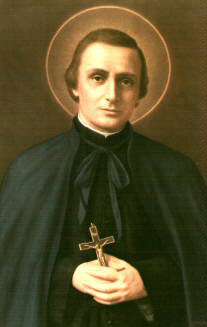 St. Peter Chanel: Saint of the Day for Sunday, April 28, 2024
 Prayer before a Crucifix: Prayer of the Day for Sunday, April 28, 2024



Copyright 2024 Catholic Online. All materials contained on this site, whether written, audible or visual are the exclusive property of Catholic Online and are protected under U.S. and International copyright laws, © Copyright 2024 Catholic Online. Any unauthorized use, without prior written consent of Catholic Online is strictly forbidden and prohibited.
Catholic Online is a Project of Your Catholic Voice Foundation, a Not-for-Profit Corporation. Your Catholic Voice Foundation has been granted a recognition of tax exemption under Section 501(c)(3) of the Internal Revenue Code. Federal Tax Identification Number: 81-0596847. Your gift is tax-deductible as allowed by law.