 Dear readers, Catholic Online was de-platformed by Shopify for our pro-life beliefs. They shut down our Catholic Online, Catholic Online School, Prayer Candles, and Catholic Online Learning Resources essential faith tools serving over 1.4 million students and millions of families worldwide. Our founders, now in their 70's, just gave their entire life savings to protect this mission. But fewer than 2% of readers donate. If everyone gave just $5, the cost of a coffee, we could rebuild stronger and keep Catholic education free for all. Stand with us in faith. Thank you. Help Now >
Religious of the Perpetual Adoration
FREE Catholic Classes
A contemplative religious congregation, founded in 1526 by Sister Elizabeth Zwirer (d. 1546), at Einsiedeln, Switzerland, and following the Benedictine rule. At he beginning of the year 1789 they commenced the practice of adoration of the Blessed Sacrament during the day before the closed tabernacle. A lay association was established, the members of which contributed a small sum of money for the expenses of the sanctuary necessitated by perpetual adoration. On 2 May, 1798, during the French invasion the sisters were expelled and their monastery ruined. Five years later, after the Concordat of Napoleon, the community returned. Acting on the advice of their confessor, Father Pierre Perrot, the sisters, on 8 January, 1846, began the practice of adoration by night as well as by day. In 1852 to signify their devotion to the Blessed Sacrament, they decided to wear a figure of an ostensorium on the breast of their habit. In 1859 Empress Elizabeth of Austria presented the monastery with a magnificent chalice and a reliquary. A new church was opened in 1882, and is adorned with three beautiful paintings, representing the adoration of Christ. The convent at Einsiedeln is the only house of its kind, and has its own novitiate. In 1909 the community numbered 46 professed sisters and 5 novices.
Join the Movement
When you sign up below, you don't just join an email list - you're joining an entire movement for Free world class Catholic education.
-

- Easter / Lent
- Ascension Day
- 7 Morning Prayers
- Mysteries of the Rosary
- Litany of the Bl. Virgin Mary
- Popular Saints
- Popular Prayers
- Female Saints
- Saint Feast Days by Month
- Stations of the Cross
- St. Francis of Assisi
- St. Michael the Archangel
- The Apostles' Creed
- Unfailing Prayer to St. Anthony
- Pray the Rosary


IRS Declares Churches Can Now Endorse Political Candidates Without Losing Tax-Exempt Status

Judge Temporarily Blocks Federal Defunding of Planned Parenthood Amid Legal Battle

Pope Leo XIV Shows Us the Only Way to Peace: Start with the Children
Daily Catholic
- Daily Readings for Wednesday, July 09, 2025
- St. Veronica Giuliani: Saint of the Day for Wednesday, July 09, 2025
- Prayer for a Happy Death: Prayer of the Day for Wednesday, July 09, 2025
- Daily Readings for Tuesday, July 08, 2025
- St. Grimbald: Saint of the Day for Tuesday, July 08, 2025
- Look over me lord : Prayer of the Day for Tuesday, July 08, 2025
 Daily Readings for Wednesday, July 09, 2025
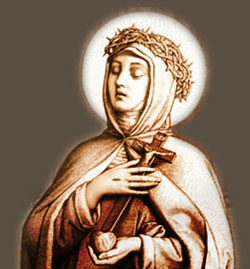 St. Veronica Giuliani: Saint of the Day for Wednesday, July 09, 2025
 Prayer for a Happy Death: Prayer of the Day for Wednesday, July 09, 2025
 St. Grimbald: Saint of the Day for Tuesday, July 08, 2025



Copyright 2025 Catholic Online. All materials contained on this site, whether written, audible or visual are the exclusive property of Catholic Online and are protected under U.S. and International copyright laws, © Copyright 2025 Catholic Online. Any unauthorized use, without prior written consent of Catholic Online is strictly forbidden and prohibited.
Catholic Online is a Project of Your Catholic Voice Foundation, a Not-for-Profit Corporation. Your Catholic Voice Foundation has been granted a recognition of tax exemption under Section 501(c)(3) of the Internal Revenue Code. Federal Tax Identification Number: 81-0596847. Your gift is tax-deductible as allowed by law.