We ask you, urgently: don't scroll past this
Dear readers, Catholic Online was de-platformed by Shopify for our pro-life beliefs. They shut down our Catholic Online, Catholic Online School, Prayer Candles, and Catholic Online Learning Resources essential faith tools serving over 1.4 million students and millions of families worldwide. Our founders, now in their 70's, just gave their entire life savings to protect this mission. But fewer than 2% of readers donate. If everyone gave just $5, the cost of a coffee, we could rebuild stronger and keep Catholic education free for all. Stand with us in faith. Thank you.Help Now >
Antonio Aparisi y Guijarro
FREE Catholic Classes
Parliamentary orator, jurisconsult, Catholic controversialist, and Spanish litterateur, b. in Valencia, 28 Mar., 1815; d. in Madrid, 5 Nov., 1872. He was extremely gifted; of extensive knowledge, brilliant imagination, graceful and beautiful power of expression, and exquisite literary taste. As a man, he was modest, kind-hearted, and most charitable, a fervent Catholic and an ardent patriot. In 1839 he was admitted to the bar, and defended many criminal cases, winning them in almost every instance. He published poems and articles in the monthly periodical, "El Licco Valenciano" (1841- 42), in "La Restauración," a Catholic review of Valencia (1843- 44), and was editor of the newspaper, "El pensamiento de Valencia" (1857-58). He contributed to "La Esperanza," "La Estrella," and particularly to "La Regeneracion" (Nov., 1862, to Nov., 1872), Catholic newspapers of Madrid, being editor of the last-named at different times, and collaborator in the publication of the review "La Concordia" (1863-64).
He was sent as representative from Valencia to the Cortes (1858-65), where, as leader of the royalists in the House of Representatives, he delivered many eloquent discourses against the disentailment laws in defence of Catholic union, in reprobation of despoiling the Pope of his temporal power, and on other vital questions touching the Church and Spain. In Paris, in 1869, he attempted to unite the royal families of Isabel II and Charles of Bourbon, and for dynastic reasons also went to Paris and London in 1869-70, and took part in the Carlist conference in Switzerland in April, 1870. He took the initiative in the formation in Paris of a Central Congress of the Carlist party. In 1860 he wrote the treatise "El Papa y Napoleón," and later four others: "Los tres Orléans" (1869), "El Rey de España" (1869), "La cuestión dinástica (1869), and "Restauración" (1872), leaving unpublished "El libro del pueblo." In February or March of 1870 he had an audience with Pius IX, who bestowed on him many marks of special favour. In 1871 he was elected senator from Guipuzcoa. He was also made a member of the Royal Spanish Academy, but did not live to take his seat. The works of Aparisi were published in Madrid during the years 1873 to 1877, in five volumes, containing his biography as well as poems, discourses, political and academic, articles and treatises, and many forensic writings and speeches.

Join the Movement
When you sign up below, you don't just join an email list - you're joining an entire movement for Free world class Catholic education.
-

- Easter / Lent
- Ascension Day
- 7 Morning Prayers
- Mysteries of the Rosary
- Litany of the Bl. Virgin Mary
- Popular Saints
- Popular Prayers
- Female Saints
- Saint Feast Days by Month
- Stations of the Cross
- St. Francis of Assisi
- St. Michael the Archangel
- The Apostles' Creed
- Unfailing Prayer to St. Anthony
- Pray the Rosary


Digital Drug: How Social Media Algorithms Are Addicting and Rewiring Our Brains

A Generation Without Christ Breeds Violence — The Answer Is Catholic Education

Rediscovering the Face of God in Others: Pope Leo’s Call to Fraternity
Daily Catholic
- Daily Readings for Saturday, September 13, 2025
- St. John Chrysostom: Saint of the Day for Saturday, September 13, 2025
- A Prayer for the Gift of Wisdom: Prayer of the Day for Saturday, September 13, 2025
- Daily Readings for Friday, September 12, 2025
- St. Ailbhe: Saint of the Day for Friday, September 12, 2025
- Family Prayer Time: Prayer of the Day for Friday, September 12, 2025
 Daily Readings for Saturday, September 13, 2025
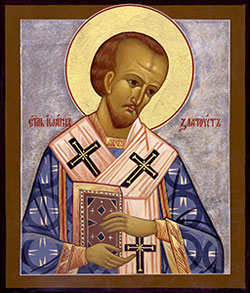 St. John Chrysostom: Saint of the Day for Saturday, September 13, 2025
 A Prayer for the Gift of Wisdom: Prayer of the Day for Saturday, September 13, 2025
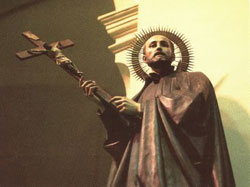 St. Ailbhe: Saint of the Day for Friday, September 12, 2025



Copyright 2025 Catholic Online. All materials contained on this site, whether written, audible or visual are the exclusive property of Catholic Online and are protected under U.S. and International copyright laws, © Copyright 2025 Catholic Online. Any unauthorized use, without prior written consent of Catholic Online is strictly forbidden and prohibited.
Catholic Online is a Project of Your Catholic Voice Foundation, a Not-for-Profit Corporation. Your Catholic Voice Foundation has been granted a recognition of tax exemption under Section 501(c)(3) of the Internal Revenue Code. Federal Tax Identification Number: 81-0596847. Your gift is tax-deductible as allowed by law.