We ask you, humbly: don't scroll away.
Hi readers, it seems you use Catholic Online a lot; that's great! It's a little awkward to ask, but we need your help. If you have already donated, we sincerely thank you. We're not salespeople, but we depend on donations averaging $14.76 and fewer than 1% of readers give. If you donate just $5.00, the price of your coffee, Catholic Online School could keep thriving. Thank you.Help Now >
Carlo Passaglia
FREE Catholic Classes
Born at Lucca, 9 May, 1812; died at Turin, 12 March, 1887. He entered the Society of Jesus in 1827; when scarcely thirty years old, he was teaching at the Sapienza and was prefect of studies at the German College. In 1845 he took the solemn vows and became professor of dogmatic theology at the Gregorian University. In 1850 he took a leading part in preparing the definition of the dogma of the Immaculate Conception, on which he wrote three large volumes. He showed in his works a rare knowledge of the theological literature of all times. His historico-linguistic method met with criticism. It was said that "he substituted grammar for dogma ". His chief works are: an edition of the "Enchiridion" of St. Augustine, with copious notes (Naples, 1847); "De prærogativis b. Petri" (Rome, 1850); "Conferences" given at the Gésu and published in "Civiltà Cattolica" (1851); "Commentariorum theologicorum partes 3 (1 vol. Rome, 1850-51); "De ecclesia Christi" (3 vols., Ratisbon, 1853 — incomplete); "De æternitate poenarum" (Ratisbon, 1854).
The trouble between Passaglia and his superiors grew steadily more serious; he finally left the Society in 1859. Pius IX gave him a chair at the Sapienza. then he came in contact with the physician Pantaleoni, Cavour's agent; Cavour summoned him to Turin for a personal interview (February, 1861). Afterwards, at Rome, he held several conferences with Cardinal Santucci, and persuaded that the ground was ready, he wrote "Pro causa italica" (1861), which was placed on the Index. Passaglia fled to Turin, where he held the chair of moral philosophy until his death. Ignorant of the world and men, he believed the opponents of temporal power were guided by the best of intentions. He founded the weekly "Il Medicatore" (1862-66), in which he wrote long articles full of undigested erudition, and to which he welcomed the contribution of any priest with a grievance. From 1863 to 1864 he edited the daily, "La Pace", and in 1867, "Il Gerdil", a weekly theological review. He could not say Mass at Turin, and put off the clerical dress. But as regards dogma, he never swerved from the true Faith ; nevertheless he criticized the Syllabus. We have still to mention his book "Sul divozio" (1861) and his refutation of Renan (1864). In 1867 the Bishops of Mondovì and Clifton tried to reconcile him with the Church, but he did not retract until a few months before his death.


We ask you, humbly: don't scroll away.
Hi readers, it seems you use Catholic Online a lot; that's great! It's a little awkward to ask, but we need your help. If you have already donated, we sincerely thank you. We're not salespeople, but we depend on donations averaging $14.76 and fewer than 1% of readers give. If you donate just $5.00, the price of your coffee, Catholic Online School could keep thriving. Thank you.Help Now >
Join the Movement
When you sign up below, you don't just join an email list - you're joining an entire movement for Free world class Catholic education.


-

-
Mysteries of the Rosary
-
St. Faustina Kowalska
-
Litany of the Blessed Virgin Mary
-
Saint of the Day for Wednesday, Oct 4th, 2023
-
Popular Saints
-
St. Francis of Assisi
-
Bible
-
Female / Women Saints
-
7 Morning Prayers you need to get your day started with God
-
Litany of the Blessed Virgin Mary

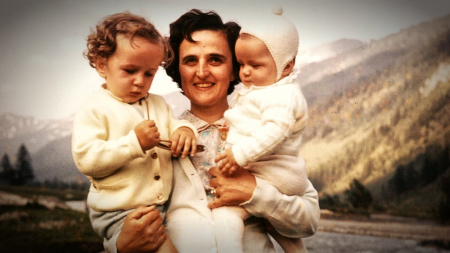
Sacrifices of Faith: The Pro-Life Legacies of St. Gianna and Jessica Hanna
-
How to love God by caring for our bodies
-
Pope Francis calls for negotiations to End Russia-Ukraine War
-
Pope Francis Contemplates Return to U.S. for United Nations Assembly Address
-
Pope Francis Calls on Faithful to Embrace Faith, Hope, and Charity in New Teaching Series

Daily Catholic
- Daily Readings for Saturday, April 27, 2024
- St. Zita: Saint of the Day for Saturday, April 27, 2024
- Prayer for the Dead # 2: Prayer of the Day for Saturday, April 27, 2024
- Daily Readings for Friday, April 26, 2024
- St. Cletus: Saint of the Day for Friday, April 26, 2024
- Prayer before the Closing of the Day: Prayer of the Day for Friday, April 26, 2024
 Daily Readings for Saturday, April 27, 2024
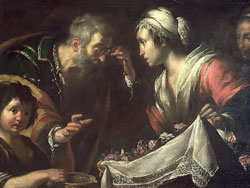 St. Zita: Saint of the Day for Saturday, April 27, 2024
 Prayer for the Dead # 2: Prayer of the Day for Saturday, April 27, 2024
 Hi readers, it seems you use Catholic Online a lot; that's great! It's a little awkward to ask, but we need your help. If you have already donated, we sincerely thank you. We're not salespeople, but we depend on donations averaging $14.76 and fewer than 1% of readers give. If you donate just $5.00, the price of your coffee, Catholic Online School could keep thriving. Thank you. Help Now >


Copyright 2024 Catholic Online. All materials contained on this site, whether written, audible or visual are the exclusive property of Catholic Online and are protected under U.S. and International copyright laws, © Copyright 2024 Catholic Online. Any unauthorized use, without prior written consent of Catholic Online is strictly forbidden and prohibited.
Catholic Online is a Project of Your Catholic Voice Foundation, a Not-for-Profit Corporation. Your Catholic Voice Foundation has been granted a recognition of tax exemption under Section 501(c)(3) of the Internal Revenue Code. Federal Tax Identification Number: 81-0596847. Your gift is tax-deductible as allowed by law.