We ask you, humbly: don't scroll away.
Hi readers, it seems you use Catholic Online a lot; that's great! It's a little awkward to ask, but we need your help. If you have already donated, we sincerely thank you. We're not salespeople, but we depend on donations averaging $14.76 and fewer than 1% of readers give. If you donate just $5.00, the price of your coffee, Catholic Online School could keep thriving. Thank you.Help Now >
Frederick Apthorp Paley
FREE Catholic Classes
Classical scholar, born at Easingwold near York, 14 Jan., 1815; died at Bournemouth, 9 December, 1888, son of the Rev. Edmund Paley and grandson of William Paley who wrote "Evidences of Christianity". He was educated at Shrewsbury School and St. John's College, Cambridge, where he taught and continued to study for eight years after his B. A. degree (1838). His studies were mainly classical; but, despite an incapacity for mathematics, he was interested in mechanics and in natural science and was an enthusiastic ecclesiological antiquary. In 1846, being well known as a Cambridge sympathizer with the Oxford Movement , he was expelled from residence in St. John's College, on suspicion of having influenced one of his pupils to become a Catholic. He was himself received into the Church in this year. For the next fourteen years he supported himself as a private tutor in several Catholic families successively (Talbot, Throckmorton, Kenelm Digby ) and by his pen. From 1860, when Tests began to be relaxed, he again lived at Cambridge until 1874; from 1874 to 1877 he was professor of classical literature at the abortive Catholic University College at Kensington. From 1877 till his death he continued to write assiduously. But the interruption of his university career, the want of a settled competence, and his banishment from the place, the society, and the learned facilities which might best have improved his talents and industry, had the effect of rendering nearly all his voluminous production ephemeral. His many classical editions which had a great and not undeserved vogue and influence in their day became soon obsolete and marked no decisive epoch in classical philology. Yet his work on Euripides and Aeschylus in particular may still be consulted with profit, at least as a monument of protest against the Victorian mock-archaic convention in translations from Greek poetry; and it is easy to underrate now the merits of work which met a great demand for school and college use, and itself did much to evoke the more scientific scholarship which has superseded it.

His works number more than fifty volumes, besides numerous magazine articles and reviews contributed to the "American Catholic Quarterly", "Edinburgh Review", "Journal of Philology" etc. The first of his classical publications, and the one which established his reputation as a scholar, was the text of Aeschylus (18447); during the next forty years he edited with the commentaries, Propertius (1853); Ovid's "Fasti" (1854); Aeschylus (1855); Euripides (1857); Hesiod (1861); Theocritus (1863); Homer's "Iliad" (1866); Martial (1868); Pindar (transl. with notes) 1868; Aristophanes' "Peace" (1873); Plato's "Philebus" (1883); "Private Orations of Demosthenes" (l874); Plato's "Thaetetus" (1875); Aristophanes' "Acharnians" (1876); Medicean Scholia of Aeschylus" (1878); Aristophanes' "Frogs" (1878); Sophocles (1880). To these must be added many critical inquiries, especially on the Homeric question, and most of his Commentaries ran through three or four editions, of which Marindin remarks that "every new edition was practically a new work". He found leisure to issue books on architecture; his "Manual of Gothic Mouldings", first published in 1845, went into a fifth edition in 1891.
We ask you, humbly: don't scroll away.
Hi readers, it seems you use Catholic Online a lot; that's great! It's a little awkward to ask, but we need your help. If you have already donated, we sincerely thank you. We're not salespeople, but we depend on donations averaging $14.76 and fewer than 1% of readers give. If you donate just $5.00, the price of your coffee, Catholic Online School could keep thriving. Thank you.Help Now >

Join the Movement
When you sign up below, you don't just join an email list - you're joining an entire movement for Free world class Catholic education.


-

-
Mysteries of the Rosary
-
St. Faustina Kowalska
-
Litany of the Blessed Virgin Mary
-
Saint of the Day for Wednesday, Oct 4th, 2023
-
Popular Saints
-
St. Francis of Assisi
-
Bible
-
Female / Women Saints
-
7 Morning Prayers you need to get your day started with God
-
Litany of the Blessed Virgin Mary


Sacrifices of Faith: The Pro-Life Legacies of St. Gianna and Jessica Hanna
-
How to love God by caring for our bodies
-
Pope Francis calls for negotiations to End Russia-Ukraine War
-
Pope Francis Contemplates Return to U.S. for United Nations Assembly Address
-
Pope Francis Calls on Faithful to Embrace Faith, Hope, and Charity in New Teaching Series


Daily Catholic
- Daily Readings for Sunday, April 28, 2024
- St. Peter Chanel: Saint of the Day for Sunday, April 28, 2024
- Prayer before a Crucifix: Prayer of the Day for Sunday, April 28, 2024
- Daily Readings for Saturday, April 27, 2024
- St. Zita: Saint of the Day for Saturday, April 27, 2024
- Prayer for the Dead # 2: Prayer of the Day for Saturday, April 27, 2024
 Daily Readings for Sunday, April 28, 2024
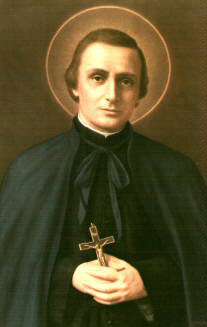 St. Peter Chanel: Saint of the Day for Sunday, April 28, 2024
 Prayer before a Crucifix: Prayer of the Day for Sunday, April 28, 2024


Copyright 2024 Catholic Online. All materials contained on this site, whether written, audible or visual are the exclusive property of Catholic Online and are protected under U.S. and International copyright laws, © Copyright 2024 Catholic Online. Any unauthorized use, without prior written consent of Catholic Online is strictly forbidden and prohibited.
Catholic Online is a Project of Your Catholic Voice Foundation, a Not-for-Profit Corporation. Your Catholic Voice Foundation has been granted a recognition of tax exemption under Section 501(c)(3) of the Internal Revenue Code. Federal Tax Identification Number: 81-0596847. Your gift is tax-deductible as allowed by law.