We ask you, urgently: don't scroll past this
Dear readers, Catholic Online was de-platformed by Shopify for our pro-life beliefs. They shut down our Catholic Online, Catholic Online School, Prayer Candles, and Catholic Online Learning Resources essential faith tools serving over 1.4 million students and millions of families worldwide. Our founders, now in their 70's, just gave their entire life savings to protect this mission. But fewer than 2% of readers donate. If everyone gave just $5, the cost of a coffee, we could rebuild stronger and keep Catholic education free for all. Stand with us in faith. Thank you.Help Now >
Minister
FREE Catholic Classes
The term minister has long been appropriated in a distinctive way to the clergy. The language of I Cor., iv, 1-2; Heb., viii, 2; Matt., xx, 26, etc. must have helped to familiarize the thought that those charged with spiritual functions in the Christian Church were called upon to be the servants ( ministri ) of their brethren. Even before the Reformation the word minister was occasionally used in English to describe those of the clergy actually taking part in a function, or the celebrant as distinguished from the assistants, but it was not then used sine addito to designate an ecclesiastic. This employment of the term dates from Calvin, who objected to the name priest etc. as involving an erroneous conception of the nature of the sacred office. These Calvinistic views had some influence in England. In the Boo of Common Prayer the word minister occurs frequently in the sense of the officiant at a service, and in the thirty-second of the Canons Ecclesiastical (1603) we read "no bishop shall make a person deacon and minister both upon one day", where clearly minister stands as the equivalent of priest. As regards modern usage the Hist. Eng. Dictionary says: "The use of minister as the designation of an Anglican clergyman (formerly extensively current, sometimes with more specific application to a beneficed clergyman ) has latterly become rare, and is now chiefly associated with Low Church views; but it is still the ordinary appellation of one appointed to spiritual office in any non-Episcopal communion, especially of one having a pastoral charge".
As regards Catholic use, minister is the title of certain superiors in various religious orders. The head of the Franciscan Order is known as the minister general, and the superior of the different provinces of the various branches is called minister provincial. The same is true of the Order of the Trinitarians for the Redemption of Captives and of some other orders. In the Society of Jesus the second in command in each house, who is usually charged with the internal discipline, the commissariat, etc., is called minister. The statement made in Addis and Arnold's "Catholic Dictionary" and thence incorporated into the great Hist. Eng. Dictionary that each of the five assistants of the General of the Jesuits is called minister is without foundation.

Join the Movement
When you sign up below, you don't just join an email list - you're joining an entire movement for Free world class Catholic education.
-

- Easter / Lent
- Ascension Day
- 7 Morning Prayers
- Mysteries of the Rosary
- Litany of the Bl. Virgin Mary
- Popular Saints
- Popular Prayers
- Female Saints
- Saint Feast Days by Month
- Stations of the Cross
- St. Francis of Assisi
- St. Michael the Archangel
- The Apostles' Creed
- Unfailing Prayer to St. Anthony
- Pray the Rosary


Catholic Online News Declares War on Lies – A 2,000-Year-Old Force for Truth Enters the Global News Arena

How to Build a Nuclear Bomb: Start to Strike

Saint Anthony of Padua: The Miracle-Worker Who Brings Us Back to Christ
Daily Catholic
- Daily Readings for Sunday, June 15, 2025
- St. Germaine Cousin: Saint of the Day for Sunday, June 15, 2025
- Prayer for God's Blessing of One's Daily Work: Prayer of the Day for Sunday, June 15, 2025
- Daily Readings for Saturday, June 14, 2025
- St. Methodius I: Saint of the Day for Saturday, June 14, 2025
- Prayer for America: Prayer of the Day for Saturday, June 14, 2025
 Daily Readings for Sunday, June 15, 2025
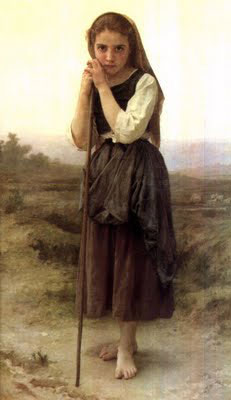 St. Germaine Cousin: Saint of the Day for Sunday, June 15, 2025
 Prayer for God's Blessing of One's Daily Work: Prayer of the Day for Sunday, June 15, 2025
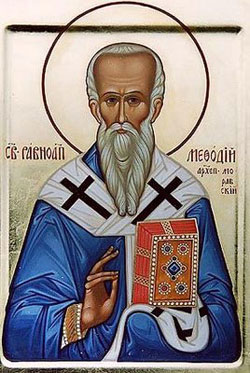 St. Methodius I: Saint of the Day for Saturday, June 14, 2025

Copyright 2025 Catholic Online. All materials contained on this site, whether written, audible or visual are the exclusive property of Catholic Online and are protected under U.S. and International copyright laws, © Copyright 2025 Catholic Online. Any unauthorized use, without prior written consent of Catholic Online is strictly forbidden and prohibited.
Catholic Online is a Project of Your Catholic Voice Foundation, a Not-for-Profit Corporation. Your Catholic Voice Foundation has been granted a recognition of tax exemption under Section 501(c)(3) of the Internal Revenue Code. Federal Tax Identification Number: 81-0596847. Your gift is tax-deductible as allowed by law.