We ask you, humbly: don't scroll away.
Hi readers, it seems you use Catholic Online a lot; that's great! It's a little awkward to ask, but we need your help. If you have already donated, we sincerely thank you. We're not salespeople, but we depend on donations averaging $14.76 and fewer than 1% of readers give. If you donate just $5.00, the price of your coffee, Catholic Online School could keep thriving. Thank you.Help Now >
Pompeo Marchesi
FREE Catholic Classes
A Lombard sculptor of the neoclassic school, born at Saltrio, near Milan, 7 August, 1790; died at Milan, 6 February, 1858. He studied in Rome under Canova and received much encouragement from his master. The greater part of his life was spent in Milan, where for many years he was professor of sculpture at the Academy. He executed a great number of groups in marble and portrait busts. One of his earliest works was a colossal statue of St. Ambrose, patron of the city; for the Arco della Pace (Simplon commemorative arch ), completed 1838, he made the reliefs of Terpsichore and Venus Urania. He decorated the façade of the Castello with twelve figures of great Italian captains, and that of the Palazzo Saporiti with reliefs in modern classic style. One of his best-known compositions is the group of the "Mater Dolorosa", in the church of San Carlo, at which he laboured many years. Works outside of Milan are the colossal statue of Charles Emmanuel III at Novara ; that of Philibert Emanuel of Savoy at Turin ; the sitting figure of Goethe for the library at Frankfort ; two statues of the Emperor Francis I of Austria, one made with the assistance of Manfredoni, for Goritz, and another, unassisted, for the Hofburg at Vienna. He also executed the monument to Volta at Como ; the monument of the singer Malibran; others to Beccaria and Bellini and a bust of Professor Zuccala for the Atheneum of Bergamo.



Join the Movement
When you sign up below, you don't just join an email list - you're joining an entire movement for Free world class Catholic education.


-

-
Mysteries of the Rosary
-
St. Faustina Kowalska
-
Litany of the Blessed Virgin Mary
-
Saint of the Day for Wednesday, Oct 4th, 2023
-
Popular Saints
-
St. Francis of Assisi
-
Bible
-
Female / Women Saints
-
7 Morning Prayers you need to get your day started with God
-
Litany of the Blessed Virgin Mary

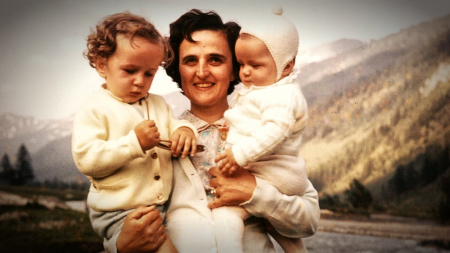
Sacrifices of Faith: The Pro-Life Legacies of St. Gianna and Jessica Hanna
-
How to love God by caring for our bodies
-
Pope Francis calls for negotiations to End Russia-Ukraine War
-
Pope Francis Contemplates Return to U.S. for United Nations Assembly Address
-
Pope Francis Calls on Faithful to Embrace Faith, Hope, and Charity in New Teaching Series


Daily Catholic
- Daily Readings for Monday, April 29, 2024
- St. Catherine of Siena: Saint of the Day for Monday, April 29, 2024
- Prayer for the Dead # 3: Prayer of the Day for Monday, April 29, 2024
- Daily Readings for Sunday, April 28, 2024
- St. Peter Chanel: Saint of the Day for Sunday, April 28, 2024
- Prayer before a Crucifix: Prayer of the Day for Sunday, April 28, 2024
 Daily Readings for Monday, April 29, 2024
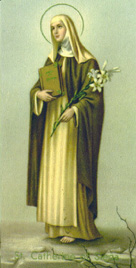 St. Catherine of Siena: Saint of the Day for Monday, April 29, 2024
 Prayer for the Dead # 3: Prayer of the Day for Monday, April 29, 2024
We ask you, humbly: don't scroll away.
Hi readers, it seems you use Catholic Online a lot; that's great! It's a little awkward to ask, but we need your help. If you have already donated, we sincerely thank you. We're not salespeople, but we depend on donations averaging $14.76 and fewer than 1% of readers give. If you donate just $5.00, the price of your coffee, Catholic Online School could keep thriving. Thank you.Help Now >


Copyright 2024 Catholic Online. All materials contained on this site, whether written, audible or visual are the exclusive property of Catholic Online and are protected under U.S. and International copyright laws, © Copyright 2024 Catholic Online. Any unauthorized use, without prior written consent of Catholic Online is strictly forbidden and prohibited.
Catholic Online is a Project of Your Catholic Voice Foundation, a Not-for-Profit Corporation. Your Catholic Voice Foundation has been granted a recognition of tax exemption under Section 501(c)(3) of the Internal Revenue Code. Federal Tax Identification Number: 81-0596847. Your gift is tax-deductible as allowed by law.