We ask you, humbly: don't scroll away.
Hi readers, it seems you use Catholic Online a lot; that's great! It's a little awkward to ask, but we need your help. If you have already donated, we sincerely thank you. We're not salespeople, but we depend on donations averaging $14.76 and fewer than 1% of readers give. If you donate just $5.00, the price of your coffee, Catholic Online School could keep thriving. Thank you.Help Now >
Juan Bautista de Toledo
FREE Catholic Classes
An eminent Spanish sculptor and architect; b. at Madrid (date not known); d. there 19 May, 1567. In 1547 he went to Rome and studied under the influence of Michelangelo Buonarroti. Afterwards he went to Naples, having been sent for by the Viceroy, Don Pietro de Toledo, who engaged him as architect to the emperor, Charles V. He designed and superintended many important works in that capital. Among others, the Strada di Toledo (since 1870 called Strada di Roma), the church of Santiago or S. Giacomo degli Spagnuoli; the square bastions to the Castello Nuovo; a large palazzo at Poselipo, or Pauselipo, and a number of fountains. In 1559, at the summons of Philip II, he went to Madrid and was appointed architect-in-chief of the royal works in Spain. His yearly salary as architect to the Crown was at first not more than 220 ducats, Philip's policy, with his Spanish artists at least, being to assign them moderate allowances until he had tested their abilities. At Madrid he designed the Casa de la Misericordia and the façade of the church de las Descalzas Reales; works at Aceca; at the palace of Aranjuez; at Martininos de las Posadas, the palace of Cardinal Espinosa, and a villa at Esteban de Ambran for the secretary D. de Vargas. Toledo soon began his plan for the Escorial, of which he saw the first stone laid on 23 April, 1563, and he superintended the work till his death. He was generally considered an architect of much merit, well-versed in philosophy, mathematics, and the belles-lettres, and endowed with all those qualities which Vitruvius considers necessary to form a good architect.

We ask you, humbly: don't scroll away.
Hi readers, it seems you use Catholic Online a lot; that's great! It's a little awkward to ask, but we need your help. If you have already donated, we sincerely thank you. We're not salespeople, but we depend on donations averaging $14.76 and fewer than 1% of readers give. If you donate just $5.00, the price of your coffee, Catholic Online School could keep thriving. Thank you.Help Now >
We ask you, humbly: don't scroll away.
Hi readers, it seems you use Catholic Online a lot; that's great! It's a little awkward to ask, but we need your help. If you have already donated, we sincerely thank you. We're not salespeople, but we depend on donations averaging $14.76 and fewer than 1% of readers give. If you donate just $5.00, the price of your coffee, Catholic Online School could keep thriving. Thank you.Help Now >
Join the Movement
When you sign up below, you don't just join an email list - you're joining an entire movement for Free world class Catholic education.


-

-
Mysteries of the Rosary
-
St. Faustina Kowalska
-
Litany of the Blessed Virgin Mary
-
Saint of the Day for Wednesday, Oct 4th, 2023
-
Popular Saints
-
St. Francis of Assisi
-
Bible
-
Female / Women Saints
-
7 Morning Prayers you need to get your day started with God
-
Litany of the Blessed Virgin Mary

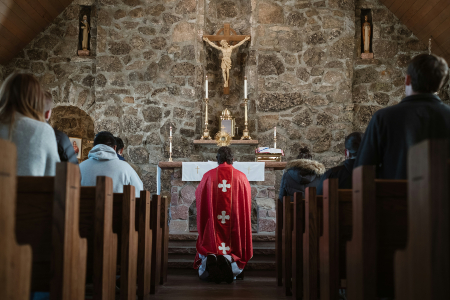
U.S. Catholic Parishes Experience Resurgence of Traditional Practices
-
Pope Francis Urges Faith and Prayers for Peace
-
Florida Welcomes Volunteer Chaplains to Public Schools
-
10 Fascinating Details About St. Joseph the Worker: Celebrating His Feast Day - May 1
-
St. Joseph the Worker: Model for Men, Young and Old

Daily Catholic
- Daily Readings for Thursday, May 02, 2024
- St. Athanasius: Saint of the Day for Thursday, May 02, 2024
- The Our Father: Prayer of the Day for Thursday, May 02, 2024
- Daily Readings for Wednesday, May 01, 2024
- St. Marculf: Saint of the Day for Wednesday, May 01, 2024
- To Saint Peregrine: Prayer of the Day for Wednesday, May 01, 2024
 Daily Readings for Thursday, May 02, 2024
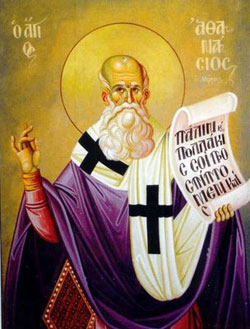 St. Athanasius: Saint of the Day for Thursday, May 02, 2024
 The Our Father: Prayer of the Day for Thursday, May 02, 2024


Copyright 2024 Catholic Online. All materials contained on this site, whether written, audible or visual are the exclusive property of Catholic Online and are protected under U.S. and International copyright laws, © Copyright 2024 Catholic Online. Any unauthorized use, without prior written consent of Catholic Online is strictly forbidden and prohibited.
Catholic Online is a Project of Your Catholic Voice Foundation, a Not-for-Profit Corporation. Your Catholic Voice Foundation has been granted a recognition of tax exemption under Section 501(c)(3) of the Internal Revenue Code. Federal Tax Identification Number: 81-0596847. Your gift is tax-deductible as allowed by law.
