We ask you, humbly: don't scroll away.
Hi readers, it seems you use Catholic Online a lot; that's great! It's a little awkward to ask, but we need your help. If you have already donated, we sincerely thank you. We're not salespeople, but we depend on donations averaging $14.76 and fewer than 1% of readers give. If you donate just $5.00, the price of your coffee, Catholic Online School could keep thriving. Thank you.Help Now >
Josias
FREE Catholic Classes
(J OSIAH – Hebrew for " Yahweh supports"; Septuagint 'Iosías ).
A pious King of Juda (639-608 B.C. ), who ascended the throne when he was only eight years of age. He was the son of Amon and the grandson of Manasses. His mother's name is given as Idida, the daughter of Hadaia [IV (II) Kings, xxii, 1]. Of the actual influences under which he grew up nothing is known for certain. His reign of thirty-one years is recorded in the parallel and slightly divergent asccounts of IV (II) Kings, xxii-xxiii, 30, and II Paralipomenon (Chronicles), xxxiv-xxxv. The following is a summary of Josias's public acts as they are set forth in the former of these accounts. In the eighteenth year of his rule, the Jewish king undertook to repair the Temple with the help of the high-priest Helcias. During the course of this work, Helcias found "the Book of the Law", and handed it to the royal scribe, Saphan, who read it to Josias. The threats made therein against the transgression of its contents frightened the monarch, who well knew how often these had been disobeyed in the past, and who sent to consult the prophetess Holda then living in Jerusalem. Holda declared that the threatened punishments would indeed take place, but only after Josias's death. Whereupon the king assembled the people, published the Law in their hearing, and they all united with Josias in a solemn vow of obedience to its commands. This was followed by a drastic reformation of worship not only in Juda and in Jerusalem, but also in Northern Israel, which was not strictly a part of Josias's kingdom, but in which the Jewish prince could easily intervene, owing probably to the feeble hold of Assyria at the time upon this distant portion of its territory. The work of reform was concluded by a magnificent celebration of the Pasch.
We ask you, humbly: don't scroll away.
Hi readers, it seems you use Catholic Online a lot; that's great! It's a little awkward to ask, but we need your help. If you have already donated, we sincerely thank you. We're not salespeople, but we depend on donations averaging $14.76 and fewer than 1% of readers give. If you donate just $5.00, the price of your coffee, Catholic Online School could keep thriving. Thank you.Help Now >
Of the thirteen years of Josias's reign which followed this important reformation, nothing is said in the narrative of the Fourth Book of Kings. We are simply told of the monarch's exceeding piety towards Yahweh and of his death on the battle-field of Mageddo, where he perished fighting against the Egyptian Pharaoh, Nechao II, who was then on his way to the Euphrates against the Assyrians. Whoever compares carefully and impartially with this first account of Josias's reign the second one given in II Par., xxxiv-xxxv, cannot help being struck with their wonderful substantial agreement. Both Biblical records agree perfectly as to the age of the king at his accession and as to the length of his reign. Like the narrative of Kings, that of Paralipomenon refers to the eighteenth year of Josias's rule the discovery of the "Book of the Law", relates the same circumstances as attending that event, speaks of a work of religious reform as carried out throughout all Israel on account of the contents of that book, and praises the magnificence of the solemn Pasch celebrated in harmony with its prescriptions. Like the narrative of Kings, too, that of Paralipomenon appreciates in the most favourable manner the king's character and describes his death on the battle-field of Mageddo when fighting against Nechao. In view of this it is plain that the differences, noticeable in their respective accounts of the reign of Josias by the authors of 2 Kings and 2 Chronicles , are only slight variations naturally accounted for by the somewhat different purposes which the two inspired. With regard to the exact extent and the Mosaic origin of the "Book of the Law", discovered under Josias, see P ENTATEUCH .
 Hi readers, it seems you use Catholic Online a lot; that's great! It's a little awkward to ask, but we need your help. If you have already donated, we sincerely thank you. We're not salespeople, but we depend on donations averaging $14.76 and fewer than 1% of readers give. If you donate just $5.00, the price of your coffee, Catholic Online School could keep thriving. Thank you. Help Now >
Join the Movement
When you sign up below, you don't just join an email list - you're joining an entire movement for Free world class Catholic education.


-

-
Mysteries of the Rosary
-
St. Faustina Kowalska
-
Litany of the Blessed Virgin Mary
-
Saint of the Day for Wednesday, Oct 4th, 2023
-
Popular Saints
-
St. Francis of Assisi
-
Bible
-
Female / Women Saints
-
7 Morning Prayers you need to get your day started with God
-
Litany of the Blessed Virgin Mary

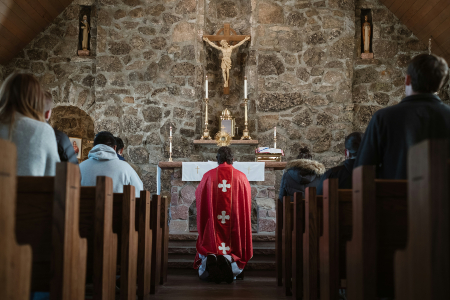
U.S. Catholic Parishes Experience Resurgence of Traditional Practices
-
Pope Francis Urges Faith and Prayers for Peace
-
Florida Welcomes Volunteer Chaplains to Public Schools
-
10 Fascinating Details About St. Joseph the Worker: Celebrating His Feast Day - May 1
-
St. Joseph the Worker: Model for Men, Young and Old

Daily Catholic
- Daily Readings for Thursday, May 02, 2024
- St. Athanasius: Saint of the Day for Thursday, May 02, 2024
- The Our Father: Prayer of the Day for Thursday, May 02, 2024
- Daily Readings for Wednesday, May 01, 2024
- St. Marculf: Saint of the Day for Wednesday, May 01, 2024
- To Saint Peregrine: Prayer of the Day for Wednesday, May 01, 2024
 Daily Readings for Thursday, May 02, 2024
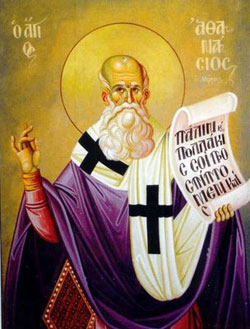 St. Athanasius: Saint of the Day for Thursday, May 02, 2024
 The Our Father: Prayer of the Day for Thursday, May 02, 2024


Copyright 2024 Catholic Online. All materials contained on this site, whether written, audible or visual are the exclusive property of Catholic Online and are protected under U.S. and International copyright laws, © Copyright 2024 Catholic Online. Any unauthorized use, without prior written consent of Catholic Online is strictly forbidden and prohibited.
Catholic Online is a Project of Your Catholic Voice Foundation, a Not-for-Profit Corporation. Your Catholic Voice Foundation has been granted a recognition of tax exemption under Section 501(c)(3) of the Internal Revenue Code. Federal Tax Identification Number: 81-0596847. Your gift is tax-deductible as allowed by law.