 Hi readers, it seems you use Catholic Online a lot; that's great! It's a little awkward to ask, but we need your help. If you have already donated, we sincerely thank you. We're not salespeople, but we depend on donations averaging $14.76 and fewer than 1% of readers give. If you donate just $5.00, the price of your coffee, Catholic Online School could keep thriving. Thank you. Help Now >
Hucbald of St-Amand
FREE Catholic Classes
(HUGBALDUS, UBALDUS, UCHUBALDUS)
A Benedictine monk ; born in 840; died in 930 or 932. The place of birth of Hucbald-Amand is unknown. From the few data we have concerning his career we learn that he entered the Benedictine Order in the monastery of St-Amand-sur-l'Elmon, near Tournai, and that he added music to the other branches of study. Later he entered the Abbey of St-Germain-d'Auxerre, where he completed his general and artistic education. In 883 we find him teaching in the Abbey of St-Bertin. In conjunction with Rémi d'Auxerre, he re-established, in 892, in the Diocese of Reims, the old church schools for singing. Hucbald-Amand made successful efforts to improve and supplement the neumatic notation in use in his time, which indicated the rhythm of the melody, but left the singer dependent on tradition for its intervals. After an attempt to make use once more of the Greek notation, he invented the so-called Dazia signs, which both designate the intervals of the melody and also serve to indicate definitely the character of the various church modes. But these signs, being clumsy and cumbersome, did not attain lasting favour as a system of notation. Hucbald-Amand later used lines and the first letters of the Latin alphabet as a means of fixing the intervals of the scale, and in this way became an important forerunner of Guido of Arezzo. Hucbald's principal achievement, however, consists in having given a theoretic basis to the custom of adding another melody to the chant of the Church, which custom he called organum , or diaphonia (see COUNTERPOINT; HARMONY), thereby laying the foundation for polyphony which developed from it. Hucbald's genuine works (Gerbert, "Scriptores", I) are "De harmonicâ institutione", "Musica enchiriadis", "Scholia enchiriadis", and "Commemoratio brevis de tonis et psalmis modulandis". On account of the discrepancy between some of the theories contained in the first-named treatise and those taught in the "Musica enchiriadis" and the "Scholia enchiriadis", which belong to a much later date in the long life of the author, Hucbald's authorship of the last two works has been called in question, without good reason, however, since it has been pointed out that the "Scholia enchiriadis" is written as a sort of commentary or glossary on the author's first treatise and records the points wherein he had modified his theories.
We ask you, humbly: don't scroll away.
Hi readers, it seems you use Catholic Online a lot; that's great! It's a little awkward to ask, but we need your help. If you have already donated, we sincerely thank you. We're not salespeople, but we depend on donations averaging $14.76 and fewer than 1% of readers give. If you donate just $5.00, the price of your coffee, Catholic Online School could keep thriving. Thank you.Help Now >


Join the Movement
When you sign up below, you don't just join an email list - you're joining an entire movement for Free world class Catholic education.


-

-
Mysteries of the Rosary
-
St. Faustina Kowalska
-
Litany of the Blessed Virgin Mary
-
Saint of the Day for Wednesday, Oct 4th, 2023
-
Popular Saints
-
St. Francis of Assisi
-
Bible
-
Female / Women Saints
-
7 Morning Prayers you need to get your day started with God
-
Litany of the Blessed Virgin Mary


Sacrifices of Faith: The Pro-Life Legacies of St. Gianna and Jessica Hanna
-
How to love God by caring for our bodies
-
Pope Francis calls for negotiations to End Russia-Ukraine War
-
Pope Francis Contemplates Return to U.S. for United Nations Assembly Address
-
Pope Francis Calls on Faithful to Embrace Faith, Hope, and Charity in New Teaching Series


Daily Catholic
- Daily Readings for Sunday, April 28, 2024
- St. Peter Chanel: Saint of the Day for Sunday, April 28, 2024
- Prayer before a Crucifix: Prayer of the Day for Sunday, April 28, 2024
- Daily Readings for Saturday, April 27, 2024
- St. Zita: Saint of the Day for Saturday, April 27, 2024
- Prayer for the Dead # 2: Prayer of the Day for Saturday, April 27, 2024
 Daily Readings for Sunday, April 28, 2024
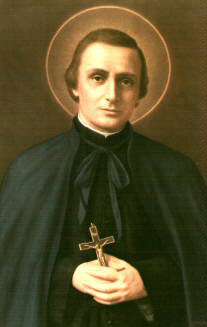 St. Peter Chanel: Saint of the Day for Sunday, April 28, 2024
 Prayer before a Crucifix: Prayer of the Day for Sunday, April 28, 2024


Copyright 2024 Catholic Online. All materials contained on this site, whether written, audible or visual are the exclusive property of Catholic Online and are protected under U.S. and International copyright laws, © Copyright 2024 Catholic Online. Any unauthorized use, without prior written consent of Catholic Online is strictly forbidden and prohibited.
Catholic Online is a Project of Your Catholic Voice Foundation, a Not-for-Profit Corporation. Your Catholic Voice Foundation has been granted a recognition of tax exemption under Section 501(c)(3) of the Internal Revenue Code. Federal Tax Identification Number: 81-0596847. Your gift is tax-deductible as allowed by law.