We ask you, humbly: don't scroll away.
Hi readers, it seems you use Catholic Online a lot; that's great! It's a little awkward to ask, but we need your help. If you have already donated, we sincerely thank you. We're not salespeople, but we depend on donations averaging $14.76 and fewer than 1% of readers give. If you donate just $5.00, the price of your coffee, Catholic Online School could keep thriving. Thank you.Help Now >
Ven. William Howard
FREE Catholic Classes
Viscount Stafford, martyr ; born 30 November, 1614; beheaded Tower-Hill, 29 December, 1680. He was grandson of the Venerable Philip Howard , Earl of Arundel, mentioned above, fifth son of Earl Thomas (the first great art collector of England ), and uncle of Thomas Philip, Cardinal Howard. Brought up as a Catholic, he was made a knight of the Bath, at the coronation of Charles I, 1 February, 1626, and married Mary, sister of the last Baron Stafford, October, 1637; the title was revived for him 12 September, 1640, and he was immediately afterwards created a viscount. He is said to have joined the royal army during the Civil War, but perhaps erroneously, for in 1642 he was in Holland, attending the exiled royal family and his mother and father. He was also employed by the Emperor Ferdinand in missions to Flanders and Switzerland. After his father's death, 4 October 1646, many painful quarrels with his nearest relatives ensued. The Howard properties in England having been sequestrated by Parliament, the family was much impoverished, and William's eldest surviving brother, Earl Henry Frederick, was induced to commence a series of unjust and vexatious suits against his mother, and practically robbed her of her dowry. William, as her representative, was involved in these painful and prolonged quarrels, and even after both mother and brother had passed away, his cousins and their agents continued against him a quasi-persecution for several years.
We ask you, humbly: don't scroll away.
Hi readers, it seems you use Catholic Online a lot; that's great! It's a little awkward to ask, but we need your help. If you have already donated, we sincerely thank you. We're not salespeople, but we depend on donations averaging $14.76 and fewer than 1% of readers give. If you donate just $5.00, the price of your coffee, Catholic Online School could keep thriving. Thank you.Help Now >
The details of these transactions are obscure, but it would seem that the viscount was, under foreign law twice actually arrested, at Heidelberg, July to September, 1653, and at Utrecht in January, 1656, in the latter case he was acquitted with honour, though the charges, of which the particulars are not now known were insulting and vexatious (Stafford Papers, 15 January, 1656, see below). In these troubles his most dangerous opponents were perhaps Junius and other literary adherents of his father, who were claiming manuscripts and rarities from the Arundel Collections in payment of their debts, while Lord William successfully proved that those collections were not liable to such charges. Though they lost, they continued to write bitterly of him, and these complaints have found a permanent record in the diaries and other writings of Evelyn, Burnet, Dugdale, etc. After the Restoration, 1660, his rights were firmly established and his life within his large family circle must have been extremely happy. The brightest hours were perhaps those spent in conducting his nephew Philip to receive the cardinal's hat in Rome (1675).
Three years later Oates (q.v.) and his abetters included Lord Stafford in their list of Catholic lords to be proscribed, and eventually he was put first upon the list. It has been supposed that this was done because his age, simplicity, and the previous differences with other members of his family suggested that he would prove comparatively easy prey. On 25 October, 1678, he was committed to the Tower, and it was more than a year before it was decided to try him. Then the resolution was taken so suddenly that he had little time to prepare. The trial, before the House of Lords, lasted from 30 November to 7 December, and was conducted with great solemnity. But no attempt was made to appraise the perjuries of Oates, Dugdale, and Tuberville, and the viscount was of course condemned by 55 votes to 31. It is sad to read that all his kinsmen but one (that one, however, the Lord Mowbray, with whom he had had many of the legal conflicts above here noticed) voted against him. His last letters and speeches are marked by a quiet dignity and a simple heroism, which give us a high idea of his character. His fellow prisoner and confessor, Father Corker, O.S.B., says: "He was ever held to be of a generous disposition, very charitable, devout, addicted to sobriety, inoffensive in words, a lover of justice." A portrait of him by Van Dyck belongs to the Marquess of Bute.



Join the Movement
When you sign up below, you don't just join an email list - you're joining an entire movement for Free world class Catholic education.


-

-
Mysteries of the Rosary
-
St. Faustina Kowalska
-
Litany of the Blessed Virgin Mary
-
Saint of the Day for Wednesday, Oct 4th, 2023
-
Popular Saints
-
St. Francis of Assisi
-
Bible
-
Female / Women Saints
-
7 Morning Prayers you need to get your day started with God
-
Litany of the Blessed Virgin Mary


Sacrifices of Faith: The Pro-Life Legacies of St. Gianna and Jessica Hanna
-
How to love God by caring for our bodies
-
Pope Francis calls for negotiations to End Russia-Ukraine War
-
Pope Francis Contemplates Return to U.S. for United Nations Assembly Address
-
Pope Francis Calls on Faithful to Embrace Faith, Hope, and Charity in New Teaching Series


Daily Catholic
- Daily Readings for Sunday, April 28, 2024
- St. Peter Chanel: Saint of the Day for Sunday, April 28, 2024
- Prayer before a Crucifix: Prayer of the Day for Sunday, April 28, 2024
- Daily Readings for Saturday, April 27, 2024
- St. Zita: Saint of the Day for Saturday, April 27, 2024
- Prayer for the Dead # 2: Prayer of the Day for Saturday, April 27, 2024
 Daily Readings for Sunday, April 28, 2024
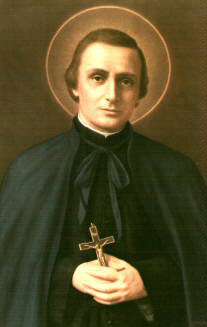 St. Peter Chanel: Saint of the Day for Sunday, April 28, 2024
 Prayer before a Crucifix: Prayer of the Day for Sunday, April 28, 2024



Copyright 2024 Catholic Online. All materials contained on this site, whether written, audible or visual are the exclusive property of Catholic Online and are protected under U.S. and International copyright laws, © Copyright 2024 Catholic Online. Any unauthorized use, without prior written consent of Catholic Online is strictly forbidden and prohibited.
Catholic Online is a Project of Your Catholic Voice Foundation, a Not-for-Profit Corporation. Your Catholic Voice Foundation has been granted a recognition of tax exemption under Section 501(c)(3) of the Internal Revenue Code. Federal Tax Identification Number: 81-0596847. Your gift is tax-deductible as allowed by law.
