We ask you, humbly: don't scroll away.
Hi readers, it seems you use Catholic Online a lot; that's great! It's a little awkward to ask, but we need your help. If you have already donated, we sincerely thank you. We're not salespeople, but we depend on donations averaging $14.76 and fewer than 1% of readers give. If you donate just $5.00, the price of your coffee, Catholic Online School could keep thriving. Thank you.Help Now >
The Pseudo-Hegesippus
FREE Catholic Classes
A fourth-century translator of the "Jewish War" of Flavius Josephus. The name is based on an error. In the manuscripts of the work "Iosippus" appears quite regularly for "Josephus". From Iosippus an unintelligent reviser derived Hegesippus, which name, therefore, is merely that of the original author, ignorantly transcribed. In the best manuscripts, the translator is said to be St. Ambrose. Although formerly much contested, this claim is today acknowledged by the greater number of philologists. The work began to circulate about the time of the death of the Bishop of Milan (398), or shortly after. A letter of St. Jerome (Epist lxxi), written between 386 and 400, bears witness to this. But there is nothing to prove that St. Ambrose wrote this work at the end of his life. The various allusions, notably that to the conquest of Britain by Theodosius (c. 370) are more readily explained if it be an earlier work of St. Ambrose, antedating his episcopate. The translator worked with great freedom, curtailing and abridging here and developing there. As a whole it suggests the work of a rhetorician. There are only five books, the first four corresponding to the first four of Josephus, but the fifth of Hegesippus combines the fifth and sixth books of Josephus, and a part of the seventh book. The authors most frequently imitated are Virgil, Sallust, and Cicero, precisely the writers most frequently imitated by St. Ambrose. The Bible is rarely quoted or made use of, which can be readily understood if the work is anterior to his career as preacher and bishop. The language and style are perceptibly the same as those of St. Ambrose. This translation of the "Bellum Judaicum" must not be confounded with that of Rufinus, which has seven books corresponding to the original, and is more literal. The best edition is that of C.F. Weber and J. Caesar (Marburg, 1864).


Join the Movement
When you sign up below, you don't just join an email list - you're joining an entire movement for Free world class Catholic education.


-

-
Mysteries of the Rosary
-
St. Faustina Kowalska
-
Litany of the Blessed Virgin Mary
-
Saint of the Day for Wednesday, Oct 4th, 2023
-
Popular Saints
-
St. Francis of Assisi
-
Bible
-
Female / Women Saints
-
7 Morning Prayers you need to get your day started with God
-
Litany of the Blessed Virgin Mary


Sacrifices of Faith: The Pro-Life Legacies of St. Gianna and Jessica Hanna
-
How to love God by caring for our bodies
-
Pope Francis calls for negotiations to End Russia-Ukraine War
-
Pope Francis Contemplates Return to U.S. for United Nations Assembly Address
-
Pope Francis Calls on Faithful to Embrace Faith, Hope, and Charity in New Teaching Series


Daily Catholic
- Daily Readings for Sunday, April 28, 2024
- St. Peter Chanel: Saint of the Day for Sunday, April 28, 2024
- Prayer before a Crucifix: Prayer of the Day for Sunday, April 28, 2024
- Daily Readings for Saturday, April 27, 2024
- St. Zita: Saint of the Day for Saturday, April 27, 2024
- Prayer for the Dead # 2: Prayer of the Day for Saturday, April 27, 2024
 Daily Readings for Sunday, April 28, 2024
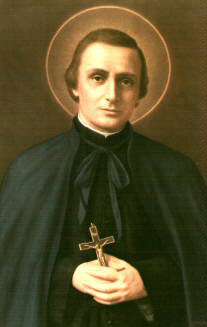 St. Peter Chanel: Saint of the Day for Sunday, April 28, 2024
 Prayer before a Crucifix: Prayer of the Day for Sunday, April 28, 2024
 Hi readers, it seems you use Catholic Online a lot; that's great! It's a little awkward to ask, but we need your help. If you have already donated, we sincerely thank you. We're not salespeople, but we depend on donations averaging $14.76 and fewer than 1% of readers give. If you donate just $5.00, the price of your coffee, Catholic Online School could keep thriving. Thank you. Help Now >


Copyright 2024 Catholic Online. All materials contained on this site, whether written, audible or visual are the exclusive property of Catholic Online and are protected under U.S. and International copyright laws, © Copyright 2024 Catholic Online. Any unauthorized use, without prior written consent of Catholic Online is strictly forbidden and prohibited.
Catholic Online is a Project of Your Catholic Voice Foundation, a Not-for-Profit Corporation. Your Catholic Voice Foundation has been granted a recognition of tax exemption under Section 501(c)(3) of the Internal Revenue Code. Federal Tax Identification Number: 81-0596847. Your gift is tax-deductible as allowed by law.