We ask you, humbly: don't scroll away.
Hi readers, it seems you use Catholic Online a lot; that's great! It's a little awkward to ask, but we need your help. If you have already donated, we sincerely thank you. We're not salespeople, but we depend on donations averaging $14.76 and fewer than 1% of readers give. If you donate just $5.00, the price of your coffee, Catholic Online School could keep thriving. Thank you.Help Now >
Grace at Meals
FREE Catholic Classes
In Apostolic times St. Paul counsels the faithful: "Whether you eat or drink, or whatsoever else you do, do all to the glory of God " ( 1 Corinthians 10:31 ). This precept did not cease to be observed. "Before taking nourishment", says Clement of Alexandria, "it is fitting to praise the Creator of all things, and it is fitting also to sing His praises when we take as nourishment the things created by Him" (Paed., II, iv). Tertullian, a contemporary of Clement, shows us the Christians of the beginning of the third century making the sign of the cross on taking their places at table (De cor. milit., iii). "Our repasts", says he, refering to the Agape, "are in nothing vile or immodest. We do not recline until we have prayed to God. In like manner prayer concludes the feast " (Apol., xxxi). Christian archaeology has collected a large number of cup-bases on which may be read a short prayer, e.g. "Drink in Christ", "Drink piously", "To the worthiest of friends, drink and live with all thine and in thy turn make a toast".
One of the most ancient formulae of prayer at meals is found in a treatise of the fourth century, attributed without foundation to Saint Athanasius. Having made the sign of the cross, the prayer followed: "We give Thee thanks, our Father, for the Resurrection which Thou hast manifested to us through Jesus, Thy Son; and even as this bread which is here on this table was formerly scattered abroad and has been made compact and one, so may Thy Church be reunited from the ends of the earth for Thy Kingdom, for Thine is the power and glory for ever and ever. Amen." Apart from its intrinsic interest this formula possesses a certain importance because it reproduces in part the formula of the "Didache". The prayer said on raising from table is a little longer:

It is not difficult to find examples in the writings of the Fathers of the Church, in the collections of canons, and in the liturgical books, notably in the Gelasian Sacramentary and the Bobbio Sacramentary (Muratori, "Liturgia Romana vetus", I, col. 745; II, col. 949).
In the Roman Liturgy the Benedicite and the Graces are compositions in which Psalms 149 and 33 are utilized, several versicles being omitted. From the most ancient times Psalm 33 has been pre-eminently the communion psalm. At the midday meal Psalm 1 is recited, in the evening Psalm 116 . The origin of these formulæ is monastic, hence the pious commemorations of benefactors.
On the chief liturgical feasts : Easter, Pentecost, etc., a selection of verses recalling the solemnity of the day is substituted for the formulæ in use at ordinary times. See also THANKSGIVING.
 Hi readers, it seems you use Catholic Online a lot; that's great! It's a little awkward to ask, but we need your help. If you have already donated, we sincerely thank you. We're not salespeople, but we depend on donations averaging $14.76 and fewer than 1% of readers give. If you donate just $5.00, the price of your coffee, Catholic Online School could keep thriving. Thank you. Help Now >
We ask you, humbly: don't scroll away.
Hi readers, it seems you use Catholic Online a lot; that's great! It's a little awkward to ask, but we need your help. If you have already donated, we sincerely thank you. We're not salespeople, but we depend on donations averaging $14.76 and fewer than 1% of readers give. If you donate just $5.00, the price of your coffee, Catholic Online School could keep thriving. Thank you.Help Now >
Join the Movement
When you sign up below, you don't just join an email list - you're joining an entire movement for Free world class Catholic education.


-

-
Mysteries of the Rosary
-
St. Faustina Kowalska
-
Litany of the Blessed Virgin Mary
-
Saint of the Day for Wednesday, Oct 4th, 2023
-
Popular Saints
-
St. Francis of Assisi
-
Bible
-
Female / Women Saints
-
7 Morning Prayers you need to get your day started with God
-
Litany of the Blessed Virgin Mary

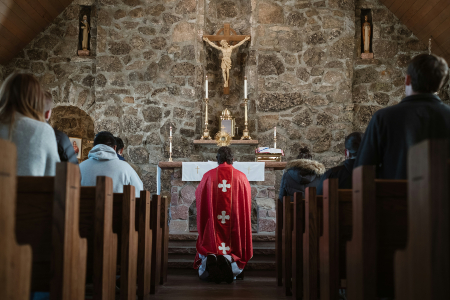
U.S. Catholic Parishes Experience Resurgence of Traditional Practices
-
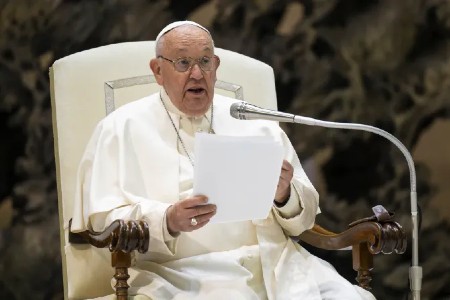
Pope Francis Urges Faith and Prayers for Peace
-
Florida Welcomes Volunteer Chaplains to Public Schools
-
10 Fascinating Details About St. Joseph the Worker: Celebrating His Feast Day - May 1
-
St. Joseph the Worker: Model for Men, Young and Old

Daily Catholic
- Daily Readings for Thursday, May 02, 2024
- St. Athanasius: Saint of the Day for Thursday, May 02, 2024
- The Our Father: Prayer of the Day for Thursday, May 02, 2024
- Daily Readings for Wednesday, May 01, 2024
- St. Marculf: Saint of the Day for Wednesday, May 01, 2024
- To Saint Peregrine: Prayer of the Day for Wednesday, May 01, 2024
 Daily Readings for Thursday, May 02, 2024
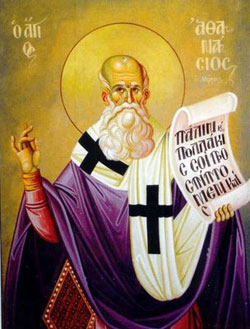 St. Athanasius: Saint of the Day for Thursday, May 02, 2024
 The Our Father: Prayer of the Day for Thursday, May 02, 2024
We ask you, humbly: don't scroll away.
Hi readers, it seems you use Catholic Online a lot; that's great! It's a little awkward to ask, but we need your help. If you have already donated, we sincerely thank you. We're not salespeople, but we depend on donations averaging $14.76 and fewer than 1% of readers give. If you donate just $5.00, the price of your coffee, Catholic Online School could keep thriving. Thank you.Help Now >

Copyright 2024 Catholic Online. All materials contained on this site, whether written, audible or visual are the exclusive property of Catholic Online and are protected under U.S. and International copyright laws, © Copyright 2024 Catholic Online. Any unauthorized use, without prior written consent of Catholic Online is strictly forbidden and prohibited.
Catholic Online is a Project of Your Catholic Voice Foundation, a Not-for-Profit Corporation. Your Catholic Voice Foundation has been granted a recognition of tax exemption under Section 501(c)(3) of the Internal Revenue Code. Federal Tax Identification Number: 81-0596847. Your gift is tax-deductible as allowed by law.