 Hi readers, it seems you use Catholic Online a lot; that's great! It's a little awkward to ask, but we need your help. If you have already donated, we sincerely thank you. We're not salespeople, but we depend on donations averaging $14.76 and fewer than 1% of readers give. If you donate just $5.00, the price of your coffee, Catholic Online School could keep thriving. Thank you. Help Now >
Emile Gebhart
FREE Catholic Classes
A French professor and writer, b. 19 July, 1839, at Nancy ; d. 22 April, 1908, in Paris. He was the grand-nephew of General Drouot, one of the most distinguished soldiers of the First Empire. Having finished his studies in the Lycee of Nancy, he was admitted to the Ecole Francaise of Athens, where he imbibed the Hellenic spirit and gathered a rich harvest of facts and anecdotes for his future works. When he returned to France he was sent to the Lycee of Nice and soon after appointed professor of foreign literatures in the University of Nancy. He was so successful that a chair of Southern European literatures was instituted specially for him at the Sorbonne, in 1880. For the twenty-six years during which he retained that position, he was the most popular professor, the Sorbonne, his course of lectures being attended by enthusiastic audiences both of students and of men and women of the world. In 1895 he was elected to the Academy of Moral and Politual Sciences, and in 1905 to the French Academy. He was fond of travelling, and every summer, for twenty-five years, he spent three months in Italy, visiting Rome, Milan, Florence, Venice, seeking rare and antique books in libraries, staying in monasteries and talking with the monks, and gathering information concerning popular legends from the common people on the streets and in the cottages of the poor. All the materials so collected were afterwards used in his books. His favourite subjects were Greek antiquity and the Italian Renaissance. He treated them in a masterly manner, showing a thorough but unpretentious knowledge. His style is clear, slightly sarcastic at times, but extremely agreeable. His principal works are: "Praxitele" (1864), "La Renaissance et la Réforme" (1877), "Les Origines de la Renaissance et Italie" (1879), "L' Italie mystique" (1890), "Le son des Cloches, contes et légendes" (1898), "Moines et Papes" (1896), "Autour d' une tiare" (1894), "Cloches de Noël et de Pâques" (1900), "Conteurs florentins au moyen-âge" [1901), "Jules II" (1904) "Florence" (1906). The last days of his life were dimmed by sadness. As he had always been fond of mysticism, which he had so well described in his lives of St. Francis of Assisi and St. Catherine of Siena , and as he disliked the rationalistic doctrines of the time the attacks of the Radicals on his religious and patriotic ideals wounded him deeply.

 Hi readers, it seems you use Catholic Online a lot; that's great! It's a little awkward to ask, but we need your help. If you have already donated, we sincerely thank you. We're not salespeople, but we depend on donations averaging $14.76 and fewer than 1% of readers give. If you donate just $5.00, the price of your coffee, Catholic Online School could keep thriving. Thank you. Help Now >
Join the Movement
When you sign up below, you don't just join an email list - you're joining an entire movement for Free world class Catholic education.


-

-
Mysteries of the Rosary
-
St. Faustina Kowalska
-
Litany of the Blessed Virgin Mary
-
Saint of the Day for Wednesday, Oct 4th, 2023
-
Popular Saints
-
St. Francis of Assisi
-
Bible
-
Female / Women Saints
-
7 Morning Prayers you need to get your day started with God
-
Litany of the Blessed Virgin Mary

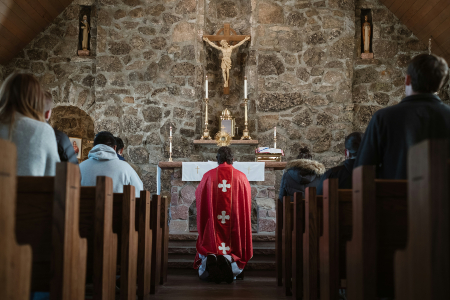
U.S. Catholic Parishes Experience Resurgence of Traditional Practices
-
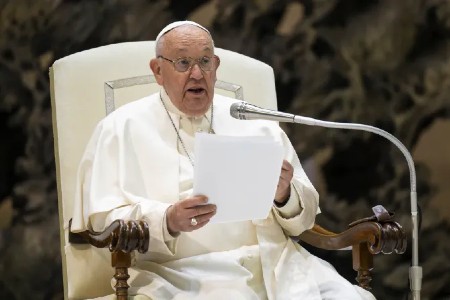
Pope Francis Urges Faith and Prayers for Peace
-
Florida Welcomes Volunteer Chaplains to Public Schools
-
10 Fascinating Details About St. Joseph the Worker: Celebrating His Feast Day - May 1
-
St. Joseph the Worker: Model for Men, Young and Old

Daily Catholic
- Daily Readings for Thursday, May 02, 2024
- St. Athanasius: Saint of the Day for Thursday, May 02, 2024
- The Our Father: Prayer of the Day for Thursday, May 02, 2024
- Daily Readings for Wednesday, May 01, 2024
- St. Marculf: Saint of the Day for Wednesday, May 01, 2024
- To Saint Peregrine: Prayer of the Day for Wednesday, May 01, 2024
 Daily Readings for Thursday, May 02, 2024
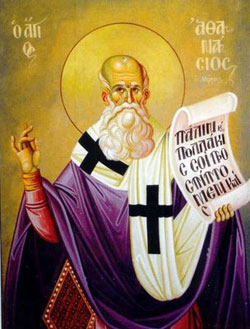 St. Athanasius: Saint of the Day for Thursday, May 02, 2024
 The Our Father: Prayer of the Day for Thursday, May 02, 2024


Copyright 2024 Catholic Online. All materials contained on this site, whether written, audible or visual are the exclusive property of Catholic Online and are protected under U.S. and International copyright laws, © Copyright 2024 Catholic Online. Any unauthorized use, without prior written consent of Catholic Online is strictly forbidden and prohibited.
Catholic Online is a Project of Your Catholic Voice Foundation, a Not-for-Profit Corporation. Your Catholic Voice Foundation has been granted a recognition of tax exemption under Section 501(c)(3) of the Internal Revenue Code. Federal Tax Identification Number: 81-0596847. Your gift is tax-deductible as allowed by law.