We ask you, humbly: don't scroll away.
Hi readers, it seems you use Catholic Online a lot; that's great! It's a little awkward to ask, but we need your help. If you have already donated, we sincerely thank you. We're not salespeople, but we depend on donations averaging $14.76 and fewer than 1% of readers give. If you donate just $5.00, the price of your coffee, Catholic Online School could keep thriving. Thank you.Help Now >
Fulgentius Ferrandus
FREE Catholic Classes
A canonist and theologian of the African Church in the first half of the sixth century. He was a deacon of Carthage and probably accompanied his master and patron, Fulgentius of Ruspe, to exile in Sardinia, when the bishops of the African Church were banished from their sees by the Arian King of the Vandals, Thrasamund. After the death of Thrasamund and the accession of Hilderic, in. 523, the exiles were permitted to return, and Fulgentius, although only a deacon, soon gained a position of great importance in the African Church. He was frequently consulted in regard to the complex theological problems of the time and was known as one of the most redoubtable champions of orthodoxy in Western Christendom. His works are mostly of a doctrinal character. He defended the Trinitarian doctrines against the Arians and dealt besides with the question of the two natures in Christ, with baptism, and with the Eucharist. He drew up a "Breviatio Canonum Ecclesiasticorum" in which he summarized in two hundred and thirty-two canons the teaching of the earliest councils, Nicaea, Laodicea, Sardica, etc., concerning the manner of life of bishops, priests, deacons and other ecclesiastics, and of the conduct to be observed towards Jews, heathens and heretics. He also wrote at the request of the Comes Reginus (who was probably military governor of North Africa ) a treatise on the Christian rule of life for soldiers, in which he laid down seven rules which he explained and inculcated, and in which he gave evidence of his piety and practical wisdom. Through no desire of his own, he was forced to take an active part in the controversy brought about through the condemnation of the "Three Chapters" by the Emperor Justinian. At the request of Pope Vigilius the Roman deacons Pelagius and Anatolius submitted the questions involved in the emperor's censure of the works of Theodore of Mopsuestia , Theodoret of Cyrus, and Ibas of Edessa, to their Carthaginian confrere, requesting him at the same time to lay the matter before the African bishops. Ferrandus at once declared himself in the most emphatic manner against yielding to the schemes of the emperor (Ep. vi, ad Pelagium et Anatolium diaconos). His decision met with the approval of Rusticus, Archbishop of Carthage, and was subsequently ratified by the council of African bishops over which Rusticus presided, and in which it was agreed to sever all relations with Pope Vigilius. Ferrandus died shortly after this event and before the Council of Constantinople was convened. (For his works see P.L., LXVII.)


Join the Movement
When you sign up below, you don't just join an email list - you're joining an entire movement for Free world class Catholic education.
-

-
Mysteries of the Rosary
-
St. Faustina Kowalska
-
Litany of the Blessed Virgin Mary
-
Saint of the Day for Wednesday, Oct 4th, 2023
-
Popular Saints
-
St. Francis of Assisi
-
Bible
-
Female / Women Saints
-
7 Morning Prayers you need to get your day started with God
-
Litany of the Blessed Virgin Mary

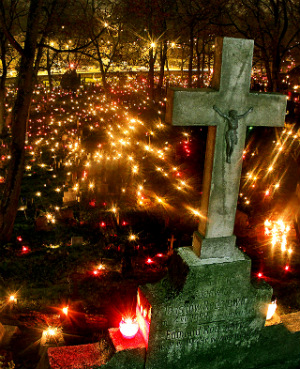
All Saints' Day, Halloween and All Souls' Day: What's the difference?
-
Should Christians Celebrate Halloween?
-
Since when did Halloween become a Christian holiday?
-
ADORABLE: A Little Boy's Heartfelt Lunchtime Prayer
-
Scientists Decode 3,000-Year-Old Babylonian Tablet, Revealing Potential Location of Noah's Ark

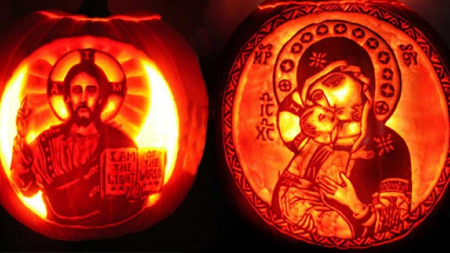
Daily Catholic
- Daily Readings for Friday, November 01, 2024
- St. Valentine Berrio-Ochoa: Saint of the Day for Friday, November 01, 2024
- Litany of the Saints: Prayer of the Day for Friday, November 01, 2024
- Daily Readings for Thursday, October 31, 2024
- St. Wolfgang: Saint of the Day for Thursday, October 31, 2024
- Memorare: Prayer of the Day for Thursday, October 31, 2024
 Daily Readings for Friday, November 01, 2024
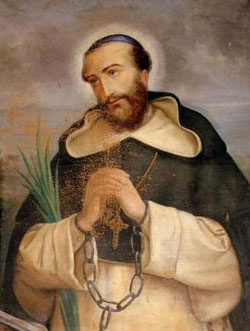 St. Valentine Berrio-Ochoa: Saint of the Day for Friday, November 01, 2024
 Litany of the Saints: Prayer of the Day for Friday, November 01, 2024


Copyright 2024 Catholic Online. All materials contained on this site, whether written, audible or visual are the exclusive property of Catholic Online and are protected under U.S. and International copyright laws, © Copyright 2024 Catholic Online. Any unauthorized use, without prior written consent of Catholic Online is strictly forbidden and prohibited.
Catholic Online is a Project of Your Catholic Voice Foundation, a Not-for-Profit Corporation. Your Catholic Voice Foundation has been granted a recognition of tax exemption under Section 501(c)(3) of the Internal Revenue Code. Federal Tax Identification Number: 81-0596847. Your gift is tax-deductible as allowed by law.
