We ask you, humbly: don't scroll away.
Hi readers, it seems you use Catholic Online a lot; that's great! It's a little awkward to ask, but we need your help. If you have already donated, we sincerely thank you. We're not salespeople, but we depend on donations averaging $14.76 and fewer than 1% of readers give. If you donate just $5.00, the price of your coffee, Catholic Online School could keep thriving. Thank you.Help Now >
Ælia Flaccilla
FREE Catholic Classes
( Plakilla )
Empress, wife of Theodosius the Great , died c. A. D. 385 or 386. Like Theodosius himself, his first wife, Ælia Flaccilla, was of Spanish descent. She may have been the daughter of Claudius Antonius, Prefect of Gaul, who was consul in 382. Her marriage with Theodosius probably took place in the year 376, when his father, the comes Theodosius, fell into disfavour and he himself withdrew to Cauca in Gallæcia, for her eldest son, afterwards Emperor Arcadius, was born towards the end of the following year. In the succeeding years she presented two more children to her husband Honorius (384), who later became emperor, and Pulcheria, who died in early childhood, shortly before her mother. Gregory of Nyssa states expressly that she had three children; consequently the Gratian mentioned by St. Ambrose , together with Pulcheria, was probably not her son. Flaccilla was, like her husband, a zealous supporter of the Nicene Creed and prevented the conference between the emperor and the Arian Eunomius ( Sozomen, Hist. eccl., VII, vi). On the throne she was a shining example of Christian virtue and ardent charity. St. Ambrose describes her as "a soul true to God " ( Fidelis anima Deo . — "De obitu Theodosii", n. 40, in P. L., XVI, 1462). In his panegyric St. Gregory of Nyssa bestowed the highest praise on her virtuous life and pictured her as the helpmate of the emperor in all good works, an ornament of the empire, a leader of justice, an image of beneficence. He praises her as filled with zeal for the Faith, as a pillar of the Church, as a mother of the indigent. Theodoret in particular exalts her charity and benevolence (Hist. eccles., V, xix, ed. Valesius, III, 192 sq.). He tells us how she personally tended cripples, and quotes a saying of hers: "To distribute money belongs to the imperial dignity, but I offer up for the imperial dignity itself personal service to the Giver." Her humility also attracts a special meed of praise from the church historian . Flaccilla was buried in Constantinople, St. Gregory of Nyssa delivering her funeral oration. She is venerated in the Greek Church as a saint, and her feast is kept on 14 September. The Bollandists (Acta SS., Sept., IV, 142) are of the opinion that she is not regarded as a saint but only as venerable, but her name stands in the Greek Menæa and Synaxaria followed by words of eulogy, as is the case with the other saints (cf. e.g. Synaxarium eccl. Constantinopolitanæ, ed. Delehaye, Brussels, 1902, col. 46, under 14 Sept.).
We ask you, humbly: don't scroll away.
Hi readers, it seems you use Catholic Online a lot; that's great! It's a little awkward to ask, but we need your help. If you have already donated, we sincerely thank you. We're not salespeople, but we depend on donations averaging $14.76 and fewer than 1% of readers give. If you donate just $5.00, the price of your coffee, Catholic Online School could keep thriving. Thank you.Help Now >

We ask you, humbly: don't scroll away.
Hi readers, it seems you use Catholic Online a lot; that's great! It's a little awkward to ask, but we need your help. If you have already donated, we sincerely thank you. We're not salespeople, but we depend on donations averaging $14.76 and fewer than 1% of readers give. If you donate just $5.00, the price of your coffee, Catholic Online School could keep thriving. Thank you.Help Now >
Join the Movement
When you sign up below, you don't just join an email list - you're joining an entire movement for Free world class Catholic education.


-

-
Mysteries of the Rosary
-
St. Faustina Kowalska
-
Litany of the Blessed Virgin Mary
-
Saint of the Day for Wednesday, Oct 4th, 2023
-
Popular Saints
-
St. Francis of Assisi
-
Bible
-
Female / Women Saints
-
7 Morning Prayers you need to get your day started with God
-
Litany of the Blessed Virgin Mary


Sacrifices of Faith: The Pro-Life Legacies of St. Gianna and Jessica Hanna
-
How to love God by caring for our bodies
-
Pope Francis calls for negotiations to End Russia-Ukraine War
-
Pope Francis Contemplates Return to U.S. for United Nations Assembly Address
-
Pope Francis Calls on Faithful to Embrace Faith, Hope, and Charity in New Teaching Series


Daily Catholic
- Daily Readings for Sunday, April 28, 2024
- St. Peter Chanel: Saint of the Day for Sunday, April 28, 2024
- Prayer before a Crucifix: Prayer of the Day for Sunday, April 28, 2024
- Daily Readings for Saturday, April 27, 2024
- St. Zita: Saint of the Day for Saturday, April 27, 2024
- Prayer for the Dead # 2: Prayer of the Day for Saturday, April 27, 2024
 Daily Readings for Sunday, April 28, 2024
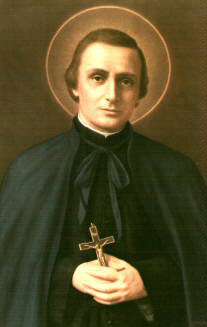 St. Peter Chanel: Saint of the Day for Sunday, April 28, 2024
 Prayer before a Crucifix: Prayer of the Day for Sunday, April 28, 2024


Copyright 2024 Catholic Online. All materials contained on this site, whether written, audible or visual are the exclusive property of Catholic Online and are protected under U.S. and International copyright laws, © Copyright 2024 Catholic Online. Any unauthorized use, without prior written consent of Catholic Online is strictly forbidden and prohibited.
Catholic Online is a Project of Your Catholic Voice Foundation, a Not-for-Profit Corporation. Your Catholic Voice Foundation has been granted a recognition of tax exemption under Section 501(c)(3) of the Internal Revenue Code. Federal Tax Identification Number: 81-0596847. Your gift is tax-deductible as allowed by law.