We ask you, humbly: don't scroll away.
Hi readers, it seems you use Catholic Online a lot; that's great! It's a little awkward to ask, but we need your help. If you have already donated, we sincerely thank you. We're not salespeople, but we depend on donations averaging $14.76 and fewer than 1% of readers give. If you donate just $5.00, the price of your coffee, Catholic Online School could keep thriving. Thank you.Help Now >
St. Finnian of Moville
FREE Catholic Classes
Born about 495; died 589. Though not so celebrated as his namesake of Clonard, he was the founder of a famous school about the year 540. He studied under St. Colman of Dromore and St. Mochae of Noendrum (Mahee Island), and subsequently at Candida Casa (Whithern), whence he proceeded to Rome, returning to Ireland in 540 with an integral copy of St. Jerome's Vulgate. St. Finnian's most distinguished pupil at Moville (County Down) was St. Columba, whose surreptitious copying of the Psaltery led to a very remarkable sequel. What remains of the copy, together with the casket that contains it, is now in the National Museum, Dublin. It is known as the Cathach or Battler , and was wont to be carried by the O'Donnells in battle. The inner case was made by Cathbar O'Donnell in 1084, but the outer is fourteenth-century work. So prized was it that family of MacGroarty were hereditary custodians of this Cathach , and it finally passed, in 1802, to Sir Neal O'Donnell, County Mayo. St. Finnian of Moville wrote a rule for his monks, also a penitential code, the canons of which were published by Wasserschleben in 1851. His festival is observed on 10 September.

Join the Movement
When you sign up below, you don't just join an email list - you're joining an entire movement for Free world class Catholic education.
-

-
Mysteries of the Rosary
-
St. Faustina Kowalska
-
Litany of the Blessed Virgin Mary
-
Saint of the Day for Wednesday, Oct 4th, 2023
-
Popular Saints
-
St. Francis of Assisi
-
Bible
-
Female / Women Saints
-
7 Morning Prayers you need to get your day started with God
-
Litany of the Blessed Virgin Mary

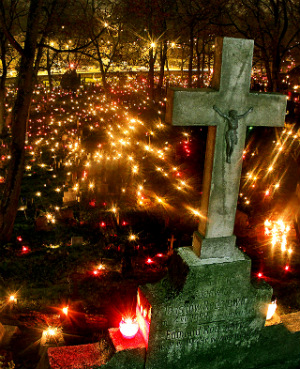
All Saints' Day, Halloween and All Souls' Day: What's the difference?
-
Should Christians Celebrate Halloween?
-
Since when did Halloween become a Christian holiday?
-
ADORABLE: A Little Boy's Heartfelt Lunchtime Prayer
-
Scientists Decode 3,000-Year-Old Babylonian Tablet, Revealing Potential Location of Noah's Ark
Daily Catholic
- Daily Readings for Friday, November 01, 2024
- St. Valentine Berrio-Ochoa: Saint of the Day for Friday, November 01, 2024
- Litany of the Saints: Prayer of the Day for Friday, November 01, 2024
- Daily Readings for Thursday, October 31, 2024
- St. Wolfgang: Saint of the Day for Thursday, October 31, 2024
- Memorare: Prayer of the Day for Thursday, October 31, 2024
 Daily Readings for Friday, November 01, 2024
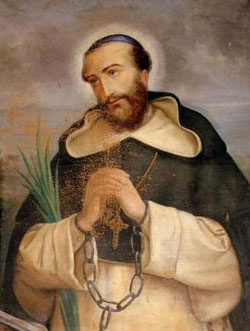 St. Valentine Berrio-Ochoa: Saint of the Day for Friday, November 01, 2024
 Litany of the Saints: Prayer of the Day for Friday, November 01, 2024


Copyright 2024 Catholic Online. All materials contained on this site, whether written, audible or visual are the exclusive property of Catholic Online and are protected under U.S. and International copyright laws, © Copyright 2024 Catholic Online. Any unauthorized use, without prior written consent of Catholic Online is strictly forbidden and prohibited.
Catholic Online is a Project of Your Catholic Voice Foundation, a Not-for-Profit Corporation. Your Catholic Voice Foundation has been granted a recognition of tax exemption under Section 501(c)(3) of the Internal Revenue Code. Federal Tax Identification Number: 81-0596847. Your gift is tax-deductible as allowed by law.
