We ask you, humbly: don't scroll away.
Hi readers, it seems you use Catholic Online a lot; that's great! It's a little awkward to ask, but we need your help. If you have already donated, we sincerely thank you. We're not salespeople, but we depend on donations averaging $14.76 and fewer than 1% of readers give. If you donate just $5.00, the price of your coffee, Catholic Online School could keep thriving. Thank you.Help Now >
Eugenius II (the Younger)
FREE Catholic Classes
Archbishop of Toledo from 647 to 13 Nov., 657, the date of his death. He was the son of a Goth named Evantius, became a cleric in the cathedral of Toledo, and at the death of Eugenius I was elected his successor. The office was so little to his taste that he fled to Saragossa to lead a monastic life, but was forced to return to Toledo by King Chindaswith and take up the government of that see. Though of small stature and feeble health he was a zealous prelate. He undertook the reform of the ecclesiastical chant of the Divine Office and achieved distinction as a writer of prose and poetry. His style is natural and clear, and his exposition easy and agreeable. His poems, though lacking polish and elegance, are full of fire, spirit, and poetic movement. Piety breathes throughout, and the orthodoxy of his faith is notable. His thought is solid, fertile, and gives evidence of a well-trained mind. His feast is kept on 13 November.
Eugenius left two books in prose and verse, published (Paris, 1619) by Father Sirmond, S.J., containing his poems on religious and secular subjects, his recension of the poem of Dracontius on "The Six days of Creation" (Hexaemeron), to which he added a "Seventh Day", and a letter to King Chindaswith explaining the plan of the entire work; he also edited the metrical "Satisfactio" of Dracontius, an account of the writer's misfortunes. Of this work Bardenhewer says (Patrology, tr. St. Louis, 1908, p. 619) that it "underwent a substantial revision at the hands of Eugenius II, Bishop of Toledo, in keeping with the wish of the Visigothic King Chindaswith (642-49); not only were the poetical form and the theology of the poem affected by this treatment,but probably also its political sentiments. It is this revision that was usually printed as Dracontii Elegia ( Migne, P.L., LXXVIII, 383-88), until the edition of Arévalo (Rome, 1791, 362-402, and 901-32) made known the original text". He also wrote a treatise on the Trinity probably against the Arian Visigoths. Ferrera mentions a letter of Eugenius to the king and one to Protasius, the Metropolitan of Tarragona, promising if possible to write a mass of St. Hippolytus and some festal sermons, but disclaiming the ability to equal his former productions.

 Hi readers, it seems you use Catholic Online a lot; that's great! It's a little awkward to ask, but we need your help. If you have already donated, we sincerely thank you. We're not salespeople, but we depend on donations averaging $14.76 and fewer than 1% of readers give. If you donate just $5.00, the price of your coffee, Catholic Online School could keep thriving. Thank you. Help Now >
We ask you, humbly: don't scroll away.
Hi readers, it seems you use Catholic Online a lot; that's great! It's a little awkward to ask, but we need your help. If you have already donated, we sincerely thank you. We're not salespeople, but we depend on donations averaging $14.76 and fewer than 1% of readers give. If you donate just $5.00, the price of your coffee, Catholic Online School could keep thriving. Thank you.Help Now >
Join the Movement
When you sign up below, you don't just join an email list - you're joining an entire movement for Free world class Catholic education.


-

-
Mysteries of the Rosary
-
St. Faustina Kowalska
-
Litany of the Blessed Virgin Mary
-
Saint of the Day for Wednesday, Oct 4th, 2023
-
Popular Saints
-
St. Francis of Assisi
-
Bible
-
Female / Women Saints
-
7 Morning Prayers you need to get your day started with God
-
Litany of the Blessed Virgin Mary

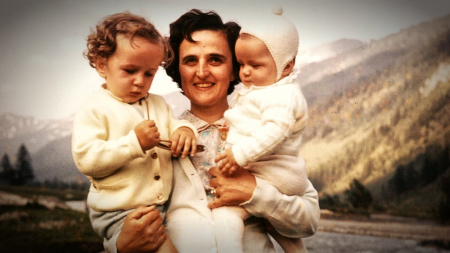
Sacrifices of Faith: The Pro-Life Legacies of St. Gianna and Jessica Hanna
-
How to love God by caring for our bodies
-
Pope Francis calls for negotiations to End Russia-Ukraine War
-
Pope Francis Contemplates Return to U.S. for United Nations Assembly Address
-
Pope Francis Calls on Faithful to Embrace Faith, Hope, and Charity in New Teaching Series


Daily Catholic
- Daily Readings for Saturday, April 27, 2024
- St. Zita: Saint of the Day for Saturday, April 27, 2024
- Prayer for the Dead # 2: Prayer of the Day for Saturday, April 27, 2024
- Daily Readings for Friday, April 26, 2024
- St. Cletus: Saint of the Day for Friday, April 26, 2024
- Prayer before the Closing of the Day: Prayer of the Day for Friday, April 26, 2024
 Daily Readings for Saturday, April 27, 2024
 St. Zita: Saint of the Day for Saturday, April 27, 2024
 Prayer for the Dead # 2: Prayer of the Day for Saturday, April 27, 2024


Copyright 2024 Catholic Online. All materials contained on this site, whether written, audible or visual are the exclusive property of Catholic Online and are protected under U.S. and International copyright laws, © Copyright 2024 Catholic Online. Any unauthorized use, without prior written consent of Catholic Online is strictly forbidden and prohibited.
Catholic Online is a Project of Your Catholic Voice Foundation, a Not-for-Profit Corporation. Your Catholic Voice Foundation has been granted a recognition of tax exemption under Section 501(c)(3) of the Internal Revenue Code. Federal Tax Identification Number: 81-0596847. Your gift is tax-deductible as allowed by law.