We ask you, humbly: don't scroll away.
Hi readers, it seems you use Catholic Online a lot; that's great! It's a little awkward to ask, but we need your help. If you have already donated, we sincerely thank you. We're not salespeople, but we depend on donations averaging $14.76 and fewer than 1% of readers give. If you donate just $5.00, the price of your coffee, Catholic Online School could keep thriving. Thank you.Help Now >
St. Etheldreda
FREE Catholic Classes
Queen of Northumbria; born (probably) about 630; died at Ely, 23 June, 679. While still very young she was given in marriage by her father, Anna, King of East Anglia, to a certain Tonbert, a subordinate prince, from whom she received as morning gift a tract of land locally known as the Isle of Ely. She never lived in wedlock with Tonbert, however, and for five years after his early death was left to foster her vocation to religion. Her father then arranged for her a marriage of political convenience with Egfrid, son and heir to Oswy, King of Northumbria. From this second bridegroom, who is said to have been only fourteen years of age, she received certain lands at Hexham ; through St. Wilfrid of York she gave these lands to found the minster of St. Andrew. St. Wilfrid was her friend and spiritual guide, but it was to him that Egfrid, on succeeding his father, appealed for the enforcement of his marital rights as against Etheldreda's religious vocation. The bishop succeeded at first in persuading Egfrid to consent that Etheldreda should live for some time in peace as a sister of the Coldingham nunnery, founded by her aunt, St. Ebba, in what is now Berwickshire. But at last the imminent danger of being forcibly carried off by the king drove her to wander southwards, with only two women in attendance. They made their way to Etheldreda's own estate of Ely, not, tradition said, without the interposition of miracles, and, on a spot hemmed in by morasses and the waters of the Ouse, the foundation of Ely Minster was begun. This region was Etheldreda's native home, and her royal East Anglian relatives gave her the material means necessary for the execution of her holy design. St. Wilfrid had not yet returned from Rome, where he had obtained extraordinary privileges for her foundation from Benedict II , when she died of a plague which she herself, it is said, had circumstantially foretold. Her body was, throughout many succeeding centuries, an object of devout veneration in the famous church which grew up on her foundation. (See ELY, ANCIENT DIOCESE OF.) One hand of the saint is now venerated in the church of St. Etheldreda, Ely Place, London, which enjoys the distinction of being the first—and at present (1909) the only—pre-Reformation church in Great Britain restored to Catholic worship. Built in the thirteenth century as a private chapel attached to the town residence of the Bishop of Ely, the structure of St. Etheldreda's passed through many vicissitudes during the centuries following its desecration, until, in 1873-74, it was purchased by Father William Lockhart and occupied by the Institute of Charity, of whose English mission Father Lockhart was then superior.

 Hi readers, it seems you use Catholic Online a lot; that's great! It's a little awkward to ask, but we need your help. If you have already donated, we sincerely thank you. We're not salespeople, but we depend on donations averaging $14.76 and fewer than 1% of readers give. If you donate just $5.00, the price of your coffee, Catholic Online School could keep thriving. Thank you. Help Now >
Join the Movement
When you sign up below, you don't just join an email list - you're joining an entire movement for Free world class Catholic education.


-

-
Mysteries of the Rosary
-
St. Faustina Kowalska
-
Litany of the Blessed Virgin Mary
-
Saint of the Day for Wednesday, Oct 4th, 2023
-
Popular Saints
-
St. Francis of Assisi
-
Bible
-
Female / Women Saints
-
7 Morning Prayers you need to get your day started with God
-
Litany of the Blessed Virgin Mary

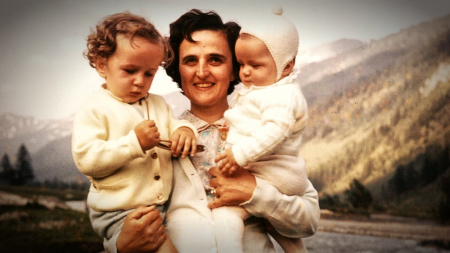
Sacrifices of Faith: The Pro-Life Legacies of St. Gianna and Jessica Hanna
-
How to love God by caring for our bodies
-
Pope Francis calls for negotiations to End Russia-Ukraine War
-
Pope Francis Contemplates Return to U.S. for United Nations Assembly Address
-
Pope Francis Calls on Faithful to Embrace Faith, Hope, and Charity in New Teaching Series


Daily Catholic
- Daily Readings for Saturday, April 27, 2024
- St. Zita: Saint of the Day for Saturday, April 27, 2024
- Prayer for the Dead # 2: Prayer of the Day for Saturday, April 27, 2024
- Daily Readings for Friday, April 26, 2024
- St. Cletus: Saint of the Day for Friday, April 26, 2024
- Prayer before the Closing of the Day: Prayer of the Day for Friday, April 26, 2024
 Daily Readings for Saturday, April 27, 2024
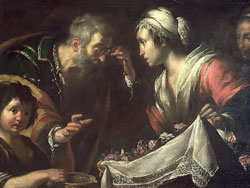 St. Zita: Saint of the Day for Saturday, April 27, 2024
 Prayer for the Dead # 2: Prayer of the Day for Saturday, April 27, 2024
We ask you, humbly: don't scroll away.
Hi readers, it seems you use Catholic Online a lot; that's great! It's a little awkward to ask, but we need your help. If you have already donated, we sincerely thank you. We're not salespeople, but we depend on donations averaging $14.76 and fewer than 1% of readers give. If you donate just $5.00, the price of your coffee, Catholic Online School could keep thriving. Thank you.Help Now >

Copyright 2024 Catholic Online. All materials contained on this site, whether written, audible or visual are the exclusive property of Catholic Online and are protected under U.S. and International copyright laws, © Copyright 2024 Catholic Online. Any unauthorized use, without prior written consent of Catholic Online is strictly forbidden and prohibited.
Catholic Online is a Project of Your Catholic Voice Foundation, a Not-for-Profit Corporation. Your Catholic Voice Foundation has been granted a recognition of tax exemption under Section 501(c)(3) of the Internal Revenue Code. Federal Tax Identification Number: 81-0596847. Your gift is tax-deductible as allowed by law.