We ask you, humbly: don't scroll away.
Hi readers, it seems you use Catholic Online a lot; that's great! It's a little awkward to ask, but we need your help. If you have already donated, we sincerely thank you. We're not salespeople, but we depend on donations averaging $14.76 and fewer than 1% of readers give. If you donate just $5.00, the price of your coffee, Catholic Online School could keep thriving. Thank you.Help Now >
St. Elizabeth of Portugal
FREE Catholic Classes
Queen (sometimes known as the PEACEMAKER); born in 1271; died in 1336. She was named after her great-aunt, the great Elizabeth of Hungary, but is known in Portuguese history by the Spanish form of that name, Isabel. The daughter of Pedro III, King of Aragon, and Constantia, grandchild of Emperor Frederick II, she was educated very piously, and led a life of strict regularity and self-denial from her childhood: she said the full Divine Office daily, fasted and did other penances, and gave up amusement. Elizabeth was married very early to Diniz (Denis), King of Portugal, a poet, and known as Ré Lavrador , or the working king, from his hard work in is country's service. His morals, however, were extremely bad, and the court to which his young wife was brought consequently most corrupt. Nevertheless, Elizabeth quietly pursued the regular religious practices of her maidenhood, whilst doing her best to win her husband's affections by gentleness and extraordinary forbearance. She was devoted to the poor and sick, and gave every moment she could spare to helping them, even pressing her court ladies into their service. Naturally, such a life was a reproach to many around her, and caused ill will in some quarters. A popular story is told of how her husband's jealousy was roused by an evil-speaking page; of how he condemned the queen's supposed guilty accomplice to a cruel death; and was finally convinced of her innocence by the strange accidental substitution of her accuser for the intended victim.

Diniz does not appear to have reformed in morals till late in life, when we are told that the saint won him to repentance by her prayers and unfailing sweetness. They had two children, a daughter Constantia and a son Affonso. The latter so greatly resented the favours shown to the king's illegitimate sons that he rebelled, and in 1323 war was declared between him and his father. St. Elizabeth, however, rode in person between the opposing armies, and so reconciled her husband and son. Diniz died in 1325, his son succeeding him as Affonso IV. St. Elizabeth then retired to a convent of Poor Clares which she had founded at Coimbra, where she took the Franciscan Tertiary habit, wishing to devote the rest of her life to the poor and sick in obscurity. But she was called forth to act once more as peacemaker. In 1336 Affonso IV marched his troops against the King of Castile, to whom he had married his daughter Maria, and who had neglected and ill-treated her. In spite of age and weakness, the holy queen dowager insisted on hurrying to Estremoz, where the two king's armies were drawn up. She again stopped the fighting and caused terms of peace to be arranged. But the exertion brought on her final illness; and as soon as her mission was fulfilled she died of a fever, full of heavenly joy, and exhorting her son to the love of holiness and peace. St. Elizabeth was buried at Coimbra, and miracles followed her death. She was canonized by Urban VIII in 1625, and her feast is kept on 8 July.
 Hi readers, it seems you use Catholic Online a lot; that's great! It's a little awkward to ask, but we need your help. If you have already donated, we sincerely thank you. We're not salespeople, but we depend on donations averaging $14.76 and fewer than 1% of readers give. If you donate just $5.00, the price of your coffee, Catholic Online School could keep thriving. Thank you. Help Now >
We ask you, humbly: don't scroll away.
Hi readers, it seems you use Catholic Online a lot; that's great! It's a little awkward to ask, but we need your help. If you have already donated, we sincerely thank you. We're not salespeople, but we depend on donations averaging $14.76 and fewer than 1% of readers give. If you donate just $5.00, the price of your coffee, Catholic Online School could keep thriving. Thank you.Help Now >
Join the Movement
When you sign up below, you don't just join an email list - you're joining an entire movement for Free world class Catholic education.


-

-
Mysteries of the Rosary
-
St. Faustina Kowalska
-
Litany of the Blessed Virgin Mary
-
Saint of the Day for Wednesday, Oct 4th, 2023
-
Popular Saints
-
St. Francis of Assisi
-
Bible
-
Female / Women Saints
-
7 Morning Prayers you need to get your day started with God
-
Litany of the Blessed Virgin Mary


Sacrifices of Faith: The Pro-Life Legacies of St. Gianna and Jessica Hanna
-
How to love God by caring for our bodies
-
Pope Francis calls for negotiations to End Russia-Ukraine War
-
Pope Francis Contemplates Return to U.S. for United Nations Assembly Address
-
Pope Francis Calls on Faithful to Embrace Faith, Hope, and Charity in New Teaching Series


Daily Catholic
- Daily Readings for Saturday, April 27, 2024
- St. Zita: Saint of the Day for Saturday, April 27, 2024
- Prayer for the Dead # 2: Prayer of the Day for Saturday, April 27, 2024
- Daily Readings for Friday, April 26, 2024
- St. Cletus: Saint of the Day for Friday, April 26, 2024
- Prayer before the Closing of the Day: Prayer of the Day for Friday, April 26, 2024
 Daily Readings for Saturday, April 27, 2024
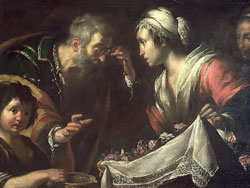 St. Zita: Saint of the Day for Saturday, April 27, 2024
 Prayer for the Dead # 2: Prayer of the Day for Saturday, April 27, 2024

Copyright 2024 Catholic Online. All materials contained on this site, whether written, audible or visual are the exclusive property of Catholic Online and are protected under U.S. and International copyright laws, © Copyright 2024 Catholic Online. Any unauthorized use, without prior written consent of Catholic Online is strictly forbidden and prohibited.
Catholic Online is a Project of Your Catholic Voice Foundation, a Not-for-Profit Corporation. Your Catholic Voice Foundation has been granted a recognition of tax exemption under Section 501(c)(3) of the Internal Revenue Code. Federal Tax Identification Number: 81-0596847. Your gift is tax-deductible as allowed by law.