 Hi readers, it seems you use Catholic Online a lot; that's great! It's a little awkward to ask, but we need your help. If you have already donated, we sincerely thank you. We're not salespeople, but we depend on donations averaging $14.76 and fewer than 1% of readers give. If you donate just $5.00, the price of your coffee, Catholic Online School could keep thriving. Thank you. Help Now >
Cure of Souls
FREE Catholic Classes
( Latin cura animarum ), technically, the exercise of a clerical office involving the instruction, by sermons and admonitions, and the sanctification, through the sacraments, of the faithful in a determined district, by a person legitimately a ppointed for the purpose. Those specially having cure of souls are the pope for the entire Church the bishops in their dioceses, and the parish priests in their respective parishes. Others may likewise have part in the cure of souls in subordination to these. Thus in missionary countries where espiscopal sees have not yet been erected, those who labour for the salvation of souls are in a special manner sharers of the particular responsibility of the Vicar of Christ for those regions. In like manner, a parish priest may have curates who attend to the wants of a particular portion of the parish, subordinate to himself. The object of the cure of souls is the salvation of men, and hence it is a continuation of Christ's mission on earth. As the Reedeemer established a church which was to govern, teach, and sanctify the world, it necessarily follows that those who are to assist in the work of the Church must obtain their mission from her alone. "How shall they preach, unless they be sent?" ( Romans 10:15 ).

The canonical mission of a priest is derived from the Apostolic succession in the Church. This succession is twofold: Holy orders and authority. The first is perpetuated by means of bishops ; the latter by the living magistracy of the Church, of which the head is the pope, who is the source of jurisdiction. Both elements enter into the mission of him who has cure of souls: Holy orders, that he may offer sacrifice and administer the sacraments, which are the ordinary channels of sanctification employe d by the Holy Ghost ; and jurisdiction, that he may teach correct doctrine, free his subjects from sins and censures, and govern them in accordance with the canons of the Church. The power of Holy orders is radically common to all priests by virtue of the ir valid oridination, but the power of jurisdiction is ordinary only in pope, bishops, and parish priests, and extraordinary or delegated in others. It is plain, then, that while valid orders may exsist outside the Catholic Church, jurisdiction cannot, as its source is the Vicar of Christ and it is possessed only so far as he confers it or does not limit it. The duties of those who have cure of souls are all carefully defined in the sacred cannons. (see Pope ; Bishop ; Parish Priest.)
We have here touched only upon what is common to the idea of a pastor of the faithful. It is plain that the closer the bond exsisting between the subordinate members of the hierarchy and their superiors, and between pastors and their people, the more ef fective will be the work done for the salvation of souls. If the pastor be earnest in preaching and admonishing, unremitting in the tribunal of penance and visitaion of the sick, charitable to the poor, kind yet firm in his dealings with all the members of his flock, observant of the regulations of the Church as to his office and particularly that of dwelling among his people (see Residence, Ecclesiastical), that he may know them and bring them succour at all times; and if, on the other hand, the people be truly desirous for their own salvation, obedient towards their pastor, zealous to obtain and employ the means of sanctification, and mindful of their obligations as members of a parish to enable their pastor to institute and improve the parochial insti tutions necessary for the proper furtherance of the object of the Church, we shall have the true idea of the cure of souls as intended by Christ and as legislated for in the canons of His Church.

We ask you, humbly: don't scroll away.
Hi readers, it seems you use Catholic Online a lot; that's great! It's a little awkward to ask, but we need your help. If you have already donated, we sincerely thank you. We're not salespeople, but we depend on donations averaging $14.76 and fewer than 1% of readers give. If you donate just $5.00, the price of your coffee, Catholic Online School could keep thriving. Thank you.Help Now >
Join the Movement
When you sign up below, you don't just join an email list - you're joining an entire movement for Free world class Catholic education.


-

-
Mysteries of the Rosary
-
St. Faustina Kowalska
-
Litany of the Blessed Virgin Mary
-
Saint of the Day for Wednesday, Oct 4th, 2023
-
Popular Saints
-
St. Francis of Assisi
-
Bible
-
Female / Women Saints
-
7 Morning Prayers you need to get your day started with God
-
Litany of the Blessed Virgin Mary

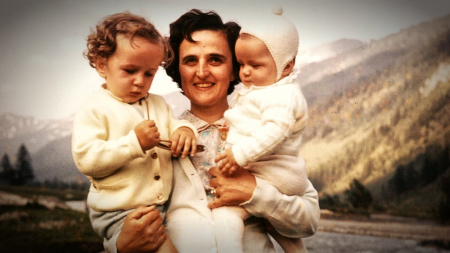
Sacrifices of Faith: The Pro-Life Legacies of St. Gianna and Jessica Hanna
-
How to love God by caring for our bodies
-
Pope Francis calls for negotiations to End Russia-Ukraine War
-
Pope Francis Contemplates Return to U.S. for United Nations Assembly Address
-
Pope Francis Calls on Faithful to Embrace Faith, Hope, and Charity in New Teaching Series


Daily Catholic
- Daily Readings for Saturday, April 27, 2024
- St. Zita: Saint of the Day for Saturday, April 27, 2024
- Prayer for the Dead # 2: Prayer of the Day for Saturday, April 27, 2024
- Daily Readings for Friday, April 26, 2024
- St. Cletus: Saint of the Day for Friday, April 26, 2024
- Prayer before the Closing of the Day: Prayer of the Day for Friday, April 26, 2024
 Daily Readings for Saturday, April 27, 2024
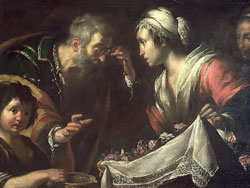 St. Zita: Saint of the Day for Saturday, April 27, 2024
 Prayer for the Dead # 2: Prayer of the Day for Saturday, April 27, 2024

Copyright 2024 Catholic Online. All materials contained on this site, whether written, audible or visual are the exclusive property of Catholic Online and are protected under U.S. and International copyright laws, © Copyright 2024 Catholic Online. Any unauthorized use, without prior written consent of Catholic Online is strictly forbidden and prohibited.
Catholic Online is a Project of Your Catholic Voice Foundation, a Not-for-Profit Corporation. Your Catholic Voice Foundation has been granted a recognition of tax exemption under Section 501(c)(3) of the Internal Revenue Code. Federal Tax Identification Number: 81-0596847. Your gift is tax-deductible as allowed by law.