We ask you, humbly: don't scroll away.
Hi readers, it seems you use Catholic Online a lot; that's great! It's a little awkward to ask, but we need your help. If you have already donated, we sincerely thank you. We're not salespeople, but we depend on donations averaging $14.76 and fewer than 1% of readers give. If you donate just $5.00, the price of your coffee, Catholic Online School could keep thriving. Thank you.Help Now >
Canossa
FREE Catholic Classes
A former castle of Matilda, Countess of Tuscany, in the foothills of the Apennines, about eighteen miles from Parma, where took place the dramatic penance of King Henry IV of Germany in presence of Pope Gregory VII. The king, excommunicated 22 February, 1076, would have been utterly abandoned by the inimical German princess unless within a year he made peace with the pope. Early in January, 1077, the latter was on his way to the diet called to meet at Augsburg, 2 February, when he heard that Henry had crossed Mont Cenis. Fearing for his person, he took refuge in the impregnable and almost inaccessible burg of Canossa, the hereditary stronghold of his friend and protectress, Matilda. The king, however, was really intent on performing the penance necessary to lift the excommunication, by which diplomatic step the plans of his enemies in Germany would be nullified. For three days (25-27 January) he stood constantly before the castle gate, in the dress of a penitent, beseeching with many tears the pope's forgiveness. Gregory finally yielded, moved by the royal compunction and by the importunities of his royal entourage, among them Matilda. He received Henry back into the communion of the Church, and promised to promote his reconciliation with the German princes. But the king soon violated his solemn oath to comply with the pope's conditions, and renewed the conflict. The story, as narrated above, is told by Gregory himself (Reg. Ep., IV, 12), in a letter to the princes of Germany explanatory of the event of Canossa. The contemporary chronicler, Lambert of Hersfeld, asserts that at the Mass of reconciliation the pope, when about to give communion to Henry, took himself on half of the Sacred Host and challenged the king to take the other as an ordeal. Modern historians deny the truth of this assertion.

The penance of Henry was, in reality, only a personal humiliation, and not a degradation of the royal office; nor was it in that form imposed by the pope, nor did the king spend three days and nights in his bare shirt without food and without shelter (Hergenröther, "Kirchengeschichte", ed. Kirsch, II, 361). The ruins of Canossa are now within the Commune of Ciano d'Enza, some shapeless fragments of broken walls that rise on rocky buttresses above a sea of hardened brown mud, "twisted and tossed and contorted into the most hideous of crevasses" (Hare). The castle-well and "gate of penance" alone remain.


Join the Movement
When you sign up below, you don't just join an email list - you're joining an entire movement for Free world class Catholic education.


-

-
Mysteries of the Rosary
-
St. Faustina Kowalska
-
Litany of the Blessed Virgin Mary
-
Saint of the Day for Wednesday, Oct 4th, 2023
-
Popular Saints
-
St. Francis of Assisi
-
Bible
-
Female / Women Saints
-
7 Morning Prayers you need to get your day started with God
-
Litany of the Blessed Virgin Mary


Sacrifices of Faith: The Pro-Life Legacies of St. Gianna and Jessica Hanna
-
How to love God by caring for our bodies
-
Pope Francis calls for negotiations to End Russia-Ukraine War
-
Pope Francis Contemplates Return to U.S. for United Nations Assembly Address
-
Pope Francis Calls on Faithful to Embrace Faith, Hope, and Charity in New Teaching Series


Daily Catholic
- Daily Readings for Sunday, April 28, 2024
- St. Peter Chanel: Saint of the Day for Sunday, April 28, 2024
- Prayer before a Crucifix: Prayer of the Day for Sunday, April 28, 2024
- Daily Readings for Saturday, April 27, 2024
- St. Zita: Saint of the Day for Saturday, April 27, 2024
- Prayer for the Dead # 2: Prayer of the Day for Saturday, April 27, 2024
 Daily Readings for Sunday, April 28, 2024
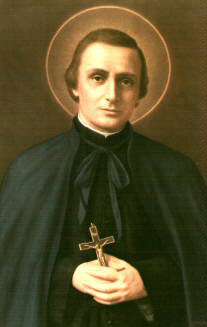 St. Peter Chanel: Saint of the Day for Sunday, April 28, 2024
 Prayer before a Crucifix: Prayer of the Day for Sunday, April 28, 2024
We ask you, humbly: don't scroll away.
Hi readers, it seems you use Catholic Online a lot; that's great! It's a little awkward to ask, but we need your help. If you have already donated, we sincerely thank you. We're not salespeople, but we depend on donations averaging $14.76 and fewer than 1% of readers give. If you donate just $5.00, the price of your coffee, Catholic Online School could keep thriving. Thank you.Help Now >

We ask you, humbly: don't scroll away.
Hi readers, it seems you use Catholic Online a lot; that's great! It's a little awkward to ask, but we need your help. If you have already donated, we sincerely thank you. We're not salespeople, but we depend on donations averaging $14.76 and fewer than 1% of readers give. If you donate just $5.00, the price of your coffee, Catholic Online School could keep thriving. Thank you.Help Now >

Copyright 2024 Catholic Online. All materials contained on this site, whether written, audible or visual are the exclusive property of Catholic Online and are protected under U.S. and International copyright laws, © Copyright 2024 Catholic Online. Any unauthorized use, without prior written consent of Catholic Online is strictly forbidden and prohibited.
Catholic Online is a Project of Your Catholic Voice Foundation, a Not-for-Profit Corporation. Your Catholic Voice Foundation has been granted a recognition of tax exemption under Section 501(c)(3) of the Internal Revenue Code. Federal Tax Identification Number: 81-0596847. Your gift is tax-deductible as allowed by law.