We ask you, humbly: don't scroll away.
Hi readers, it seems you use Catholic Online a lot; that's great! It's a little awkward to ask, but we need your help. If you have already donated, we sincerely thank you. We're not salespeople, but we depend on donations averaging $14.76 and fewer than 1% of readers give. If you donate just $5.00, the price of your coffee, Catholic Online School could keep thriving. Thank you.Help Now >
Adrianople
FREE Catholic Classes
A city of Turkey in Europe. According to legend, Orestes, son of Agamemnon, built this city at the confluence of the Tonsus (Toundja) and the Ardiscus (Arda) with the Hebrus (Maritza). The Emperor Hadrian developed it, adorned it with monuments, changed its name of Orestias to Hadrianopolis, and made it the capital of the province of Haemimont, or Thrace. Licinius was defeated there by Constantine in 323, and Valens killed by the Goths in 378. During the existence of the Latin Empire of Constantinople, Theodore, Despot of Epirus, took possession of it in 1227, and two years later was killed there by Asên, King of the Bulgarians. It was captured by Ainurat I in 1360, and it was the capital of the Turks from 1362 to 1453. It was occupied by the Russians in 1829, during the war for Grecian independence, and in 1878, in the war for Bulgarian independence. Adrianople is today the principal city of a vilayet (province) of the same name, which has about 960,000 inhabitants. It has a thriving commerce in woven stuffs, silks, carpets, and agricultural products. Adrianople contains the ruins of the ancient palace of the Sultans, and has many beautiful mosques, the most remarkable being that of Selim II, of an altogether grandiose appearance and with a cupola three or four feet higher than that of St. Sophia. The city suffered greatly in 1905, from a conflagration. It then possessed about 80,000 inhabitants, of whom 30,000 were Mussulmans. (Turks and some Albanians, Tzigani, and Circassians); 22,000 Greeks, or those speaking Greek; 10,000 Bulgarians ; 4;000 Armenians ; 12,000 Jews ; 2,000 not classifiable. The see of a Greek metropolitan and of a Gregorian Armenian bishop, Adrianople is also the centre of a Bulgarian diocese, but it is not recognized and is deprived of a bishop. The city also has some Protestants. The Latin Catholics, foreigners for the most part, and not numerous, are dependents of the vicariate-apostolic of Constantinople. At Adrianople itself there are the parish of St. Anthony of Padua (Minors Conventual) and a school for girls conducted by the Sisters of Charity of Agram. In the suburb of Kara-Aghatch there are a church (Minor Conventuals ), a school for boys (Assumptionists), and a school for girls (Oblates of the Assumption). Each of its mission stations, at Rodosto and Dédé-Aghatch, has a school (Minor Conventuals ), and there is one at Gallipoli (the Assumptionists ). From the standpoint of the Oriental Catholics, Adrianople is the residence of a Bulgarian vicar-apostolic for the Uniats of the vilayet (province) of Thrace and of the principality of Bulgaria. There are 4,600 of them. They have 18 parishes or missions, 6 of which are in the principality, with 20 churches or chapels, 31 priests, of whom 6 are Assumptionists and 6 are Resurrectionists; 11 schools with 670 pupils. In Adrianople itself there are only a very few United Bulgarians, with an Episcopal church of St. Elias, and the churches of St. Demetrius and Sts. Cyril and Methodius. The last is served by the Resurrectionists, who have also a college of 90 pupils. In the suburb of Kara-Aghatch, the Assumptionists have a parish and a seminary with 50 pupils. Besides the United Bulgarians, the above statistics include the Greek Catholic missions of Malgara and Daoudili, with 4 priests and 200 faithful, because from the civil point of view they belong to the Bulgarian Vicariate.
We ask you, humbly: don't scroll away.
Hi readers, it seems you use Catholic Online a lot; that's great! It's a little awkward to ask, but we need your help. If you have already donated, we sincerely thank you. We're not salespeople, but we depend on donations averaging $14.76 and fewer than 1% of readers give. If you donate just $5.00, the price of your coffee, Catholic Online School could keep thriving. Thank you.Help Now >
We ask you, humbly: don't scroll away.
Hi readers, it seems you use Catholic Online a lot; that's great! It's a little awkward to ask, but we need your help. If you have already donated, we sincerely thank you. We're not salespeople, but we depend on donations averaging $14.76 and fewer than 1% of readers give. If you donate just $5.00, the price of your coffee, Catholic Online School could keep thriving. Thank you.Help Now >
Join the Movement
When you sign up below, you don't just join an email list - you're joining an entire movement for Free world class Catholic education.


-

-
Mysteries of the Rosary
-
St. Faustina Kowalska
-
Litany of the Blessed Virgin Mary
-
Saint of the Day for Wednesday, Oct 4th, 2023
-
Popular Saints
-
St. Francis of Assisi
-
Bible
-
Female / Women Saints
-
7 Morning Prayers you need to get your day started with God
-
Litany of the Blessed Virgin Mary

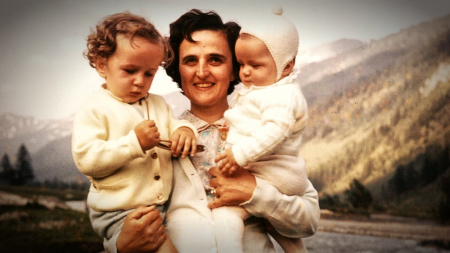
Sacrifices of Faith: The Pro-Life Legacies of St. Gianna and Jessica Hanna
-
How to love God by caring for our bodies
-
Pope Francis calls for negotiations to End Russia-Ukraine War
-
Pope Francis Contemplates Return to U.S. for United Nations Assembly Address
-
Pope Francis Calls on Faithful to Embrace Faith, Hope, and Charity in New Teaching Series

Daily Catholic
- Daily Readings for Sunday, April 28, 2024
- St. Peter Chanel: Saint of the Day for Sunday, April 28, 2024
- Prayer before a Crucifix: Prayer of the Day for Sunday, April 28, 2024
- Daily Readings for Saturday, April 27, 2024
- St. Zita: Saint of the Day for Saturday, April 27, 2024
- Prayer for the Dead # 2: Prayer of the Day for Saturday, April 27, 2024
 Daily Readings for Sunday, April 28, 2024
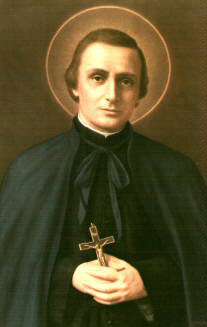 St. Peter Chanel: Saint of the Day for Sunday, April 28, 2024
 Prayer before a Crucifix: Prayer of the Day for Sunday, April 28, 2024
 Hi readers, it seems you use Catholic Online a lot; that's great! It's a little awkward to ask, but we need your help. If you have already donated, we sincerely thank you. We're not salespeople, but we depend on donations averaging $14.76 and fewer than 1% of readers give. If you donate just $5.00, the price of your coffee, Catholic Online School could keep thriving. Thank you. Help Now >

Copyright 2024 Catholic Online. All materials contained on this site, whether written, audible or visual are the exclusive property of Catholic Online and are protected under U.S. and International copyright laws, © Copyright 2024 Catholic Online. Any unauthorized use, without prior written consent of Catholic Online is strictly forbidden and prohibited.
Catholic Online is a Project of Your Catholic Voice Foundation, a Not-for-Profit Corporation. Your Catholic Voice Foundation has been granted a recognition of tax exemption under Section 501(c)(3) of the Internal Revenue Code. Federal Tax Identification Number: 81-0596847. Your gift is tax-deductible as allowed by law.