We ask you, humbly: don't scroll away.
Hi readers, it seems you use Catholic Online a lot; that's great! It's a little awkward to ask, but we need your help. If you have already donated, we sincerely thank you. We're not salespeople, but we depend on donations averaging $14.76 and fewer than 1% of readers give. If you donate just $5.00, the price of your coffee, Catholic Online School could keep thriving. Thank you.Help Now >
Gabriel Barletta
FREE Catholic Classes
(Sometimes called Barlete, De Barolo, Barolus)
Preacher, b., according to some, in the Neapolitan territory at Barletta, whence he took his name, or, according to others, at Aquino; d. sometime after 1480. Little is known of his life other than that he was a Dominican and probably a pupil of St. Antoninus. All his contemporaries held him in high esteem as an orator. He was generally proposed, even during his lifetime, as the model orator. After his death his fame did not diminish, if the popular saying which Altamura has preserved for us be a criterion. Throughout Italy it was the common saying: Nescit praedicare qui nescit barlettare . His sermons appeared in two volumes at Brixen in 1497, and have been reprinted very frequently since. Echard says that no less than thirteen editions appeared in eighty years. The best edition is that of Venice (1577), in two volumes.
In form his sermons are nothing else than the ordinary homily on the virtues and vices of life. He spares none of the foibles and weaknesses of his contemporaries, and in his denunciations passages of eloquent and biting sarcasm are often met with. At times he descends to an almost burlesque mimicry, as witness his sermon on the manner in which the rich ecclesiastic says the Lord's prayer. Coarse things are also to be found, but not so frequently as in the printed sermons of some of his rivals. He has been blamed for this coarseness by Bayle and Theophilus Raynaud, but his name has been completely vindicated by Dominic Casales, O.P., in the work "Candor lilii seu Ordo Praedicatorum a calumniis Petri a Valle Clausa [i.e. Theop. Reynaldi] vindicatus". Some maintain (Tubing, Quartalschrift, 1872, II, 270) that Barletta is not the author of the sermons which bear his name. They base their contention on a sentence of Leander Alberti [Descrizzione di tutta Italia (Bologna, 1550), 200], who says that an unskilled youth whom he knew gathered together old and unknown sermons and ascribed them to Barletta. Furthermore, they must have appeared in the vernacular, whilst we know them in the Latin alone. Thus they have suffered many changes and alterations. But up to the seventeenth century there was no question of the authorship. They show sure signs of the times and are not unworthy of his fame. Hence, scholars generally accept them as authentic.
 Hi readers, it seems you use Catholic Online a lot; that's great! It's a little awkward to ask, but we need your help. If you have already donated, we sincerely thank you. We're not salespeople, but we depend on donations averaging $14.76 and fewer than 1% of readers give. If you donate just $5.00, the price of your coffee, Catholic Online School could keep thriving. Thank you. Help Now >

We ask you, humbly: don't scroll away.
Hi readers, it seems you use Catholic Online a lot; that's great! It's a little awkward to ask, but we need your help. If you have already donated, we sincerely thank you. We're not salespeople, but we depend on donations averaging $14.76 and fewer than 1% of readers give. If you donate just $5.00, the price of your coffee, Catholic Online School could keep thriving. Thank you.Help Now >
Join the Movement
When you sign up below, you don't just join an email list - you're joining an entire movement for Free world class Catholic education.


-

-
Mysteries of the Rosary
-
St. Faustina Kowalska
-
Litany of the Blessed Virgin Mary
-
Saint of the Day for Wednesday, Oct 4th, 2023
-
Popular Saints
-
St. Francis of Assisi
-
Bible
-
Female / Women Saints
-
7 Morning Prayers you need to get your day started with God
-
Litany of the Blessed Virgin Mary


Sacrifices of Faith: The Pro-Life Legacies of St. Gianna and Jessica Hanna
-
How to love God by caring for our bodies
-
Pope Francis calls for negotiations to End Russia-Ukraine War
-
Pope Francis Contemplates Return to U.S. for United Nations Assembly Address
-
Pope Francis Calls on Faithful to Embrace Faith, Hope, and Charity in New Teaching Series


Daily Catholic
- Daily Readings for Sunday, April 28, 2024
- St. Peter Chanel: Saint of the Day for Sunday, April 28, 2024
- Prayer before a Crucifix: Prayer of the Day for Sunday, April 28, 2024
- Daily Readings for Saturday, April 27, 2024
- St. Zita: Saint of the Day for Saturday, April 27, 2024
- Prayer for the Dead # 2: Prayer of the Day for Saturday, April 27, 2024
 Daily Readings for Sunday, April 28, 2024
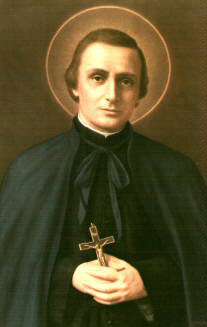 St. Peter Chanel: Saint of the Day for Sunday, April 28, 2024
 Prayer before a Crucifix: Prayer of the Day for Sunday, April 28, 2024
We ask you, humbly: don't scroll away.
Hi readers, it seems you use Catholic Online a lot; that's great! It's a little awkward to ask, but we need your help. If you have already donated, we sincerely thank you. We're not salespeople, but we depend on donations averaging $14.76 and fewer than 1% of readers give. If you donate just $5.00, the price of your coffee, Catholic Online School could keep thriving. Thank you.Help Now >


Copyright 2024 Catholic Online. All materials contained on this site, whether written, audible or visual are the exclusive property of Catholic Online and are protected under U.S. and International copyright laws, © Copyright 2024 Catholic Online. Any unauthorized use, without prior written consent of Catholic Online is strictly forbidden and prohibited.
Catholic Online is a Project of Your Catholic Voice Foundation, a Not-for-Profit Corporation. Your Catholic Voice Foundation has been granted a recognition of tax exemption under Section 501(c)(3) of the Internal Revenue Code. Federal Tax Identification Number: 81-0596847. Your gift is tax-deductible as allowed by law.