We ask you, humbly: don't scroll away.
Hi readers, it seems you use Catholic Online a lot; that's great! It's a little awkward to ask, but we need your help. If you have already donated, we sincerely thank you. We're not salespeople, but we depend on donations averaging $14.76 and fewer than 1% of readers give. If you donate just $5.00, the price of your coffee, Catholic Online School could keep thriving. Thank you.Help Now >
Joseph, Ritter von Aschbach
FREE Catholic Classes
German historian, b. at Hochst, in Hesse-Nassau, 29 April, 1801; d. at Vienna, 25 April, 1882. In 1819, he began the study of theology and philosophy at the University of Heidelberg, but soon turned his attention to that of history, at the instigation of the well-known historian Schlosser. On the completion of this course, in 1823, he was appointed instructor at the Select School of Frankfort-on-the-Main. In 1842 he obtained a reputation as Professor of History at the University of Bonn whence he removed to Vienna in 1853, to fill the same position. Within two years he became a member of the Vienna Academy of Sciences, was ennobled in 1870, and retired from the exercise of his position in 1872, ten years prior to his death. While in Frankfort he wrote: "Geschichte der Westgoten" (Frankfort, 1827); "Geschichte der Omajjaden in Spanien" (Frankfort, 1829, 1830; 2d ed., Vienna, 1860); "Geschichte Spaniens und Portugals zur Zeit der Almaroviden und Almohaden" (2 Vols., Frankfort, 1833, 1837); "Geschichte der Heruler und Gepiden" (first in Schlosser's "Archiv für Geschichte und Literatur" and then separately, Frankfort, 1835); "Geschichte Kaiser Sigmunds" (4 Vols., Hamburg, 1838-45). In Bonn he published, first, the "Urkundliche Geschichte der Grafen von Wertheim" (2 Vols., Frankfort, 1843) and then edited the "Allgemeine Kirchenlexikon" (4 vols., Frankfort and Mainz, 1846-51) most of the historical articles being from his own pen.In Vienna he devoted himself chiefly to the history of the Roman Emporers, and published the interesting, though not always tenable, results of his investigations in the "Sitzungsberichten und Denkschriften" of the Vienna Academy of Sciences. His "Geschichte der Wiener Universität" was written to mark the celebration of the fifth centenary of the University of Vienna. The first volume (Vienna, 1865) dealt with the period from 1365 to 1465; the second (Vienna, 1877), with the Viennese humanists of the time of the Emperor Maximilian I ; the third, which appeared after his death (Vienna, 1888), brings the history down to 1565. His two latest works attracted no little attention: "Die früheren Wanderjahre des Conrad Celtes, und die Anfänge der von ihm errichteten gelehrten Sodalitäten" (Vienna, 1869); and, more especially, "Roswitha und Conrad Celtes" (Vienna, 1867, 2d ed., 1868). In this work, he endeavoured to prove that the poem addressed to the Emperor Otto the Great, hitherto attributed to the nun Roswitha of Gandersheim, really originated in the sixteenth century and was composed by the humanist Conrad Celtes. The contention was, however, immediately and effectually confuted.



Join the Movement
When you sign up below, you don't just join an email list - you're joining an entire movement for Free world class Catholic education.


-

-
Mysteries of the Rosary
-
St. Faustina Kowalska
-
Litany of the Blessed Virgin Mary
-
Saint of the Day for Wednesday, Oct 4th, 2023
-
Popular Saints
-
St. Francis of Assisi
-
Bible
-
Female / Women Saints
-
7 Morning Prayers you need to get your day started with God
-
Litany of the Blessed Virgin Mary


Sacrifices of Faith: The Pro-Life Legacies of St. Gianna and Jessica Hanna
-
How to love God by caring for our bodies
-
Pope Francis calls for negotiations to End Russia-Ukraine War
-
Pope Francis Contemplates Return to U.S. for United Nations Assembly Address
-
Pope Francis Calls on Faithful to Embrace Faith, Hope, and Charity in New Teaching Series


Daily Catholic
- Daily Readings for Sunday, April 28, 2024
- St. Peter Chanel: Saint of the Day for Sunday, April 28, 2024
- Prayer before a Crucifix: Prayer of the Day for Sunday, April 28, 2024
- Daily Readings for Saturday, April 27, 2024
- St. Zita: Saint of the Day for Saturday, April 27, 2024
- Prayer for the Dead # 2: Prayer of the Day for Saturday, April 27, 2024
 Daily Readings for Sunday, April 28, 2024
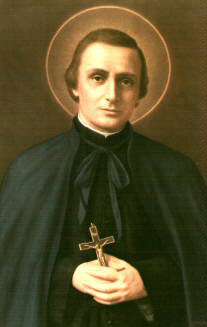 St. Peter Chanel: Saint of the Day for Sunday, April 28, 2024
 Prayer before a Crucifix: Prayer of the Day for Sunday, April 28, 2024
We ask you, humbly: don't scroll away.
Hi readers, it seems you use Catholic Online a lot; that's great! It's a little awkward to ask, but we need your help. If you have already donated, we sincerely thank you. We're not salespeople, but we depend on donations averaging $14.76 and fewer than 1% of readers give. If you donate just $5.00, the price of your coffee, Catholic Online School could keep thriving. Thank you.Help Now >



Copyright 2024 Catholic Online. All materials contained on this site, whether written, audible or visual are the exclusive property of Catholic Online and are protected under U.S. and International copyright laws, © Copyright 2024 Catholic Online. Any unauthorized use, without prior written consent of Catholic Online is strictly forbidden and prohibited.
Catholic Online is a Project of Your Catholic Voice Foundation, a Not-for-Profit Corporation. Your Catholic Voice Foundation has been granted a recognition of tax exemption under Section 501(c)(3) of the Internal Revenue Code. Federal Tax Identification Number: 81-0596847. Your gift is tax-deductible as allowed by law.