Theological and Moral Perspectives on Today's Challenge of Peace
FREE Catholic Classes
United States Conference of Catholic Bishops
Department of Social Development and World Peace
Theological and Moral Perspectives on Today's Challenge of Peace
Speaking notes of
Most Rev. Diarmuid Martin
Coadjutor Archbishop of Dublin
Washington, 10th November 2003
Collective security
"Nothing is to be lost with peace; everything can be lost with war". These were words used by Pope Pius XII on 24th August 1939, on the eve of World War II, a war which was to bring devastating effects on the entire European continent for the following six years, and which gradually expanded, bringing into its clutches the entire globe.
World War II was a war which was accompanied by the horrors of the Holocaust, that terrible mark on the twentieth century which should be a permanent reminder to all of the depths of depravity to which totalitarian regimes are prepared to stoop, when they remain unchallenged.
The outbreak of World War II showed up the weaknesses of the collective security structures which it had been hoped would emerge, at least in an embryonic manner, in the League of Nations.
That early concept of collective security was the fruit of the horrors of World War I. The strong support of President Wilson was crucial for the establishment of the League of Nations. In many ways, the concept of collective security was a "new" proposal from the United States to what it felt then was "old Europe" and its factious nations.
The subsequent lack of support at home in the United States fatally weakened the League of Nations. The inability of the remaining major powers within the League to address aggression, such as the invasion of Ethiopia, finally rendered it ineffective. Collective security requires responsible and coherent action on the part of all.
The United Nations, after World War II, was also inspired by the ideal "of saving succeeding generations from the scourge of war, which twice in our lifetime has brought untold sorrow to mankind" (Charter of the United Nations, Preamble).
It is worth noting that precisely those generations of the twentieth century which had experienced both the horrors of war and the terrors of totalitarianism felt the need to turn to mechanisms of international cooperation to defend their security. The Purpose of the United Nations is to maintain peace and security. Those who emerged from the horrors of war seemed to be more clearly aware that security transcends national power, that no one is secure when anyone is insecure. Peace and security are primordial global issues.
The just war doctrine
Pope John Paul II belongs to that generation which bears deep in its own personal identity the experience of World War II. That personal experience has led Pope John Paul to an abhorrence of both the horrors of war and the inhumanity of totalitarian systems. It is important to recall that his abhorrence is about both: the horrors of both war and totalitarian systems. This was especially clear in his comments on the recent Gulf Wars
Some have begun to ask: has Pope John Paul II assumed a pacifist approach? Has he abandoned the just war theory? Is he - or someone in his name - attempting to change it or does he read that theory with the lens of a particular viewpoint?
Pope John Paul II is against war. At the beginning of this year, addressing the Diplomatic Corps accredited to the Holy See, he repeated his conviction: "No to war, war is never inevitable, it is always a defeat for humankind", just as he has in the past affirmed that war is a path of no return and that the international community must find new ways of ensuring that disputes are resolved by means other than war.
The Catholic Church has however not renounced the just war theory. The Second Vatican Council recalled the theory and the Catechism of the Catholic Church §§ 2307 to2309 and § 2312 to 2314 explicitly mentions the "just war doctrine".
The Church recognizes that a nation has not just the right, but the obligation to ensure the security of its citizens and to respond to an aggression, even - if only under very strict conditions - by means of military force. Article 51 of the UN Charter prescribes that all States, if attacked, retain the inherent right of self defense. The Pope has stressed further that in certain other situations the community of nations has the obligation to block the hand of an aggressor, when he threatens those who cannot defend themselves.
But the section of the Catechism which deals with the strict conditions for legitimate defense by military force is headed "Avoiding war". The treatment of the just war doctrine is introduced by the phrase (§2308): "all citizens and all governments are obliged to work for the avoidance of war". It talks (§2307) about "the evils and injustices which accompany all war".
Catholic reflection has clearly moved in the direction of the affirmation of an imperative towards peace and a presumption that the non-recourse to force is the most appropriate way to resolve disputes between nations, except in the casers foreseen by the United Nations Charter and by the principles of international law.
Unique legitimacy
The obligation on States to defend their people from attack is a true obligation, as is the responsibility of the community of nations to prevent unjust aggression, especially of those who are helpless. When "all other means of putting an end to the damage of aggression have been shown to be impractical and ineffective" recourse to military force may be legitimate under certain circumstances.
The evaluation of the principles belongs to "the prudential judgment of those who have responsibility for the common good". Unfortunately, in the concrete situations, these principles are not always simply to evaluate.
Let me say here as an aside, but an important one. In many years of experience in international questions, I have often been extraordinarily impressed - and humbled - by the sensitivity I have seen among many senior military leaders and those who bear the political responsibility for taking decisions about war or warfare. They are aware of the immense weight which falls on their conscience by virtue of the gravity of the decisions they must take. Those of them especially who have experienced the horrors of war in the front line and in their own flesh are generally the most hesitant about committing the lives of another generation to what they experienced.

Let us come back to that principle of "the prudential decision of those who have responsibility for the common good". Much of the discussion around the just war theory today concerns who bears responsibility for the common good, when many aggressions transcend the boundaries of a single State, when others occur within States that are only partially functioning and where many of those who threaten or carry out aggression are non-State actors of various kinds.
We are, indeed, very often asking who is the legitimate authority competent to address aggression by those who bear no legitimacy, and who spend little time reflecting on the niceties of international law? It is complicated by the fact that, in the past, in the name of a different kind of Realpolitik, legitimate governments have had ambivalent relations with, if not terrorist organizations, organizations which exist on the fringes of normal legality, something which almost inevitably comes back to haunt them.
The Holy See, right throughout the current crisis, has stressed the necessity for the international community to respect the Charter of the United Nations (art. 2, #4): "All Members shall refrain in their international relations from the threat or use of force against the territorial integrity or political independence of any state, or in any other manner inconsistent with the Purposes of the United Nations" and the whole of chapter VII, which foresees what is to be done when peace is threatened or broken, or in any act of aggression.
For the Holy See, in conformity with these principles, any State or group of States which turns unilaterally to the use of force would be acting outside international legitimacy. Apart from the case of self-defense in the face of clear aggression, only the Security Council can, in particular circumstances, decide that there exists a real threat against peace. Even here this does not mean that recourse to force should be, for the same Security Council, the only adequate response.
Those who accept this view must also however accept the challenge set out by the Secretary General of the United Nations at the opening of the General Assembly earlier this year. While he expressed his anxiety that the concerns of some countries could drive them to take unilateral action, he stressed that "We must show that those concerns can, and will be addressed effectively through collective action".
We must look, then, at two challenges to what had been emerging as a consensus in international reflection. For the sake of honesty, it must be admitted that widespread consensus around the fundamental principles still exists, even among those who challenge them in practice. It must also be said that in practice the principles have long been violated in so many conflicts since the foundation of the United Nations. Let us look at the two new challenges:

We have to address the case in which an individual State decides to reserve the right to take military action, either alone or through ad hoc coalitions, without that "unique legitimacy" provided by the United Nations.
We have to face the question of what to do when the instruments of the United Nations show themselves incapable of responding to acts of aggression or threats to international peace, either because of the inertia of member States or through irresponsible behavior on the part of individual members or groups of members, especially within the Security Council (apart altogether with the question of the legitimacy of the current Security Council composition).
Recourse to the United Nations Security Council is the normal and obligatory way to address such challenges. Even during the Gulf War and the Kosovo crises there was an awareness of the importance of this principle, at least on the level of lip service or as an appropriate way to gather international consensus for a perhaps predetermined policy.
But when the Security Council is unable to respond, could there be occasions in which unilateral or multilateral ad hoc measures might be tolerated? This is what happened in Kosovo and what did not happen in the case of the genocide in Rwanda.
The problem is that such action, however noble its motives, can easily lead to a situation of the proliferation of, what the Secretary General called, "the unilateral and lawless use of force, with or without justification".
All this points to the fact that the family of nations is still a very dysfunctional family. The instruments for fostering the global common good are inadequate and are negotiated in general by people paid to defend their own national interest. National interest is inseparable from national economic interest, and here economic interest can be very often the interest of the private sector.
International law is at a crucial stage of its development. In many areas, a network of binding international norms exists. In other cases, international law is still at the level of the codification of the current existing consensus. The United States is ambiguous in its attitude towards international law. Enforcement procedures are still very weak and ambiguous. In any case, so much legal reflection is inspired by positivistic and utilitarian viewpoints that it becomes well neigh impossible to address the deeper underlying philosophical dimensions of international law.
War against terror
Hopefully today no one questions the need to combat terrorism, without ambiguity. We are all in agreement in affirming the need to stop that crazy desire of a small number of people to impose their ideology of hate on everyone, with violent means, which will moreover have their most disastrous effects on innocent people, and often on the poor. Our culture of tolerance should not diminish our capacity to express indignation and condemnation, when one is dealing with violence against innocent people and to do what is necessary concretely to stop that violence. The hand of the aggressor must be blocked.

A war against international terror, however, is not the same as a war about territory. It is a new kind of war. It is a war against an enemy difficult to identify, who does not necessarily live in a stable geographic zone, and who does not represent a nation or a people in the traditional sense. The terrorism of 11th September is not comparable to those terrorist movements that fought for a precise cause or territory.
The new terrorist of the post-11th September world is, in a strange way, a citizen par excellence of the global society, perhaps, alongside the operators of global crime, one of the first delinquent children of the global society, who use the instruments of global interaction against the interests of the global common good.
But the war against terrorism is new in another sense. One could say that a war against terrorism - by definition - cannot be other than a war in favor of the rule of law; it is a war to re-establish, in a wounded world, respect for the dignity of persons and their rights; it is a war which wants not simply to block an enemy, but to foster an equitable coexistence and order in the relationships between persons, peoples and cultures.
When one defines the war against terror in this way, one sees that one is dealing with a war that cannot be fought with traditional arms only. In a war against terror, winning the war means winning the peace. There is no half way house. Neither force by itself, nor the demonstration of one's own military superiority, nor pragmatic pacts of realpolitik are suitable instruments for the creation of a new vision of human co-existence. They could even provoke the opposite result. The victory over those who reject the rule of law and the peaceful coexistence among people can only be achieved within the framework of the legality of the rule of law. Victory can only be proclaimed when legality, the rule of law and peaceful coexistence are reestablished.
Because the "enemy" in a war against terror is difficult to define, we have to be careful to avoid that everyone becomes a potential enemy. We have to avoid the war against terror becoming a war against the other. A society built on fear of the other will never be a peaceful society.
The challenge which every nation which has had to face the scourge of blind and murderous terrorism has been to fight terrorism uncompromisingly, but to do so without renouncing the basic principles of legality which terrorism challenges, but which are the only basis for legitimate action by individual States or the community of nations. Violence, even where it is legitimate, is a blunt weapon in the fight against terrorism. It may even provide new ammunition for embittered and fanatical people to continue with their folly. It may win more hearts for the folly of violence, than it does convert hearts to the prospect of democracy and participation.

Intelligence, investment and development
The arms which have been most successful in the fight against terrorism right across the world have been primarily those of intelligence and international cooperation, of infiltration and of dismantling false ideologies, as well as, of course, development policies focused on the establishment of the infrastructures for democracy.
International terrorism can best be fought by intelligence and the dismantling of their organizations. For me one of the disconcerting factors in the current conflict is that of a weakening of both capacity of and confidence in the intelligence capacity of the Western countries. Public opinion will not be impressed by the argument of governments which say "we have the intelligence but we cannot tell you". Even worse, a culture of political spin can damage the effectiveness of intelligence as well as the confidence of citizens in political institutions. A culture of political spin and sound byte superficiality is leading to disenchantment with politics and political institutions, just when we need confidence in them. Weakening confidence in institutions is a threat to security.
For Pope John Paul, as for Pope John, peace must be built on principles, especially those four pillars identified in Pacem in Terris: truth, justice, love and freedom. The Pope's contribution to the ending of the European communist totalitarian regimes arises not simply from his concrete moral support to the reform movement in his native Poland but above all from his recognition of the fact that the political systems in those individual countries and the geopolitical structures that emerged after Yalta constituted a lie, they did not correspond to the truth.
Democracy requires a relationship of trust between government and citizens. Responsibility for the common good is never entrusted by people to governments absolutely. Citizens retain the right to be informed, to have that sufficient knowledge to be able to influence and participate in, in an appropriate manner, the decision making processes which affect them. Peace can only be built on truth.
I spoke of the importance of development policies in the fight against terror. I am not saying - far from it - that terrorism is the fruit of poverty or that somehow the poor are more likely to become terrorists. Poverty deserves its own response. Fighting poverty also will provide a more lasting security.
Poverty is not simply lack of economic resources. Poverty is the inability of people to realize God-given potential. Fighting poverty is a question of enhancing human potential, so that they can be the people God wishes them to be.

Fighting poverty involves giving people voice in the decisions that concern them, both on the local level and on the level of the broader society in which they live. It is not simply about aid and handouts. Development policy belongs even less to the funding allocations of an old-fashioned Realpolitik, which tried to control relations between States on the basis of the interests of the more powerful. It involves the creation of mature participative democratic structures, in which citizens enjoy voice and are able to contribute as active subjects. Such a policy requires a leap of confidence in the ability of people, even those who have not experienced democracy for many years. It is not a question of doing things for them, but in reestablishing the mutual confidence in other people abilities. The poor have remarkable creativity, which they use simply to survive.
It also requires an investment in human capacity and in social infrastructures, those infrastructures needed to maintain democratic institutions. It may take time, but establishing effective, participatory structure of governance is the real long term answer to international security. Half measures only put off decisions for another day. I was struck by the slogan on some posters I have seen on the streets of Washington in these days, about the evolution of US democracy. It indicates well the way forwards for international peace. The slogan says simply: From civil war to civil rights.
Let us not overlook the fact that war also hinders development, through the destruction of human lives it involves, through the enormous environmental damage it creates, through the breakdown of the network of human interaction it causes. Today it is more dangerous to be a civilian in conflict than to be a combatant, a challenge which humanitarian law must address.
Nuclear disarmament
The pastoral letter on Peace is remembered by many as a pastoral letter on the nuclear question, though it does deal with a broad reflection on peace and on the wider questions concerning disarmament.
At the time of the publication of the Letter the question of peace was very much on the agenda, both in political circles and in the broader society. There was widespread fear of a suicidal conflagration between superpowers. There was a strong popular peace movement. At the beginnings of the Gulf War, a broad-based peace movement has reemerged. There has been a renewed popular interest in the question of war and peace, perhaps more in terms of rejection of war than in the casuistry concerning war which is an essential dimension of security policy.

The cold war gave birth to an important network of international instruments on arms control, especially the Nuclear Non Proliferation Treaty which was its backbone. It was also possible in that period to produce International Conventions, on Chemical; Weapons, on Biological Weapons, on Weapons with humanitarian consequences. In more recent times, the Land Mine Treaty was adopted, the CCW has been expanded to cover also infra-State conflicts and some progress is being made on the question of explosive remnants of war.
But we are now at a major crossroads. Many of these Treaties are marked as cold war treaties, not fully adequate to today's world. The danger is that this important edifice could be dismantled or allowed to collapse, without having an alternative structure in place. We must clearly identify the signs of where this may be happening. I am thinking of questions of proliferation (albeit, thank God, limited). I am thinking of the slowness of the nuclear powers in assuming the responsibilities they assumed in terms of disarmament. Is our acceptance of "deterrence" to be eternally provisional? I am thinking of new nuclear strategies or of how the maintenance of the safety of existing weapons can be achieved without a "modernization" strategy which would put the NPT at risk.
We should also look at other future challenges in arms control, like the question of what I call the first example of the post global era, namely the movement of weapons and technology associated with weapons beyond the globe into the cosmos.
A pastoral plan for peace should also address the question of the proliferation of those arms which are not called weapons of mass destruction, but which have in fact been responsible for massive destruction in human life, small arms and light weapons which are the favorite arms of the wars of the poor. We have to stop the uncontrolled flow of arms into conflict areas. We have to keep children out of contamination with the instruments of war. When conflict ceases we have to ruthlessly collect and destroy the arms that have contributed to them.
Humanitarian intervention
The reaction to humanitarian crisis can range from anything from a rejection of violence up to the request for armed military intervention. An appeal to the use military intervention to attain "humanitarian" goals may seem paradoxical. Many major humanitarian institutions reject it. In some cases, outside military intervention may be the best effective way of controlling a crisis before it gets out of hand. This is especially the challenge regarding certain countries which are on the brink of implosion.

The sad fact is that comparatively modest military intervention can bring an end to conflicts, as has been seen in some African countries. Decisions about military intervention are not easy to make. But one has the impression that we live in a world where there are varying prices on human life. Human life is not to be valued on the strategic importance of where one happens to be born.
The success of such operations depends on their design and mandate and on how quickly they facilitate rapid local ownership of a peace process and economic development. Missions of humanitarian intervention using military need to have a clear mandate and the limitations of military intervention need to be recognized. The success of the military side of the intervention can only be determined by the sending countries. The success of the humanitarian depends on the ownership of the future by local forces.
But there is also a need to renew efforts at peace prevention and post conflict resolution. Church movements have a place to play here, especially in their ability to be politically neutral and to have credibility with the local populations. The Church needs a powerful peace movement, one which tries to make concrete what that presumption against violence means and which draws political leaders to their responsibility to be coherent in their decisions making.
Humankind constitutes one family. We live in a world still built on the boundaries of States, but which is borderless in some many other senses. The Church should be a primary that unity of the human family and in breaking down the barriers that divide them, in building up relationships of trust and in fostering forgiveness and reconciliation among peoples who have become estranged.
We should never underestimate the significance of what Pope John Paul II in his World Day of Peace Message for this year called "gestures of peace", those "innumerable gestures of peace made by men and women throughout history who have kept hope and have not given in to discouragement". These gestures of peace, the Pope recalls, "create a tradition and a culture of peace. Let us not overlook the effectiveness here of gestures of non-violent action, which through its sign value can disarm a culture of violence, which can both disarm the hand of an aggressor and reach out the hand of reconciliation.
Peace is a gift of God
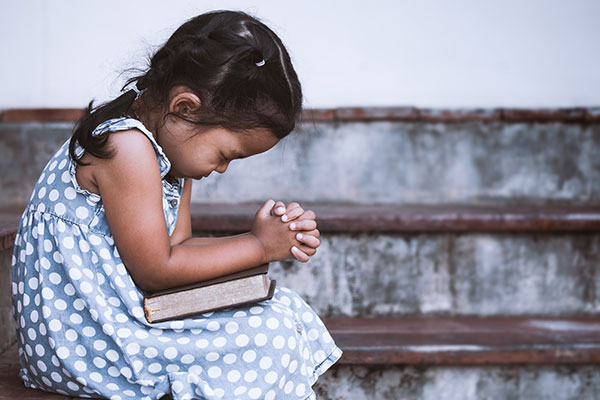
Peace is a gift of God. Christians should be alongside their fellow citizens in marching for peace, in demonstrating for peace, in reflecting on peace. But they must also be involved in what is specifically Christian in the fight for peace: praying for peace, fasting for peace, converting towards peace.
On various occasions Pope John Paul has convoked special meetings of religious leaders to pray for peace. I know personally how he looks on the significance of the 1986 Meeting of Religious Leaders who came together to pray at Assisi. When political efforts to avoid nuclear conflagration were in jeopardy, he felt that the Churches should use their specific arms to invoke in prayer the great gift of God which is peace. We have to be convinced of the value of prayer for peace.
In prayer we recognize the transcendence and lordship of God. We recognize that he alone is lord and sovereign of creation and the good things given to us in stewardship. His love became manifest in Jesus Christ, who took on our humanity and who is our peace. As followers of Jesus we must be prophets of justice and peace and passionate about the situation of humanity in our times.
Contact
United States Conference of Catholic Bishops
http://www.usccb.org
DC, US
United States Conference of Catholic Bishops - Coadjutor Archbishop of Dublin, 202 541-3000
info@yourcatholicvoice.org
Keywords
War, Peace, Terror, Justice
More Catholic PRWire
Showing 1 - 50 of 4,716
A Recession Antidote
Randy Hain
Monaco & The Vatican: Monaco's Grace Kelly Exhibit to Rome--A Review of Monegasque-Holy See Diplomatic History
Dna. Maria St. Catherine Sharpe, t.o.s.m., T.O.SS.T.
The Why of Jesus' Death: A Pauline Perspective
Jerom Paul
A Royal Betrayal: Catholic Monaco Liberalizes Abortion
Dna. Maria St.Catherine De Grace Sharpe, t.o.s.m., T.O.SS.T.
Embrace every moment as sacred time
Mary Regina Morrell
My Dad
JoMarie Grinkiewicz
Letting go is simple wisdom with divine potential
Mary Regina Morrell
Father Lombardi's Address on Catholic Media
Catholic Online
Pope's Words to Pontifical Latin American College
Catholic Online
Prelate: Genetics Needs a Conscience
Catholic Online
State Aid for Catholic Schools: Help or Hindrance?
Catholic Online
Scorsese Planning Movie on Japanese Martyrs
Catholic Online
2 Nuns Kidnapped in Kenya Set Free
Catholic Online
Holy See-Israel Negotiation Moves Forward
Catholic Online
Franchising to Evangelize
Catholic Online
Catholics Decry Anti-Christianity in Israel
Catholic Online
Pope and Gordon Brown Meet About Development Aid
Catholic Online
Pontiff Backs Latin America's Continental Mission
Catholic Online
Cardinal Warns Against Anti-Catholic Education
Catholic Online
Full Circle
Robert Gieb
Three words to a deeper faith
Paul Sposite
Relections for Lent 2009
chris anthony
Wisdom lies beyond the surface of life
Mary Regina Morrell
World Food Program Director on Lent
Catholic Online
Moral Clarity
DAN SHEA
Pope's Lenten Message for 2009
Catholic Online
A Prayer for Monaco: Remembering the Faith Legacy of Prince Rainier III & Princess Grace and Contemplating the Moral Challenges of Prince Albert II
Dna. Maria St. Catherine Sharpe
Keeping a Lid on Permissiveness
Sally Connolly
Glimpse of Me
Sarah Reinhard
The 3 stages of life
Michele Szekely
Sex and the Married Woman
Cheryl Dickow
A Catholic Woman Returns to the Church
Cheryl Dickow
Modernity & Morality
Dan Shea
Just a Minute
Sarah Reinhard
Catholic identity ... triumphant reemergence!
Hugh McNichol
Edging God Out
Paul Sposite
Burying a St. Joseph Statue
Cheryl Dickow
George Bush Speaks on Papal Visit
Catholic Online
Sometimes moving forward means moving the canoe
Mary Regina Morrell
Action Changes Things: Teaching our Kids about Community Service
Lisa Hendey
Easter... A Way of Life
Paul Spoisite
Papal initiative...peace and harmony!
Hugh McNichol
Proclaim the mysteries of the Resurrection!
Hugh McNichol
Jerusalem Patriarch's Easter Message
Catholic Online
Good Friday Sermon of Father Cantalamessa
Catholic Online
Papal Address at the End of the Way of the Cross
Catholic Online
Cardinal Zen's Meditations for Via Crucis
Catholic Online
Interview With Vatican Aide on Jewish-Catholic Relations
Catholic Online
Pope Benedict XVI On the Easter Triduum
Catholic Online
Holy Saturday...anticipation!
Hugh McNichol
Come Grow With Us
Sign up and walk the Catholic journey with millions around the world.
Receive inspiring emails on saints, daily readings, and free faith-building resources—no cost, ever.
Catholic Online Is Free. But We Need Your Help.
Please Watch
- 7 Morning Prayers
- Mysteries of the Rosary
- Litany of the Bl. Virgin Mary
- Popular Saints
- Popular Prayers
- Female Saints
- Saint Feast Days by Month
- Stations of the Cross
- St. Francis of Assisi
- St. Michael the Archangel
- The Apostles' Creed
- Unfailing Prayer to St. Anthony
- Pray the Rosary






Copyright 2026 Catholic Online. All materials contained on this site, whether written, audible or visual are the exclusive property of Catholic Online and are protected under U.S. and International copyright laws, © Copyright 2026 Catholic Online. Any unauthorized use, without prior written consent of Catholic Online is strictly forbidden and prohibited.
Catholic Online is a Project of Your Catholic Voice Foundation, a Not-for-Profit Corporation. Your Catholic Voice Foundation has been granted a recognition of tax exemption under Section 501(c)(3) of the Internal Revenue Code. Federal Tax Identification Number: 81-0596847. Your gift is tax-deductible as allowed by law.