 Hi readers, it seems you use Catholic Online a lot; that's great! It's a little awkward to ask, but we need your help. If you have already donated, we sincerely thank you. We're not salespeople, but we depend on donations averaging $14.76 and fewer than 1% of readers give. If you donate just $5.00, the price of your coffee, Catholic Online School could keep thriving. Thank you. Help Now >
Wednesday's Audience - On Tertullian
FREE Catholic Classes
"Accomplished a Great Step in the Development of the Trinitarian Dogma"
VATICAN CITY, MAY 31, 2007 (Zenit) - Here is a translation of the address Benedict XVI delivered Wednesday at the general audience in St. Peter's Square. The Pope continued his catechesis on the Apostolic Fathers. Today's reflection focused on Tertullian.
* * *
Dear Brothers and Sisters,
With today's catechesis we return to the series that we stopped in honor of the trip to Brazil, and we continue to talk about the great personalities of the ancient Church: They are masters of the faith for us even today and witnesses of the perennial actuality of the Christian faith.
Today we speak about an African, Tertullian, who at the end of the second century and the beginning of the third inaugurated Christian literature in Latin. With him we see the beginning of theology in that language.
His work bore decisive fruits, and it would be unforgivable to undervalue them. His influence is developed on many levels: linguistically and in the recovery of the classic culture, and the singling out of a common "Christian soul" in the world and the formulation of new proposals for living together.
We don't know the exact date of his birth or his death. We know that he was from Carthage, that he lived near the end of the second century, and that from his parents and pagan teachers, he received a solid formation in rhetoric, philosophy, law and history. He converted in Christianity, being attracted -- it seems -- by the example of the Christian martyrs.
We ask you, humbly: don't scroll away.
Hi readers, it seems you use Catholic Online a lot; that's great! It's a little awkward to ask, but we need your help. If you have already donated, we sincerely thank you. We're not salespeople, but we depend on donations averaging $14.76 and fewer than 1% of readers give. If you donate just $5.00, the price of your coffee, Catholic Online School could keep thriving. Thank you.Help Now >
He began publishing his most famous writings in A.D. 197. But because of a too individualistic research of the truth together with his intemperance of character -- he was a rigorous man -- he gradually left communion with the Church and joined a sect of Montanism. But the originality of his thought united with an incisive efficacy of language assured him a high position in ancient Christian literature.
Most noteworthy are his apologetic writings. They show two principal intents: that of confounding the grave accusations that pagans were hurling against the new religion, and that of a more missionary nature -- to communicate the message of the Gospel in dialogue with the culture of that time.
His most famous work, "Apologeticus," denounces the unjust actions of the political authorities toward the Church. He explains and defends the teachings and customs of Christians; he lists the differences between the new religion and the principal philosophical currents of the time; he shows the triumph of the Spirit, who pits the violence of persecutors against the blood, suffering and patience of the martyrs. "As refined as it is," he writes, "your cruelty serves no purpose: On the contrary, for our community, it is an invitation. We multiply every time one of us is mowed down: The blood of Christians is a seed" ("Apologeticus" 50:13).
Martyrdom and suffering for the truth are victorious in the end and more effective than the cruelty and violence of totalitarian regimes.
But Tertullian, like all great apologists, at the same time speaks of the need to communicate the essence of Christianity in a positive way. To do this he adopts the speculative way to show the rational foundations of Christian dogma. He studies them in a systematic manner, and begins with the description of "the God of the Christians." "He whom we adore," he writes, "is one God."
He goes on to say, using the antitheses and paradoxes that are characteristic of his language: "He is invisible, even if you see him, untouchable, even if he is present through grace; unintelligible, even if human sense can perceive him, therefore he is true and great!" (ibid., 17:1-2).
Tertullian also accomplished a great step in the development of the Trinitarian dogma; he gave us, in Latin, the terms adequate to express this great mystery, introducing the terms "one substance" and "three Persons." In a similar way, he also greatly developed the correct language to express the mystery of Christ, Son of God and true Man.

The African also speaks about the Holy Spirit, showing his personal and divine character: "We believe that, according to his promise, Jesus Christ sent by means of his Father the Holy Spirit, the Paraclete, the sanctifier of the faith of all those who believe in the Father, Son and Holy Spirit" (ibid, 2:1).
There are also in the African's writings numerous texts on the Church, which Tertullian always refers to as "mother." Even after joining Montanism, he never forgot that the Church is the Mother of our faith and of our Christian life.
He also speaks about the moral conduct of Christians and the life to come. His writings are important because they reflect the living tendencies of the Christian community about Mary most holy, the Eucharist, matrimony and reconciliation, the primacy of Peter, prayer... In a special way, during those times of persecution in which the Christians seemed to be a lost minority, the apologist exhorted them to hope; that -- in his writings -- is not merely a virtue in itself, but something that involves every aspect of Christian existence. We have the hope that the future is ours because the future is God's.
The Lord's resurrection is presented as the foundation for our future resurrection, and represents the principal object of Christian faith: "And so the flesh shall rise again, wholly in every man, in its own identity, in its absolute integrity. Wherever it may be, it is in safe keeping in God's presence, through that most faithful Mediator between God and man, Jesus Christ, who shall reconcile both God to man, and man to God" (On the Resurrection of the Flesh, 63:1).
From a human point of view one can speak of Tertullian's drama. With the passing of time he came more demanding of Christians. He expected them at all times, and above all in times of persecution, to act heroically. He rigidly held his positions, criticized many and inevitably found himself isolated.
There are still many questions about Tertullian's theological and philosophical thought, but also about his way of dealing with the political institutions and the pagan society of that time.
This great moral and intellectual personality, this man who gave such a great contribution to Christian thought, makes me think. It is evident that at the end he lacks simplicity, the humility to belong to the Church, to accept his weaknesses, to be tolerant of others and with himself.
When you evaluate your thought in terms of your greatness, in the end it is this greatness that is lost. The essential characteristic of a great theologian is the humility to stay with the Church, to accept her and one's own faults, because only God is all holy. We, on the other hand, are always in need of forgiveness.
Tertullian remains an interesting witness of the first years of the Church, when Christians found themselves true subjects of a "new culture" between classic inheritance and the Gospel message. His famous phrase states that our soul "is naturally Christian" (Apologeticus 17:6), where Tertullian evokes the perennial continuity between authentic human values and Christian ones. And his other reflection, taken from the Gospels, says "the Christian cannot hate, not even his own enemies" (Apologeticus 37), where the moral implication of the choice of faith, proposes "nonviolence" as the law of life: And who could not see the relevance of this teaching today in light of the fervent debate on religions.
In Tertullian's writings there are many themes that we are called to face still today. They call us to a fruitful interior examination, to which I exhort all the faithful, so that they may know how to express, in an evermore convincing way, the "Rule of Faith," which -- getting back to Tertullian -- "prescribes the belief that there is one only God, and that he is none other than the Creator of the world, who produced all things out of nothing through his own Word, first of all sent forth" (Prescription against Heretics 13:1).
[After the audience, the Holy Father greeted the people in several languages. In English, he said:]
Dear Brothers and Sisters,
In our catechesis on the Fathers and teachers of the early Church, we now turn to Tertullian, an African from Carthage and the first great Christian author to write in Latin. A convert to Christianity, Tertullian became an eloquent apologist for the faith, not only defending it from its detractors but striving to present positively the Gospel message in dialogue with the pagan intellectual tradition. He emphasized the unity of God while affirming the divinity of Christ and the Holy Spirit. Tertullian's terminology of three "persons" in one divine "substance" marked a significant advance in the development of the dogma of the Trinity. His works also bear witness to the emerging understanding of the dignity of Our Lady, the nature of the Church, the Petrine Primacy, and the sacraments. Tertullian grounds the Christian life in prayer and in hope based on the resurrection of Jesus Christ. Converted by the sufferings of the martyrs, whose blood he called the seed of the Church (cf. Ap., 50.13), Tertullian grew increasingly rigoristic, and eventually left the Church's communion. Yet he remains an influential witness to the Church's rule of faith and an important figure in the perennial dialogue between the Gospel and the world of culture.
Hi readers, it seems you use Catholic Online a lot; that's great! It's a little awkward to ask, but we need your help. If you have already donated, we sincerely thank you. We're not salespeople, but we depend on donations averaging $14.76 and fewer than 1% of readers give. If you donate just $5.00, the price of your coffee, Catholic Online School could keep thriving. Thank you. Help Now >
I am pleased to greet the English-speaking pilgrims, including participants in a seminar organized by the Lay Centre "Foyer Unitas", graduates of the Classical Lyceum of Turku, and pilgrims from the parish of the Immaculate Conception in Devizes. Upon you and your loved ones, I invoke the grace and peace of Almighty God.
© Copyright 2007 -- Libreria Editrice Vaticana
Contact
Catholic Online
https://www.catholic.org
CA, US
Catholic Online - Publisher, 661 869-1000
info@yourcatholicvoice.org
Keywords
Tertullian, Pope, Benedict, Wednesday, Audience, Dogma
We ask you, humbly: don't scroll away.
Hi readers, it seems you use Catholic Online a lot; that's great! It's a little awkward to ask, but we need your help. If you have already donated, we sincerely thank you. We're not salespeople, but we depend on donations averaging $14.76 and fewer than 1% of readers give. If you donate just $5.00, the price of your coffee, Catholic Online School could keep thriving. Thank you.Help Now >
More Catholic PRWire
Showing 1 - 50 of 4,716
A Recession Antidote
Randy Hain
Monaco & The Vatican: Monaco's Grace Kelly Exhibit to Rome--A Review of Monegasque-Holy See Diplomatic History
Dna. Maria St. Catherine Sharpe, t.o.s.m., T.O.SS.T.
The Why of Jesus' Death: A Pauline Perspective
Jerom Paul
A Royal Betrayal: Catholic Monaco Liberalizes Abortion
Dna. Maria St.Catherine De Grace Sharpe, t.o.s.m., T.O.SS.T.
Embrace every moment as sacred time
Mary Regina Morrell
My Dad
JoMarie Grinkiewicz
Letting go is simple wisdom with divine potential
Mary Regina Morrell
Father Lombardi's Address on Catholic Media
Catholic Online
Pope's Words to Pontifical Latin American College
Catholic Online
Prelate: Genetics Needs a Conscience
Catholic Online
State Aid for Catholic Schools: Help or Hindrance?
Catholic Online
Scorsese Planning Movie on Japanese Martyrs
Catholic Online
2 Nuns Kidnapped in Kenya Set Free
Catholic Online
Holy See-Israel Negotiation Moves Forward
Catholic Online
Franchising to Evangelize
Catholic Online
Catholics Decry Anti-Christianity in Israel
Catholic Online
Pope and Gordon Brown Meet About Development Aid
Catholic Online
Pontiff Backs Latin America's Continental Mission
Catholic Online
Cardinal Warns Against Anti-Catholic Education
Catholic Online
Full Circle
Robert Gieb

Three words to a deeper faith
Paul Sposite
Relections for Lent 2009
chris anthony
Wisdom lies beyond the surface of life
Mary Regina Morrell
World Food Program Director on Lent
Catholic Online
Moral Clarity
DAN SHEA
Pope's Lenten Message for 2009
Catholic Online
A Prayer for Monaco: Remembering the Faith Legacy of Prince Rainier III & Princess Grace and Contemplating the Moral Challenges of Prince Albert II
Dna. Maria St. Catherine Sharpe
Keeping a Lid on Permissiveness
Sally Connolly
Glimpse of Me
Sarah Reinhard
The 3 stages of life
Michele Szekely
Sex and the Married Woman
Cheryl Dickow
A Catholic Woman Returns to the Church
Cheryl Dickow
Modernity & Morality
Dan Shea
Just a Minute
Sarah Reinhard
Catholic identity ... triumphant reemergence!
Hugh McNichol
Edging God Out
Paul Sposite
Burying a St. Joseph Statue
Cheryl Dickow
George Bush Speaks on Papal Visit
Catholic Online
Sometimes moving forward means moving the canoe
Mary Regina Morrell
Action Changes Things: Teaching our Kids about Community Service
Lisa Hendey

Easter... A Way of Life
Paul Spoisite
Papal initiative...peace and harmony!
Hugh McNichol
Proclaim the mysteries of the Resurrection!
Hugh McNichol
Jerusalem Patriarch's Easter Message
Catholic Online
Good Friday Sermon of Father Cantalamessa
Catholic Online
Papal Address at the End of the Way of the Cross
Catholic Online
Cardinal Zen's Meditations for Via Crucis
Catholic Online
Interview With Vatican Aide on Jewish-Catholic Relations
Catholic Online
Pope Benedict XVI On the Easter Triduum
Catholic Online
Holy Saturday...anticipation!
Hugh McNichol

Join the Movement
When you sign up below, you don't just join an email list - you're joining an entire movement for Free world class Catholic education.


-

-
Mysteries of the Rosary
-
St. Faustina Kowalska
-
Litany of the Blessed Virgin Mary
-
Saint of the Day for Wednesday, Oct 4th, 2023
-
Popular Saints
-
St. Francis of Assisi
-
Bible
-
Female / Women Saints
-
7 Morning Prayers you need to get your day started with God
-
Litany of the Blessed Virgin Mary

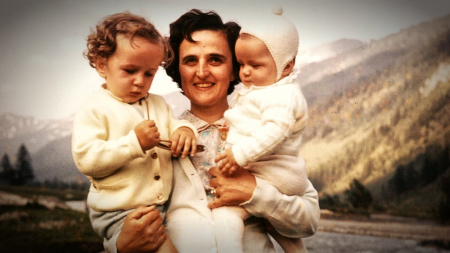
Sacrifices of Faith: The Pro-Life Legacies of St. Gianna and Jessica Hanna
-
How to love God by caring for our bodies
-
Pope Francis calls for negotiations to End Russia-Ukraine War
-
Pope Francis Contemplates Return to U.S. for United Nations Assembly Address
-
Pope Francis Calls on Faithful to Embrace Faith, Hope, and Charity in New Teaching Series

Daily Catholic
- Daily Readings for Saturday, April 27, 2024
- St. Zita: Saint of the Day for Saturday, April 27, 2024
- Prayer for the Dead # 2: Prayer of the Day for Saturday, April 27, 2024
- Daily Readings for Friday, April 26, 2024
- St. Cletus: Saint of the Day for Friday, April 26, 2024
- Prayer before the Closing of the Day: Prayer of the Day for Friday, April 26, 2024
 Daily Readings for Saturday, April 27, 2024
 St. Zita: Saint of the Day for Saturday, April 27, 2024
 Prayer for the Dead # 2: Prayer of the Day for Saturday, April 27, 2024


Copyright 2024 Catholic Online. All materials contained on this site, whether written, audible or visual are the exclusive property of Catholic Online and are protected under U.S. and International copyright laws, © Copyright 2024 Catholic Online. Any unauthorized use, without prior written consent of Catholic Online is strictly forbidden and prohibited.
Catholic Online is a Project of Your Catholic Voice Foundation, a Not-for-Profit Corporation. Your Catholic Voice Foundation has been granted a recognition of tax exemption under Section 501(c)(3) of the Internal Revenue Code. Federal Tax Identification Number: 81-0596847. Your gift is tax-deductible as allowed by law.