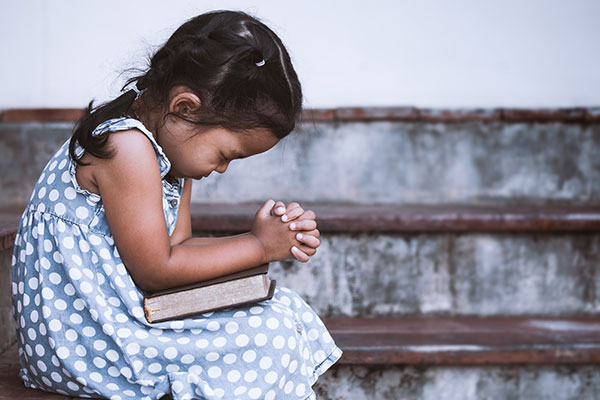
 Millions of people turn to Catholic Online for prayers, Daily Readings, saints, Catholic education and answers about their Faith. Most will never donate. But if Catholic Online has given you more than $5 worth of value this year, we're asking you to do something very simple: Give $5 today.
Your Catholic Voice Foundation also supports Catholic Online School, which has served 2.2 million student enrollments in 193 countries. We don't believe a family's ability to pay should determine whether a child can receive a Catholic education. If we've given you something of value, please give something back.
DONATE TODAY >>Vatican's Address to U.N. on Climate Change
FREE Catholic Classes
"Will Impact First and Foremost the Poorest and Weakest"
NEW YORK, MAY 13, 2007 (Zenit) - Here is the address Archbishop Celestino Migliore, the Holy See's permanent observer to the United Nations, delivered May 10 to the 15th session of the U.N. Commission on Sustainable Development of the Economic and Social Council on "Turning Political Commitments Into Action, Working Together in Partnership."
* * *
Mr. Chairman,
While my delegation congratulates you and your bureau on your appointment, it sincerely hopes that all delegations will work with the greatest flexibility to achieve as much as we can in this policy year.
The debate during this session and the work of the preparatory committee and last year's Commission on Sustainable Development have all demonstrated the strongly interconnected nature of the four themes chosen for this cycle, and how they may have ample repercussions both on national and international security and on the capacity of the international community to confront seriously the problems of poverty and the achievement of the Millennium Development Goals.
The interconnections become even stronger when we consider that, ultimately, the earth is our common heritage and we have a grave and far-reaching responsibility to ourselves and to future generations for the actions we are due to take here. It should be added that the need for joint action at the international level does not lessen the responsibility of individual states.
Mr. Chairman, the question of energy is rapidly becoming one of the key questions of the entire international agenda, as all of us struggle to assemble a common, global, long-term energy strategy, capable of satisfying legitimate short- and medium-term energy requirements, ensuring energy security, protecting human health and the environment, and establishing precise commitments to address the question of climate change.
The scientific evidence for global warming and for humanity's role in the increase of greenhouse gasses becomes ever more unimpeachable, as the Intergovernmental Panel on Climate Change findings are going to suggest; and such activity has a profound relevance, not just for the environment, but in ethical, economic, social and political terms as well. The consequences of climate change are being felt not only in the environment, but in the entire socioeconomic system and, as seen in the findings of numerous reports already available, they will impact first and foremost the poorest and weakest who, even if they are among the least responsible for global warming, are the most vulnerable because they have limited resources or live in areas at greater risk. We need only think of the small island developing states as one example among many. Many of the most vulnerable societies, already facing energy problems, rely upon agriculture -- the very sector most likely to suffer from climatic shifts.
Thus, in order to address the double challenge of climate change and the need for ever greater energy resources, we will have to change our present model from one of the heedless pursuit of economic growth in the name of development, toward a model which heeds the consequences of its actions and is more respectful toward the creation we hold in common, coupled with an integral human development for present and future generations.
The complexity of the promotion of sustainable development is evident to all; there are, however, certain underlying principles which can direct research toward adequate and lasting solutions. Humanity must become increasingly conscious of the links between natural ecology, or respect for nature, and human ecology. Experience shows that disregard for the environment harms human coexistence, while at the same time it becomes clearer that there is a positive link to be made between peace with creation and peace among nations.
Not so long ago, the Security Council had a meeting to discuss the relationship between energy, security and climate. While not everyone agrees upon the discussion of such material in the Security Council, the sobering fact is that we are already witnessing struggles for the control of strategic resources such as oil and fresh water, both of which are becoming ever scarcer. If we refuse to build sustainable economies now, we will continue to drift toward more tensions and conflicts over resources, to say nothing of threatening the very existence of coastal peoples and small island states.
Recently, we have heard of economies that have managed to grow while actually reducing their consumption of energy. Surely this success holds out hope that our current economic model does not always oblige us to use more and more energy in order to grow. Economic growth does not have to mean greater consumption. From the standpoint of a sustainable economy, it does however mean that we will need technology, ingenuity, determined political will and common sense. Importantly, it will also demand technology transfer to developing countries, to the benefit of the entire global community.
But even technology, its transfer and political will to collaborate at the international level are not enough: to all that we must add national education schemes that will lead all of us without exception to approach our daily patterns of consumption and production in a very different way and to demand a similar change throughout construction, transport, businesses and other institutions.
Through such education, states can help their citizens grasp the urgency of what must be done, teaching them in turn to expect and demand a very different approach to their own consumption and that around them.
Worldwide, unprecedented ecological changes are already taking place and none of us can foresee fully the consequences of man's industrial activity over the recent centuries. Remedies are not beyond our ingenuity, but we should however be careful not to choose a path that will make things worse, especially for the poor. We cannot simply uninvent the modern world, but there is still time to use technology and education to promote universally sustainable development before it is too late.
Thank you, Mr. Chairman.
[Original text: English; text adapted]
Contact
Catholic Online
https://www.catholic.org
CA, US
Catholic Online - Publisher, 661 869-1000
info@yourcatholicvoice.org
Keywords
Vatican, U.N., Climate, Society, Migliore, Economic
More Catholic PRWire
Showing 1 - 50 of 4,716
A Recession Antidote
Randy Hain
Monaco & The Vatican: Monaco's Grace Kelly Exhibit to Rome--A Review of Monegasque-Holy See Diplomatic History
Dna. Maria St. Catherine Sharpe, t.o.s.m., T.O.SS.T.
The Why of Jesus' Death: A Pauline Perspective
Jerom Paul
A Royal Betrayal: Catholic Monaco Liberalizes Abortion
Dna. Maria St.Catherine De Grace Sharpe, t.o.s.m., T.O.SS.T.
Embrace every moment as sacred time
Mary Regina Morrell
My Dad
JoMarie Grinkiewicz
Letting go is simple wisdom with divine potential
Mary Regina Morrell
Father Lombardi's Address on Catholic Media
Catholic Online
Pope's Words to Pontifical Latin American College
Catholic Online
Prelate: Genetics Needs a Conscience
Catholic Online
State Aid for Catholic Schools: Help or Hindrance?
Catholic Online
Scorsese Planning Movie on Japanese Martyrs
Catholic Online
2 Nuns Kidnapped in Kenya Set Free
Catholic Online
Holy See-Israel Negotiation Moves Forward
Catholic Online
Franchising to Evangelize
Catholic Online
Catholics Decry Anti-Christianity in Israel
Catholic Online
Pope and Gordon Brown Meet About Development Aid
Catholic Online
Pontiff Backs Latin America's Continental Mission
Catholic Online
Cardinal Warns Against Anti-Catholic Education
Catholic Online
Full Circle
Robert Gieb

Three words to a deeper faith
Paul Sposite
Relections for Lent 2009
chris anthony
Wisdom lies beyond the surface of life
Mary Regina Morrell
World Food Program Director on Lent
Catholic Online
Moral Clarity
DAN SHEA
Pope's Lenten Message for 2009
Catholic Online
A Prayer for Monaco: Remembering the Faith Legacy of Prince Rainier III & Princess Grace and Contemplating the Moral Challenges of Prince Albert II
Dna. Maria St. Catherine Sharpe
Keeping a Lid on Permissiveness
Sally Connolly
Glimpse of Me
Sarah Reinhard
The 3 stages of life
Michele Szekely
Sex and the Married Woman
Cheryl Dickow
A Catholic Woman Returns to the Church
Cheryl Dickow
Modernity & Morality
Dan Shea
Just a Minute
Sarah Reinhard
Catholic identity ... triumphant reemergence!
Hugh McNichol
Edging God Out
Paul Sposite
Burying a St. Joseph Statue
Cheryl Dickow
George Bush Speaks on Papal Visit
Catholic Online
Sometimes moving forward means moving the canoe
Mary Regina Morrell
Action Changes Things: Teaching our Kids about Community Service
Lisa Hendey

Easter... A Way of Life
Paul Spoisite
Papal initiative...peace and harmony!
Hugh McNichol
Proclaim the mysteries of the Resurrection!
Hugh McNichol
Jerusalem Patriarch's Easter Message
Catholic Online
Good Friday Sermon of Father Cantalamessa
Catholic Online
Papal Address at the End of the Way of the Cross
Catholic Online
Cardinal Zen's Meditations for Via Crucis
Catholic Online
Interview With Vatican Aide on Jewish-Catholic Relations
Catholic Online
Pope Benedict XVI On the Easter Triduum
Catholic Online
Holy Saturday...anticipation!
Hugh McNichol

Come Grow With Us
Sign up and walk the Catholic journey with millions around the world.
Receive inspiring emails on saints, daily readings, and free faith-building resources—no cost, ever.
Catholic Online Is Free. But We Need Your Help.
Please Watch
- 7 Morning Prayers
- Mysteries of the Rosary
- Litany of the Bl. Virgin Mary
- Popular Saints
- Popular Prayers
- Female Saints
- Saint Feast Days by Month
- Stations of the Cross
- St. Francis of Assisi
- St. Michael the Archangel
- The Apostles' Creed
- Unfailing Prayer to St. Anthony
- Pray the Rosary







Copyright 2026 Catholic Online. All materials contained on this site, whether written, audible or visual are the exclusive property of Catholic Online and are protected under U.S. and International copyright laws, © Copyright 2026 Catholic Online. Any unauthorized use, without prior written consent of Catholic Online is strictly forbidden and prohibited.
Catholic Online is a Project of Your Catholic Voice Foundation, a Not-for-Profit Corporation. Your Catholic Voice Foundation has been granted a recognition of tax exemption under Section 501(c)(3) of the Internal Revenue Code. Federal Tax Identification Number: 81-0596847. Your gift is tax-deductible as allowed by law.