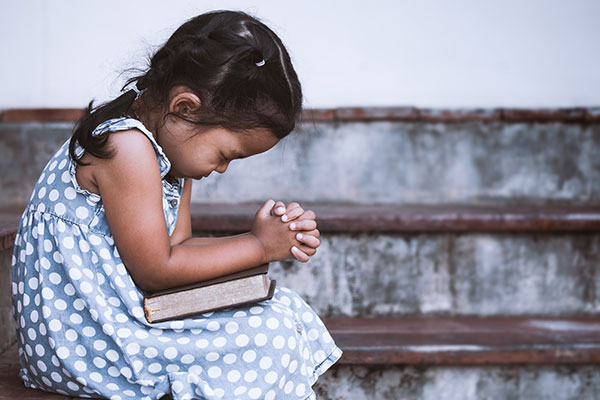
Cardinal Hummes on Priestly Celibacy
FREE Catholic Classes
"Christ's Precious Gift to His Church"
VATICAN CITY, MARCH 25, 2007 (Zenit) - Here is an article written by Cardinal Cláudio Hummes, prefect of the Congregation for Clergy, on "The Importance of Priestly Celibacy." It was published in the Italian edition of L'Osservatore Romano.
* * *
At the beginning of the 40th anniversary of the publication of the Encyclical "Sacerdotalis Caelibatus" of His Holiness Paul VI, the Congregation for the Clergy deems it opportune to recall the magisterial teaching of this important papal document.
Indeed, priestly celibacy is Christ's precious gift to his Church, a gift one needs to meditate on anew and to strengthen, especially in today's profoundly secularized world.
Scholars note that the origins of priestly celibacy date back to apostolic times. Father Ignace de la Potterie writes: "Scholars generally agree that the obligation of celibacy, or at least of continence, became canon law from the fourth century onwards. ... However, it is important to observe that the legislators of the fourth and fifth centuries affirmed that this canonical enactment was based on an apostolic tradition.
"The Council of Carthage (390), for instance, said: 'It was fitting that those who were at the service of the divine sacraments be perfectly continent (continentes esse in omnibus), so that what the Apostles taught and antiquity itself maintained, we too may observe.'"[1]
In the same way, Alfons-Marie Stickler mentions biblical arguments of apostolic inspiration that advocate celibacy.[2]
Historical development
The Church's solemn Magisterium has never ceased to reaffirm the measures regulating ecclesiastical celibacy. The Synod of Elvira (300-303?) prescribed in canon 27: "A bishop, like any other cleric, should have with him either only one sister or consecrated virgin; it is established that in no way should he have an extraneous woman"; in canon 33: "The following overall prohibition for bishops, presbyters and deacons and for all clerics who exercise a ministry has been decided: they must abstain from relations with their wives and must not beget children; those who do are to be removed from the clerical state."[3]
Pope St. Siricius (384-399), in his "Letter to Bishop Himerius of Tarragona" dated February 10, 385, affirmed: "The Lord Jesus ... wished the figure of the Church, whose Bridegroom he is, to radiate with the splendor of chastity ... all of us as priests are bound by the indissoluble law of these measures ... so that from the day of our ordination we may devote our hearts and our bodies to moderation and modesty, to please the Lord our God in the daily sacrifices we offer to him."[4]
At the First Lateran Ecumenical Council of 1123, we read from canon 3: "We absolutely forbid priests, deacons or subdeacons to cohabit with concubines or wives and to cohabit with women other than those whom the Council of Nicea (325) permitted to live in the household."[5]
So too, at the 24th session of the Council of Trent, the absolute impossibility of contracting marriage for clerics bound by sacred orders or for male religious who had solemnly professed chastity was reasserted; and with it, the nullity of marriage itself was declared, together with the duty to ask God, with an upright intention, for the gift of chastity.[6]
In more recent times, the Second Vatican Ecumenical Council reaffirmed in the Decree on the Ministry and Life of Priests, "Presbyterorum Ordinis,"[7] the close connection between celibacy and the Kingdom of God. It saw in the former a sign that radiantly proclaims the latter, the beginning of a new life to whose service the minister of the Church is consecrated.
With the encyclical "Sacerdotalis Caelibatus" of June 24, 1967, Paul VI kept a promise he had made to the Council Fathers two years earlier. In it, he examined the objections raised concerning the discipline of celibacy. Subsequently, by placing emphasis on their Christological foundation and appealing to history and to what we learn from the first-century documents about the origins of celibacy and continence, he fully confirmed their value.
The 1971 Synod of Bishops, both in the presynodal program "Ministerium Presbyterorum" (Feb. 15) and in the final document "Ultimis Temporibus" (Nov. 30), affirmed the need to preserve celibacy in the Latin Church, shedding light on its foundations, the convergence of motives and the conditions that encouraged it.[8]
The new Code of Canon Law of the Latin Church in 1983 reasserted the age-old tradition: "Clerics are obliged to observe perfect and perpetual continence for the sake of the Kingdom of Heaven and therefore are obliged to observe celibacy, which is a special gift of God, by which sacred ministers can adhere more easily to Christ with an undivided heart and can more freely dedicate themselves to the service of God and humankind."[9]
Along the same lines, the 1990 synod resulted in the Apostolic Exhortation of the Servant of God, Pope John Paul II, "Pastores Dabo Vobis," in which the Pontiff presented celibacy as a radical Gospel requirement that especially favors the style of spousal life and springs from the priest's configuration to Jesus Christ through the sacrament of orders.[10]
The Catechism of the Catholic Church, published in 1992 and which gathers the first fruits of the great event of the Second Vatican Council, reaffirms the same doctrine: "All the ordained ministers of the Latin Church, with the exception of permanent deacons, are normally chosen from among men of faith who live a celibate life and who intend to remain celibate 'for the sake of the Kingdom of Heaven.'"[11]
At the most recent Synod on the Eucharist itself, according to the preliminary unofficial draft of its final propositions authorized by Pope Benedict XVI, in proposition. 11, "the importance of the priceless gift of ecclesiastical celibacy in the practices of the Latin Church is recognized" despite the scarcity of clergy in certain parts of the world as well as the "Eucharistic hunger" of the People of God.
With the reference to the Magisterium, particularly that of the Second Vatican Council and of the most recent Pontiffs, the Fathers asked that the reasons for the relationship between celibacy and priestly ordination be properly described, with full respect for the tradition of the Eastern Churches. Some of them referred to the matter of the "viri probabi," but the hypothesis was judged to be a way not to be taken.
Only recently, on Nov. 16, 2006, Benedict XVI presided at one of the regular meetings held in the Apostolic Palace of the Heads of the Dicasteries of the Roman Curia. On that occasion, the value of the choice of priestly celibacy in accordance with the unbroken Catholic tradition was reasserted and the need for the sound human and Christian formation of seminarians and ordained priests was reaffirmed.
Reasons for holy celibacy
In his encyclical "Sacerdotalis Caelibatus," Paul VI begins by presenting the situation of priestly celibacy at that time, from the viewpoint of the appreciation of it and of the objections to it. His first words are crucial and ever timely: "Priestly celibacy has been guarded by the Church for centuries as a brilliant jewel, and retains its value undiminished even in our time when the outlook of men and the state of the world have undergone such profound changes."[12]
Paul VI revealed what he himself meditated upon, questioning himself on the subject in order to be able to respond to the objections. He concluded: "Hence, we consider that the present law of holy celibacy should today continue to be linked to the ecclesiastical ministry. This law should support the minister in his exclusive, definitive and total choice of the unique and supreme love of Christ and of the Church; it should uphold him in the entire dedication of himself to the public worship of God and to the service of the Church; it should distinguish his state of life both among the faithful and in the world at large."[13]
"It is true," the Pope added, "that virginity, as the Second Vatican Council declared, is not demanded of the priesthood by its nature. This is clear from the practice of the early Church and the tradition of the Eastern Churches (cf. "Presbyterorum Ordinis," no. 16). But at the same time the Council did not hesitate to confirm solemnly the ancient, sacred and providential present law of priestly celibacy. In addition, it set forth the motives which justify this law for those who, in a spirit of faith and with generous fervor, know how to appreciate the gifts of God."[14]
It is true. Celibacy is a gift that Christ offers to men called to the priesthood. This gift must be accepted with love, joy and gratitude. Thus, it will become a source of happiness and holiness.
Paul VI gave three reasons for sacred celibacy: its Christological, ecclesiological and eschatological significance.
Let us start with its Christological significance.
Christ is newness. He brings about a new creation. His priesthood is new. He renews all things. Jesus, the only-begotten Son of the Father sent into the world, "became man in order that humanity which was subject to sin and death might be reborn, and through this new birth might enter the Kingdom of Heaven."

"Being entirely consecrated to the will of the Father, Jesus brought forth this new creation by means of his Paschal Mystery; thus, he introduced into time and into the world a new form of life which is sublime and divine and which radically transforms the human condition."[15]
Natural marriage itself, blessed by God since creation but damaged by sin, was renewed by Christ, who "has raised it to the dignity of a sacrament and of a mysterious symbol of his own union with the Church. ... But Christ, 'Mediator of a more excellent covenant' (cf. Hebrews 8:6), has also opened a new way in which the human creature adheres wholly and directly to the Lord, and is concerned only with him and with his affairs; thus, he manifests in a clearer and more complete way the profoundly transforming reality of the New Testament."[16]
This newness, this new process, is life in virginity, which Jesus himself lived in harmony with his role as Mediator between heaven and earth, between the Father and the human race. "Wholly in accord with this mission, Christ remained throughout his whole life in the state of celibacy, which signified his total dedication to the service of God and men."[17] The service of God and men means that total love without reserve which distinguished Jesus' life among us: virginity for the sake of the Kingdom of God!
Now Christ, by calling his priests to be ministers of salvation, that is, of the new creation, calls them to be and to live in newness of life, united and similar to him in the most perfect way possible. From this derives the gift of sacred celibacy, as the fullest configuration with the Lord Jesus and a prophecy of the new creation. He called his apostles "friends." He called them to follow him very closely in everything, even to the cross. And the cross brought them to the Resurrection, to the new creation's completion.
We know, therefore, that following him with faithfulness in virginity, which includes sacrifice, will lead us to happiness. God does not call anyone to unhappiness; he calls us all to happiness. Happiness, however, always goes hand in hand with faithfulness. The late Pope John Paul II said this to the married couples whom he met at the Second World Meeting of Families in Rio de Janeiro.
Thus, the theme of the eschatological meaning of celibacy is revealed as a sign and a prophecy of the new creation, in other words, of the definitive Kingdom of God in the parousia, when we will all be raised from the dead.

As the Second Vatican Council teaches, "She [the Church] is, on earth, the seed and the beginning of that kingdom."[18] Virginity, lived for love of the Kingdom of God, is a special sign of these "final times," because the Lord announced that "in the resurrection they neither marry nor are given in marriage, but are like angels in heaven."[19]
In a world like ours, a world of entertainment and superficial pleasures, captivated by earthly things and especially by the progress of science and technology -- let us remember the biological sciences and biotechnology -- the proclamation of an afterlife, of a future world, a parousia, as a definitive event of a new creation is crucial and at the same time free from the ambiguity of aporia, of din, suffering and contradictions with regard to the true good and the new, profound knowledge that human progress brings with it.
Finally, the ecclesiological meaning of celibacy leads us more directly to the priest's pastoral activity.
The encyclical "Sacerdotalis Caelibatus" affirms: "The consecrated celibacy of the sacred ministers actually manifests the virginal love of Christ for the Church, and the virginal and supernatural fecundity of this marriage."[20]
Like Christ and in Christ, the priest mystically weds the Church and loves the Church with an exclusive love. Thus, dedicating himself totally to the affairs of Christ and of his Mystical Body, the priest enjoys ample spiritual freedom to put himself at the loving and total service of all people without distinction.
"In a similar way, by a daily dying to himself and by giving up the legitimate love of a family of his own for the love of Christ and of his Kingdom, the priest will find the glory of an exceedingly rich and fruitful life in Christ, because like him and in him he loves and dedicates himself to all the children of God."[21]
The encyclical likewise adds that celibacy makes it easier for the priest to devote himself to listening to the Word of God and to prayer, and prepares him to offer upon the altar the whole of his life, marked by sacrifice.[22]
Value of chastity, celibacy
Even before it is a canonical disposition, celibacy is God's gift to his Church. It is an issue bound to the complete gift of self to the Lord.
In the distinction between the age-old discipline of celibacy and the religious experience of consecration and the pronouncement of vows, it is beyond doubt that there is no other possible interpretation or justification of ecclesiastical celibacy than unreserved dedication to the Lord in a relationship that must also be exclusive from the emotional viewpoint. This presupposes a strong personal and communal relationship with Christ, who transforms the hearts of his disciples.

The option for celibacy of the Latin Rite Catholic Church has developed since apostolic times precisely in line with the priest's relationship with his Lord, moved by the inspiring question, "Do you love me more than these?"[23] which the Risen Jesus addressed to Peter.
The Christological, ecclesiological and eschatological reasons for celibacy, all rooted in the special communion with Christ to which priests are called, can therefore be expressed in various ways, according to what is authoritatively stated in "Sacerdotalis Caelibatus."
Celibacy is first and foremost a "symbol of and stimulus to charity."[24] Charity is the supreme criterion for judging Christian life in all its aspects; celibacy is a path of love, even if, as the Gospel according to Matthew says, Jesus himself states that not all are able to understand this reality: "Not all men can receive this precept, but only those to whom it is given."[25]
This charity develops in the classical, twofold aspect of love for God and for others: "By preserving virginity or celibacy for the sake of the Kingdom of Heaven, priests are consecrated in a new and excellent way to Christ. They more readily cling to him with undivided heart."[26]
St. Paul, in the passage alluded to here, presents celibacy and virginity as the way "to please God" without divided interests:[27] in other words, a "way of love" which certainly presupposes a special vocation; in this sense it is a charism and in itself excellent for both Christians and priests.
Through pastoral charity, radical love for God becomes love for one's brethren. In "Presbyterorum Ordinis" we read that priests "dedicate themselves more freely in him and through him to the service of God and of men. They are less encumbered in their service of his Kingdom and of the task of heavenly regeneration. In this way they become better fitted for a broader acceptance of fatherhood in Christ."[28]
Common experience confirms that it is easier for those who, apart from Christ, are not bound by other affections, however legitimate and holy they may be, to give their heart to their brethren fully and without reserve.
Celibacy is the example that Christ himself left us. He wanted to be celibate. The encyclical explains further: "Wholly in accord with this mission, Christ remained throughout his whole life in the state of celibacy, which signified his total dedication to the service of God and men. This deep connection between celibacy and the priesthood of Christ is reflected in those whose fortune it is to share in the dignity and mission of the Mediator and the Eternal Priest; this sharing will be more perfect the freer the sacred minister is from the bonds of flesh and blood."[29]

Jesus Christ's historical existence is the most visible sign that chastity voluntarily embraced for God's sake is a solidly founded vocation, both at the Christian level and at that of common human logic.
If ordinary Christian life cannot legitimately claim to be such if it excludes the dimension of the cross, how much more incomprehensible would priestly life be were the perspective of the crucified One to be put aside.
Suffering, sometimes weariness and boredom and even setbacks have to be dealt with in a priest's life which, however, is not ultimately determined by them. In choosing to follow Christ, one learns from the very outset to go with him to Calvary, mindful that taking up one's cross is the element that qualifies the radical nature of the sequela.
Lastly, as previously stated, celibacy is an eschatological sign. In the Church, from this moment, the future Kingdom is present. She not only proclaims it but brings it about through the sacraments, contributing to the "new creation" until her glory is fully manifested.
While the sacrament of marriage roots the Church in the present, immersing her totally in the earthly realm which can thus become a possible place for sanctification, celibacy refers immediately to the future, to that full perfection of the created world that will be brought to complete fulfillment only at the end of time.
Being faithful to celibacy
The 2,000-year-old wisdom of the Church, an expert in humanity, has in the course of time constantly determined several fundamental and indispensable elements to foster her children's fidelity to the supernatural charism of celibacy.
Among them, also in the recent Magisterium, the importance of spiritual formation for the priest, who is called to be "a witness of the Absolute," stands out. "Pastores Dabo Vobis" states: "In preparing for the priesthood we learn how to respond from the heart to Christ's basic question: 'Do you love me?'. For the future priest the answer can only mean total self-giving."[30]
In this regard, the years of formation are absolutely fundamental, both those distant years lived in the family, and especially the more recent years spent at the seminary. At this true school of love, like the apostolic community, young seminarians cluster round Jesus, awaiting the gift of his Spirit for their mission.
"The relation of the priest to Jesus Christ, and in him to his Church, is found in the very being of the priest, by virtue of his sacramental consecration/anointing and in his activity, that is, in his mission or ministry."[31]

The priesthood is no more than "'living intimately united' to Jesus Christ"[32] in a relationship of intimate communion, described "in terms of friendship."[33] The priest's life is basically that form of existence which would be inconceivable without Christ. Precisely in this lies the power of his witness: Virginity for the sake of the Kingdom of God is a real element, it exists because Christ, who makes it possible, exists.
Love for the Lord is authentic when it endeavors to be total: Falling in love with Christ means having a deep knowledge of him, it means a close association with his person, the identification and assimilation of his thought, and lastly, unreserved acceptance of the radical demands of the Gospel.
It is only possible to be witnesses of God through a deep experience of Christ; the whole of a priest's life depends on his relationship with the Lord, the quality of his experience of martyria, of his witness.
Only someone who truly has Jesus for his friend and Lord, one who enjoys his communion, can be a witness of the Absolute. Christ is not only a subject of reflection, of a theological thesis or of a historical memory; he is the Lord who is present, he is alive because he is the Risen One and we live only to the extent that we participate ever more deeply in his life. The entire priestly existence is founded on this explicit faith.
Consequently, the encyclical says: "The priest should apply himself above all else to developing, with all the love grace inspires in him, his close relationship with Christ, and exploring this inexhaustible and enriching mystery; he should also acquire an ever deeper sense of the mystery of the Church. There would be the risk of his state of life seeming unreasonable and unfounded if it were viewed apart from this mystery."[34]
In addition to formation and love for Christ, an essential element for preserving celibacy is passion for the Kingdom of God, which means the ability to work cheerfully, sparing no effort to make Christ known, loved and followed.
Like the peasant who, having found the precious pearl, sold all he had in order to purchase the field, so those who find Christ and spend their whole lives with him and for him cannot but live by working to enable others to encounter him.
Without this clear perspective, any "missionary urge" is doomed to failure, methodologies are transformed into techniques for maintaining a structure, and even prayers can become techniques for meditation and for contact with the sacred in which both the human "I" and the "you" of God dissolve.

One fundamental and necessary occupation, a requirement and a task, is prayer. Prayer is irreplaceable in Christian life and in the life of priests. Prayer should be given special attention.
The Eucharistic Celebration, the Divine Office, frequent confession, an affectionate relationship with Mary Most Holy, spiritual retreats and the daily recitation of the holy rosary are some of the spiritual signs of a love which, were it lacking, would risk being replaced by unworthy substitutes such as appearances, ambition, money and sex.
The priest is a man of God because God calls him to be one, and he lives this personal identity in an exclusive belonging to his Lord, also borne out by his choice of celibacy. He is a man of God because he lives by God and talks to God. With God he discerns and decides in filial obedience on the steps of his own Christian existence.
The more radically a priest is a man of God through a life that is totally theocentric, as the Holy Father stressed in his Address at the Christmas Meeting with the Roman Curia on Dec. 22, 2006, the more effective and fertile his witness will be, and the richer in fruits of conversion his ministry. There is no opposition between fidelity to God and fidelity to man: On the contrary, the former is a prerequisite for the latter.
Conclusion: a holy vocation
"Pastores Dabo Vobis," speaking on the priest's vocation to holiness, having underlined the importance of the personal relationship with Christ, expresses another need: The priest, called to the mission of preaching the Good News, sees himself entrusted with it in order to give it to everyone. He is nevertheless called in the first place to accept the Gospel as a gift offered for his life, for himself, and as a saving event that commits him to a holy life.
In this perspective, John Paul II has spoken of the evangelical radicalism that must be a feature of the priest's holiness. It is therefore possible in the evangelical counsels, traditionally proposed by the Church and lived in the various states of consecrated life, to map out the vitally radical journey to which, also and in his own way, the priest is called to be faithful.
"Pastores Dabo Vobis" states: "A particularly significant expression of the radicalism of the Gospel is seen in the different 'evangelical counsels' which Jesus proposes in the Sermon on the Mount, and among them the intimately related counsels of obedience, chastity and poverty. The priest is called to live these counsels in accordance with those ways and, more specifically, those goals and that basic meaning which derive from and express his own priestly identity."[35]

And again, taking up the ontological dimension on which evangelical radicalism is founded, the postsynodal apostolic exhortation says: "The Spirit, by consecrating the priest and configuring him to Jesus Christ, Head and Shepherd, creates a bond which, located in the priest's very being, demands to be assimilated and lived out in a personal, free and conscious way through an ever richer communion of life and love and an ever broader and more radical sharing in the feelings and attitudes of Jesus Christ. In this bond between the Lord Jesus and the priest, an ontological and psychological bond, a sacramental and moral bond, is the foundation and likewise the power for that 'life according to the Spirit' and that 'radicalism of the Gospel' to which every priest is called today and which is fostered by ongoing formation in its spiritual aspect."[36]
The nuptial dimension of ecclesiastical celibacy, proper to this relationship between Christ and the Church which the priest is called to interpret and to live, must enlarge his mind, illumine his life and warm his heart. Celibacy must be a happy sacrifice, a need to live with Christ so that he will pour out into the priest the effusions of his goodness and love that are ineffably full and perfect.
In this regard the words of the Holy Father Benedict XVI are enlightening: "The true foundation of celibacy can be contained in the phrase: Dominus pars (mea) -- You are my land. It can only be theocentric. It cannot mean being deprived of love, but must mean letting oneself be consumed by passion for God and subsequently, thanks to a more intimate way of being with him, to serve men and women, too. Celibacy must be a witness to faith: faith in God materializes in that form of life which only has meaning if it is based on God.
"Basing one's life on him, renouncing marriage and family, means that I accept and experience God as a reality and that I can therefore bring him to men and women."[37]
------------------------
NOTES
1. Cf. Father Ignace de la Potterie , Il fondamento biblico del celibato sacerdotale, in Solo per amore. Riflessioni sul celibato sacerdotale, Cinisello Balsamo, 1993, pp. 14-15.
2. Cf. Alfons-Marie Stickler, in Ch. Cochini, Origines apostoliques du CĂ©libat sacerdotal, Preface, p. 6.
3. Cf. Heinrich Denzinger, Enchiridion symbolorum definitionum et declarationum de rebus fidei et morum, ed. P. HĂĽnermann., Bologna, 1995, nn. 118-119, p. 61.
4. Ibid., op. cit., n. 185, p. 103; [n. 10].
5. Cf. ibid., op. cit., n. 711, p. 405.
6. Ibid., op. cit., n. 1809, p. 739.
7. Second Vatican Council, Decree on the Ministry and Life of Priests, Presbyterorum Ordinis, n. 16.
8. Enchiridion of the Synod of Bishops, 1, 1965-1988 ed. General Secretariat of the Synod of Bishops, Bologna, 2005, nn. 755-855; 1068-1114; especially nn. 1100-1105.
9. Code of Canon Law, canon 277, §1.
10. John Paul II, Post-Synodal Apostolic Exhortation Pastores Dabo Vobis, 25 March 1992, n. 44.
11. Catechism of the Catholic Church, n. 1579.
12. Paul VI, Encyclical Letter Sacerdotalis Caelibatus, n. 1.
13. Ibid., n. 14.
14. Ibid., n. 17.
15. Ibid., n. 19.
16. Ibid., n. 20.
17. Ibid., n. 21.
18. Cf. Second Vatican Council, Dogmatic Constitution on the Church, Lumen Gentium, n. 5.
19. Paul VI, Sacerdotalis Caelibatus, n. 34.
20. Ibid., n. 26.
21. Ibid., n. 30.
22. Cf. ibid., nn. 27-29.
23. John 21:15.
24. Paul VI, Sacerdotalis Caelibatus, n. 24.
25. Matthew 19:11.
26. Second Vatican Council, Presbyterorum Ordinis, n. 16.
27. Cf. I Corinthians 7:32-33.
28. Second Vatican Council, Presbyterorum Ordinis, n. 16.
29. Paul VI, Sacerdotalis Caelibatus, n. 21.
30. John Paul II, Pastores Dabo Vobis, n. 42.
31. Ibid., n. 16.
32. Ibid., n. 46.
33. Ibid.
34. Paul VI, Sacerdotalis Caelibatus, n. 75.
35. John Paul II, Pastores Dabo Vobis, n. 27.
36. Ibid., n. 72.
37. Benedict XVI, Address at the Audience with the Roman Curia for the Exchange of Christmas Greetings, 22 December 2006; L'Osservatore Romano English edition, 3 January 2007, p. 5.
[Text adapted]
Contact
Catholic Online
https://www.catholic.org
CA, US
Catholic Online - Publisher, 661 869-1000
info@yourcatholicvoice.org
Keywords
Priest, Celibacy, Hummes, Clergy, Sacerdotalis Caelibatus
More Catholic PRWire
Showing 1 - 50 of 4,716
A Recession Antidote
Randy Hain
Monaco & The Vatican: Monaco's Grace Kelly Exhibit to Rome--A Review of Monegasque-Holy See Diplomatic History
Dna. Maria St. Catherine Sharpe, t.o.s.m., T.O.SS.T.
The Why of Jesus' Death: A Pauline Perspective
Jerom Paul
A Royal Betrayal: Catholic Monaco Liberalizes Abortion
Dna. Maria St.Catherine De Grace Sharpe, t.o.s.m., T.O.SS.T.
Embrace every moment as sacred time
Mary Regina Morrell
My Dad
JoMarie Grinkiewicz
Letting go is simple wisdom with divine potential
Mary Regina Morrell
Father Lombardi's Address on Catholic Media
Catholic Online
Pope's Words to Pontifical Latin American College
Catholic Online
Prelate: Genetics Needs a Conscience
Catholic Online
State Aid for Catholic Schools: Help or Hindrance?
Catholic Online
Scorsese Planning Movie on Japanese Martyrs
Catholic Online
2 Nuns Kidnapped in Kenya Set Free
Catholic Online
Holy See-Israel Negotiation Moves Forward
Catholic Online
Franchising to Evangelize
Catholic Online
Catholics Decry Anti-Christianity in Israel
Catholic Online
Pope and Gordon Brown Meet About Development Aid
Catholic Online
Pontiff Backs Latin America's Continental Mission
Catholic Online
Cardinal Warns Against Anti-Catholic Education
Catholic Online
Full Circle
Robert Gieb
Three words to a deeper faith
Paul Sposite
Relections for Lent 2009
chris anthony
Wisdom lies beyond the surface of life
Mary Regina Morrell
World Food Program Director on Lent
Catholic Online
Moral Clarity
DAN SHEA
Pope's Lenten Message for 2009
Catholic Online
A Prayer for Monaco: Remembering the Faith Legacy of Prince Rainier III & Princess Grace and Contemplating the Moral Challenges of Prince Albert II
Dna. Maria St. Catherine Sharpe
Keeping a Lid on Permissiveness
Sally Connolly
Glimpse of Me
Sarah Reinhard
The 3 stages of life
Michele Szekely
Sex and the Married Woman
Cheryl Dickow
A Catholic Woman Returns to the Church
Cheryl Dickow
Modernity & Morality
Dan Shea
Just a Minute
Sarah Reinhard
Catholic identity ... triumphant reemergence!
Hugh McNichol
Edging God Out
Paul Sposite
Burying a St. Joseph Statue
Cheryl Dickow
George Bush Speaks on Papal Visit
Catholic Online
Sometimes moving forward means moving the canoe
Mary Regina Morrell
Action Changes Things: Teaching our Kids about Community Service
Lisa Hendey
Easter... A Way of Life
Paul Spoisite
Papal initiative...peace and harmony!
Hugh McNichol
Proclaim the mysteries of the Resurrection!
Hugh McNichol
Jerusalem Patriarch's Easter Message
Catholic Online
Good Friday Sermon of Father Cantalamessa
Catholic Online
Papal Address at the End of the Way of the Cross
Catholic Online
Cardinal Zen's Meditations for Via Crucis
Catholic Online
Interview With Vatican Aide on Jewish-Catholic Relations
Catholic Online
Pope Benedict XVI On the Easter Triduum
Catholic Online
Holy Saturday...anticipation!
Hugh McNichol
Come Grow With Us
Sign up and walk the Catholic journey with millions around the world.
Receive inspiring emails on saints, daily readings, and free faith-building resources—no cost, ever.
Catholic Online Is Free. But We Need Your Help.
Please Watch
- 7 Morning Prayers
- Mysteries of the Rosary
- Litany of the Bl. Virgin Mary
- Popular Saints
- Popular Prayers
- Female Saints
- Saint Feast Days by Month
- Stations of the Cross
- St. Francis of Assisi
- St. Michael the Archangel
- The Apostles' Creed
- Unfailing Prayer to St. Anthony
- Pray the Rosary




Copyright 2026 Catholic Online. All materials contained on this site, whether written, audible or visual are the exclusive property of Catholic Online and are protected under U.S. and International copyright laws, © Copyright 2026 Catholic Online. Any unauthorized use, without prior written consent of Catholic Online is strictly forbidden and prohibited.
Catholic Online is a Project of Your Catholic Voice Foundation, a Not-for-Profit Corporation. Your Catholic Voice Foundation has been granted a recognition of tax exemption under Section 501(c)(3) of the Internal Revenue Code. Federal Tax Identification Number: 81-0596847. Your gift is tax-deductible as allowed by law.