How Africa's Suffering May Lead to Christian Unity
FREE Catholic Classes
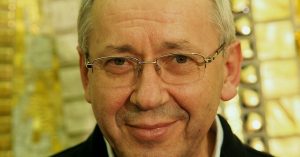
Interview With Father Donald Bolen
VATICAN CITY, JAN. 19, 2007 (Zenit) - In 2004, Father Donald Bolen returned from a visit to South Africa as a Vatican observer, overwhelmed by what he saw.
It was that experience that gave rise to this year's theme for the Week of Prayer for Christian Unity, which begins today.
This is a recent interview Father Bolen, a member of the Pontifical Council for Promoting Christian Unity, gave to Vatican Radio.
Q: This year the week of prayer is inspired by the experience of the South African Christian communities of the Umlazi region, overwhelmed by enormous suffering. Where did this idea come from?
Father Bolen: Each year, the Pontifical Council for Promoting Christian Unity and the Faith and Order Commission of the World Council of Churches alternate in requesting a particular country or region to prepare a first draft of the week of prayer materials.
For the 2007 texts, it was the World Council's turn to organize the texts. But as it happens, when the international commission met -- in September 2004 -- to prepare the 2006 texts, I had just returned from a visit to South Africa. I was there as the Vatican's observer at a Methodist assembly, but while there, I had the opportunity to visit several townships and informal settlements near Johannesburg.
I visited townships where half of the population was HIV-positive, and where the poverty was beyond anything I had ever encountered. But I also attended a confirmation celebration there which was incredible; the singing was amazing, the spirit of joy and celebration was very moving.
And I had the opportunity to visit numerous church projects, including schools, hospices, even a care center for children born HIV-positive -- some of these were Catholic, some Anglican, some Methodist -- and here, one could see church communities courageously seeking to respond to the needs of people living in the townships.
These were incredibly inspiring. It was immediately following that trip that we had our international planning meeting for the week of prayer, and over the course of a couple of meals, I spoke about my experience there. My World Council of Churches colleagues then got the idea that they would find a community in the townships of South Africa to prepare the week of prayer materials for 2007.
Q: The texts which were prepared initially by a group of the region, were then submitted to an international group responsible for the preparation of the final texts. How was this done? How were you able to make this initial situation helpful for each country throughout the world, where the realities can be diametrically opposed?
Father Bolen: Once the texts have been prepared for international distribution, they are sent out to Catholic episcopal conferences worldwide, as well as to all of the member churches of the [World Council of Churches]. In each local context, we invite Christians to work ecumenically in once again adapting the texts for their particular local context. Sometimes the original material is not seen as appropriate in a particular local context. It is my hope that something of the South African origins of this material still shines through.
Q: This year's texts reflect the concerns and experience of a people overwhelmed by an enormous suffering. This year two intentions emerge: the search for Christian unity and the search for a Christian response to human suffering. Is this a novelty in relation to previous years?
Father Bolen: At the international meeting where we worked on the texts, we were joined by a representative of the local group from the township of Umlazi, near Durban, an Anglican priest named Father Thami Shange.
In fact he did not so much bring us texts as he came to tell us stories from Umlazi, and from those stories, much of the material was prepared. Because of the daily crises facing the people of Umlazi, the focus of the churches, ecumenically, is joining together to respond to the suffering of their people.
It is self-evident. On the other hand, the work of the Pontifical Council for Promoting Christian Unity, and that of the Faith and Order Commission of the World Council of Churches, is centered on the task of addressing the differences which keep Christians divided, and trying to resolve those differences through dialogue and through prayer.
We also encourage cooperation among Christians in the work of social justice, but that is not the core of our work. So at the international meeting, these two different perspectives had to come into dialogue with each other. When we talked about these two tasks -- working for Christian unity, and working together -- ecumenically -- in responding to human suffering, we gained a better realization of the extent to which those two tasks were intrinsically related.
That's what we try to reflect upon in the introduction to this year's materials.
Q: This week of unity is prepared jointly by the Pontifical Council for Promoting Christian Unity and the Faith and Order Commission of the World Council of Churches, a relationship that has lasted 40 years. To what extent is the Week of Prayer for Christian Unity a key moment of this cooperation?
Father Bolen: Yes, for 40 years we have collaborated in the preparation of texts for the week of prayer, and working together in this regard is of great importance. Perhaps the most valuable fruit of this cooperation is that it offers a tangible encouragement to Christian communities to gather ecumenically in diverse settings the world over, to pray: to pray for their common needs, and to pray for the unity that Christ wills for us.
When we stand together before Christ in prayer, when we are converted more and more to Christ, we come closer to each other as well. In those situations, we come to see more clearly that it is the Holy Spirit which is at work leading us on our ecumenical journey.
Contact
Catholic Online
https://www.catholic.org
CA, US
Catholic Online - Publisher, 661 869-1000
info@yourcatholicvoice.org
Keywords
Christian, Unity, Christian, Africa, Bolen
More Catholic PRWire
Showing 1 - 50 of 4,716
A Recession Antidote
Randy Hain
Monaco & The Vatican: Monaco's Grace Kelly Exhibit to Rome--A Review of Monegasque-Holy See Diplomatic History
Dna. Maria St. Catherine Sharpe, t.o.s.m., T.O.SS.T.
The Why of Jesus' Death: A Pauline Perspective
Jerom Paul
A Royal Betrayal: Catholic Monaco Liberalizes Abortion
Dna. Maria St.Catherine De Grace Sharpe, t.o.s.m., T.O.SS.T.
Embrace every moment as sacred time
Mary Regina Morrell
My Dad
JoMarie Grinkiewicz
Letting go is simple wisdom with divine potential
Mary Regina Morrell
Father Lombardi's Address on Catholic Media
Catholic Online
Pope's Words to Pontifical Latin American College
Catholic Online
Prelate: Genetics Needs a Conscience
Catholic Online
State Aid for Catholic Schools: Help or Hindrance?
Catholic Online
Scorsese Planning Movie on Japanese Martyrs
Catholic Online
2 Nuns Kidnapped in Kenya Set Free
Catholic Online
Holy See-Israel Negotiation Moves Forward
Catholic Online
Franchising to Evangelize
Catholic Online
Catholics Decry Anti-Christianity in Israel
Catholic Online
Pope and Gordon Brown Meet About Development Aid
Catholic Online
Pontiff Backs Latin America's Continental Mission
Catholic Online
Cardinal Warns Against Anti-Catholic Education
Catholic Online
Full Circle
Robert Gieb

Three words to a deeper faith
Paul Sposite
Relections for Lent 2009
chris anthony
Wisdom lies beyond the surface of life
Mary Regina Morrell
World Food Program Director on Lent
Catholic Online
Moral Clarity
DAN SHEA
Pope's Lenten Message for 2009
Catholic Online
A Prayer for Monaco: Remembering the Faith Legacy of Prince Rainier III & Princess Grace and Contemplating the Moral Challenges of Prince Albert II
Dna. Maria St. Catherine Sharpe
Keeping a Lid on Permissiveness
Sally Connolly
Glimpse of Me
Sarah Reinhard
The 3 stages of life
Michele Szekely
Sex and the Married Woman
Cheryl Dickow
A Catholic Woman Returns to the Church
Cheryl Dickow
Modernity & Morality
Dan Shea
Just a Minute
Sarah Reinhard
Catholic identity ... triumphant reemergence!
Hugh McNichol
Edging God Out
Paul Sposite
Burying a St. Joseph Statue
Cheryl Dickow
George Bush Speaks on Papal Visit
Catholic Online
Sometimes moving forward means moving the canoe
Mary Regina Morrell
Action Changes Things: Teaching our Kids about Community Service
Lisa Hendey

Easter... A Way of Life
Paul Spoisite
Papal initiative...peace and harmony!
Hugh McNichol
Proclaim the mysteries of the Resurrection!
Hugh McNichol
Jerusalem Patriarch's Easter Message
Catholic Online
Good Friday Sermon of Father Cantalamessa
Catholic Online
Papal Address at the End of the Way of the Cross
Catholic Online
Cardinal Zen's Meditations for Via Crucis
Catholic Online
Interview With Vatican Aide on Jewish-Catholic Relations
Catholic Online
Pope Benedict XVI On the Easter Triduum
Catholic Online
Holy Saturday...anticipation!
Hugh McNichol
Come Grow With Us
Sign up and walk the Catholic journey with millions around the world.
Receive inspiring emails on saints, daily readings, and free faith-building resources—no cost, ever.
This 15-Second Video Will Change How You See Catholic Education.
Watch Now
- 7 Morning Prayers
- Mysteries of the Rosary
- Litany of the Bl. Virgin Mary
- Popular Saints
- Popular Prayers
- Female Saints
- Saint Feast Days by Month
- Stations of the Cross
- St. Francis of Assisi
- St. Michael the Archangel
- The Apostles' Creed
- Unfailing Prayer to St. Anthony
- Pray the Rosary






Copyright 2026 Catholic Online. All materials contained on this site, whether written, audible or visual are the exclusive property of Catholic Online and are protected under U.S. and International copyright laws, © Copyright 2026 Catholic Online. Any unauthorized use, without prior written consent of Catholic Online is strictly forbidden and prohibited.
Catholic Online is a Project of Your Catholic Voice Foundation, a Not-for-Profit Corporation. Your Catholic Voice Foundation has been granted a recognition of tax exemption under Section 501(c)(3) of the Internal Revenue Code. Federal Tax Identification Number: 81-0596847. Your gift is tax-deductible as allowed by law.
