We have one question for you.
Has Catholic Online given you $5 worth of value this year? Maybe you came here for a prayer. Maybe you read today's Mass readings. Maybe you researched a saint. Maybe you needed an answer about the Catholic Faith. Maybe your child used Catholic Online School. If the answer is no, you don't owe us anything. Keep using Catholic Online. But if the answer is yes, we're asking you to give $5 today.
Catholic Online School has served 2.2 million student enrollments in 193 countries, and we continue working to make Catholic education available regardless of a family's financial circumstances. We don't need every reader to give. We need the readers who recognize the value of what they've received to stand behind it. Is Catholic Online worth $5 to you?
GIVE TODAY >>Challenges of Christian Converts From Islam
FREE Catholic Classes
Interview With Giorgio Paolucci, Editor in Chief of Avvenire
ROME, OCT. 17, 2006 (Zenit) - Converts from Islam to Christianity pose a challenge for governments to ensure freedom of religion -- and their witness is also a challenge to the Church itself.
So says Giorgio Paolucci, editor in chief of the Italian Catholic newspaper Avvenire. He has written a book with Lebanese journalist Camille Eid, Avvenire's Mideast correspondent, entitled "I Cristiani Venuti dall'Islam" (Christian Converts from Islam), which gathers the testimonies of Muslims residing in Italy who have converted to Christianity.
"The book seeks to bring to light an iceberg," says Paolucci. "Whereas Westerners who convert to Islam are very well known -- they go on television, are invited by the most popular programs, are presidents of the most famous Muslim associations and have no problems of visibility -- we have sought out people who, by the very nature of their experience, have problems in making known what they have experienced, though they are very happy with what has occurred."
Here is an excerpt of an interview Paolucci gave to us.
Q: Was this delicate and dangerous research?
Paolucci: The first problem was to find Muslims converted to Christianity. Everyone has heard talk of Abdul Rahman, the 41-year-old Afghan threatened with the death penalty in March of this year, accused of apostasy, who now lives in Italy, rescued thanks to an incredible international mobilization.
When his case occurred, for 15 days all the newspapers of Italy and Europe and the world talked about the problem of apostasy and the death penalty that Islam provides for those who convert to another religion.
Our task was to get to know the histories and faces of these people, to make it understood that the problem not only affects remote countries, such as Afghanistan, but also Europe and Italy.
Q: Why does it affect us?
Paolucci: One of the results of immigration is that Islam is among us. Being in our midst, it is present in all its complexity, including the issue of religious freedom, an issue that Muslim countries and the relative communities spread around the world have yet to clarify.
We wanted to write a book that would reflect further on the theological and juridical implications of apostasy and the relative punishments, and that would do so through human itineraries, attempting to understand how it is possible that there are people who so love Jesus as to risk suffering persecutions and the death penalty.
In 1955, Jean-Pierre Gaudeul's book "Vengono dall'Islam, Chiamati da Cristo" [They Come from Islam, Called by Christ], published by Emi, also came out in Italy. Its objective was to analyze the histories from the theological point of view.
We, instead, were interested in the whole of the histories. We spent two years finding them because it is very difficult to convince people to talk; organize the accounts in a way that the essence will remain, changing the connotations for security reasons.
In the end, we found 30 histories, some recounted personally, others gathered on the telephone or the Internet; others taken from rare articles of the Italian press.
Q: In the book's introduction, Egyptian Jesuit Samir Khalil Samir, professor of history of Arab culture and Islamology at the St. Joseph University of Beirut, addresses the problem of apostasy. Could you tell us the results of his analysis?
Paolucci: According to Khalil Samir, from the study of the Koran one does not glean that there is a death penalty for apostates.
There are 14 suras that speak about punishments for the apostate, but only in one of them is reference made to the type of punishment and it says that "the apostate will be punished with a punishment in this world and in the next."
The passage that says "in this world" does not specify how, whereas the Koran in general is very specific about punishments: If one robs, one's hand must be amputated; if one is an adulterer, one is punished with 100 lashes, etc.
Samir underlines therefore that the fact that apostates are condemned to death according to the penal code of Saudi Arabia, Iran, Sudan, Yemen, Mauritania and Afghanistan, does not derive from a Koranic prescription.
If this is true, Muslim fundamentalists who say that apostates must be killed, do not speak in the name of the Koran. This fact is important not only for Muslims who convert to Christianity but because, in the last 30 years, apostasy has become the main instrument to eliminate political adversaries.
Very often Muslim Brothers and other groups accuse their adversaries of apostasy; hence, it is no longer a religious problem but a technique to eliminate the opposition. Samir's analysis on the argument is revolutionary and it is hoped it will spark an internal debate in Islam.
Q: How many are the Muslim converts to Christianity in Italy?
Paolucci: There is no precise data. Insofar as our research is concerned, we can attest to several hundred converts, coming from countries of North Africa, the Middle East and Asia.
Some have been baptized in Italy, others baptized in their country who later came to live in Italy, others baptized in a third country who later came [to Italy].
From the histories we have gathered it is evident that there are many questions that are in the heart of every person: the meaning of life, happiness, love, friendship, what happens after death.
Some of the people we met did not find a satisfactory answer in the Koran and the Muslim education they received; at the same time, they found attractive testimonies of Christians -- their friends, work colleagues, neighbors, professors -- who were the beginning to an answer other than the Muslim Koranic.
The different experiences sparked the idea that perhaps it was Christianity, Jesus, and not the Koran, that they were seeking to undertake their human journey.
Q: Tell us about some of the stories included in your book.
Paolucci: An Algerian girl, of a Catholic father and Algerian Muslim mother, born in Varese, Italy, was educated in Islam.
One day she went to the institute and had beside her a girl from the ecclesial movement Communion and Liberation, who became her best friend. She began to study with her.
At 15 years of age, she wondered why this friend of hers was always joyful and happy and she asked her: "May I also go on the outings and attend the meetings you organize?" Only after living with groups of young people united by the Christian faith, did she understand that the origin of this joy was Jesus and his love. So she said: "I also want that."

At first she had problems with her mother who did not agree that she should go to the parish youth center, to Mass. Then she made up her own mind.
Often, within a Muslim family, the father, mother or community are radically opposed to conversion to Christianity. There are extreme cases, of people who are killed if they abandon Muslim customs. From the different stories, I have drawn an even clearer conviction that at the base of conversion is the human attraction represented by Christian witness.
A Turkish youth who did not find convincing answers within the Islamic tradition, would go to the imam and the latter would reply that he should read the Koran. The Turkish youth read the Koran but did not find the answers. So one day he visited a Franciscan, he asked him certain questions and received precise and satisfactory answers, and this lead him to conversion.
Q: Is it true that some have converted by reading the Gospel?
Paolucci: Indeed. There is a Bosnian who fought in the Balkans in the Muslim militias against the Serbs and Croats.
During the night he would listen in the trench to a Sarajevo radio station which transmitted at the same time the speeches of Mustafa Ceric -- head of the Muslim community of Bosnia-Herzegovina -- and those of Cardinal Vinko Puljic on the war.
Ceric would say: We must undertake the holy war and fight so that this land will become Muslim, and it is the duty of every Muslim to undertake the jihad. For his part, Puljic would say that there would be no peace in this land until we have the courage to forgive one another; reconciliation, he would add, is the only way that will lead to friendship.
And the Bosnian was impressed by the fact that whereas his leader would incite to the use of arms, his enemy urged reconciliation.
For several reasons he came to Italy where he unjustly ended up in prison for a fire in which he was not at all involved and, in fact, was later acquitted.
During the time spent in prison, he met a Croatian nun who visited prisoners and she asked him if he would like to read the Koran, but the Bosnian officer replied that he already knew the Koran and wanted to read the Gospel, because he remembered a phrase of Cardinal Puljic who said that in the Gospel Jesus teaches us forgiveness.
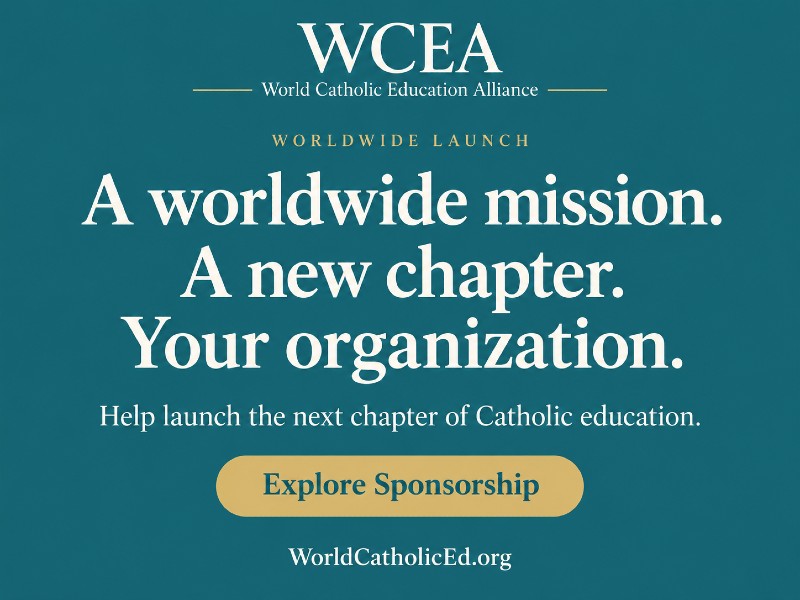
The nun was impressed and she gave him a Gospel in Croatian. He read it and a friendship began which in the end led him to baptism.
These are miraculous stories, as every conversion is miraculous. ...
Q: Is there a pastoral program for converts from Islam?
Paolucci: The Italian episcopal conference has prepared a document, "Catechumens Converted from Islam," written by Walther Ruspi.
There is in fact much caution because many of the converted Muslims risk their lives. It is a problem of freedom which does not only touch Muslim countries.
Unfortunately, the problem of freedom is also evident in a country like Italy, because Islam establishes only one religion from which one cannot get out. From this point of view, it is very important to ask Muslim communities to recognize their brothers' religious freedom so that they can convert and live freely.
Q: What are the conclusions you have drawn from this research?
Paolucci: The book throws out three challenges: It challenges Islam to recognize religious freedom; it challenges the civil authorities to guarantee that freedom; and it challenges us, "lukewarm" Christians, to rekindle love of Jesus.
As is written in Article 18 of the Universal Declaration of Human Rights, approved in 1948, the right to religious freedom is the foundation of every civil society. It is legitimate that the Muslim communities present in our country request protection of their religious rights but, precisely because of this, they must recognize the same right to those who freely wish to convert to another religion.
From this point of view, the Italian civil authorities must guarantee the right and practice of religious freedom. It is not right that a convert from Islam must live clandestinely, go to a church that is 30 kilometers from his home because he is afraid that the Muslim community will punish him.
The third to be challenged is the Church, because those converts are part of the new springtime of Christianity, in a country in which Catholicism has often become an embellishment. During the research, [co-author] Camille Eid and I were impressed by the freshness and courage of these converts from Islam, who said to us: "You do not realize the great treasure you have -- Jesus Christ has revolutionized our life."
Contact
Catholic Online
https://www.catholic.org
CA, US
Catholic Online - Publisher, 661 869-1000
info@yourcatholicvoice.org
Keywords
Islam, Catholic, Muslim, Paolucci, Religion

More Catholic PRWire
Showing 1 - 50 of 4,716
A Recession Antidote
Randy Hain
Monaco & The Vatican: Monaco's Grace Kelly Exhibit to Rome--A Review of Monegasque-Holy See Diplomatic History
Dna. Maria St. Catherine Sharpe, t.o.s.m., T.O.SS.T.
The Why of Jesus' Death: A Pauline Perspective
Jerom Paul
A Royal Betrayal: Catholic Monaco Liberalizes Abortion
Dna. Maria St.Catherine De Grace Sharpe, t.o.s.m., T.O.SS.T.
Embrace every moment as sacred time
Mary Regina Morrell
My Dad
JoMarie Grinkiewicz
Letting go is simple wisdom with divine potential
Mary Regina Morrell
Father Lombardi's Address on Catholic Media
Catholic Online
Pope's Words to Pontifical Latin American College
Catholic Online
Prelate: Genetics Needs a Conscience
Catholic Online
State Aid for Catholic Schools: Help or Hindrance?
Catholic Online
Scorsese Planning Movie on Japanese Martyrs
Catholic Online
2 Nuns Kidnapped in Kenya Set Free
Catholic Online
Holy See-Israel Negotiation Moves Forward
Catholic Online
Franchising to Evangelize
Catholic Online
Catholics Decry Anti-Christianity in Israel
Catholic Online
Pope and Gordon Brown Meet About Development Aid
Catholic Online
Pontiff Backs Latin America's Continental Mission
Catholic Online
Cardinal Warns Against Anti-Catholic Education
Catholic Online
Full Circle
Robert Gieb

Three words to a deeper faith
Paul Sposite
Relections for Lent 2009
chris anthony
Wisdom lies beyond the surface of life
Mary Regina Morrell
World Food Program Director on Lent
Catholic Online
Moral Clarity
DAN SHEA
Pope's Lenten Message for 2009
Catholic Online
A Prayer for Monaco: Remembering the Faith Legacy of Prince Rainier III & Princess Grace and Contemplating the Moral Challenges of Prince Albert II
Dna. Maria St. Catherine Sharpe
Keeping a Lid on Permissiveness
Sally Connolly
Glimpse of Me
Sarah Reinhard
The 3 stages of life
Michele Szekely
Sex and the Married Woman
Cheryl Dickow
A Catholic Woman Returns to the Church
Cheryl Dickow
Modernity & Morality
Dan Shea
Just a Minute
Sarah Reinhard
Catholic identity ... triumphant reemergence!
Hugh McNichol
Edging God Out
Paul Sposite
Burying a St. Joseph Statue
Cheryl Dickow
George Bush Speaks on Papal Visit
Catholic Online
Sometimes moving forward means moving the canoe
Mary Regina Morrell
Action Changes Things: Teaching our Kids about Community Service
Lisa Hendey
Easter... A Way of Life
Paul Spoisite
Papal initiative...peace and harmony!
Hugh McNichol
Proclaim the mysteries of the Resurrection!
Hugh McNichol
Jerusalem Patriarch's Easter Message
Catholic Online
Good Friday Sermon of Father Cantalamessa
Catholic Online
Papal Address at the End of the Way of the Cross
Catholic Online
Cardinal Zen's Meditations for Via Crucis
Catholic Online
Interview With Vatican Aide on Jewish-Catholic Relations
Catholic Online
Pope Benedict XVI On the Easter Triduum
Catholic Online
Holy Saturday...anticipation!
Hugh McNichol
Come Grow With Us
Sign up and walk the Catholic journey with millions around the world.
Receive inspiring emails on saints, daily readings, and free faith-building resources—no cost, ever.
Catholic Online Is Free. But We Need Your Help.
Please Watch
- 7 Morning Prayers
- Mysteries of the Rosary
- Litany of the Bl. Virgin Mary
- Popular Saints
- Popular Prayers
- Female Saints
- Saint Feast Days by Month
- Stations of the Cross
- St. Francis of Assisi
- St. Michael the Archangel
- The Apostles' Creed
- Unfailing Prayer to St. Anthony
- Pray the Rosary









Copyright 2026 Catholic Online. All materials contained on this site, whether written, audible or visual are the exclusive property of Catholic Online and are protected under U.S. and International copyright laws, © Copyright 2026 Catholic Online. Any unauthorized use, without prior written consent of Catholic Online is strictly forbidden and prohibited.
Catholic Online is a Project of Your Catholic Voice Foundation, a Not-for-Profit Corporation. Your Catholic Voice Foundation has been granted a recognition of tax exemption under Section 501(c)(3) of the Internal Revenue Code. Federal Tax Identification Number: 81-0596847. Your gift is tax-deductible as allowed by law.
