Europe's Endangered Families
FREE Catholic Classes
With Few Children, What Are Countries to Do?
MADRID, Spain, MAY 21, 2006 (Zenit) - Finding an effective strategy to help European families is not proving easy. This month the Madrid-based Institute for Family Policies published a study titled, "Report on the Evolution of the Family in Europe 2006." The report noted a growing awareness of the need to protect the family and family life. Yet in spite of this concern, the family is under increasing pressure.
The first sections of the report look at the problem of a declining birthrate and an aging population. It then considers how marriage is faring. During 1980-2004, the number of marriages in the 25-member countries of the European Union dropped by more than 663,600, even as the population grew by 31.1 million. In 2003 the average age at marriage for men was 30, and for women, 27.7. The respective figures for 1980 were 26 and 23.3.
Another trend is the increasing numbers of children being born outside of marriage. A strict comparison here for the current 25 EU member countries is not possible due to the recent entry of 10 nations. But in the 15 older EU member countries, in 1980, only 9.6% of children were born to single women or unmarried couples. By 2004 this skyrocketed to 32.8%. The 2004 figure for all 25 EU countries is 31.6%.
The overall average conceals wide variations among countries, however. Sweden's proportion of out-of-wedlock births stands at 55.4%; Denmark's at 45.4%; France's, 45.2%; and the United Kingdom's, 42.3%. Greece and Italy, at 4.9% and 14.9%, respectively, have relatively low levels.
Divorce rates, meanwhile, increased by about half over the last couple of decades. From 1990 to 2004, more than 10 million marriages broke up in the 15 EU nations, affecting more than 16 million children.
To face these changes governments are paying more attention to family needs, the report said. But the resources devoted to helping families are still limited. On average European governments spend 28% of gross national product on the social sector, but only 2.2% of GNP is spent on the family.
Again there are wide variations. A family with two children could receive â‚Ź611 ($785 at current exchange rates) a month in assistance in Luxembourg. In Germany this goes down to â‚Ź308, and in the United Kingdom to â‚Ź270. Among the 15 EU countries the governments of Spain, Italy, Portugal and Greece spent the least on helping families. A family with two children in Spain receives only â‚Ź49. The newer EU states have low levels too. A couple with two children would receive only â‚Ź38 in the Czech Republic, and â‚Ź22 in Poland.
Parenthood policies
The institute's report is not alone in highlighting problems with family policy in Europe. In March the BBC published a series of articles on the issue.
A March 27 article noted that if current forecasts of birthrates prove correct, then the United States, which now has 160 million fewer people than the European Union, will have equaled it by 2050. Many European countries already have policies in place, the BBC added, but how successful these incentives will be remains unclear.
Norway in one country has taken serious steps to help couples. Norwegian mothers are entitled to 12 months off work with 80% pay, or 10 months with full pay, the BBC reported March 28. Husbands are also entitled to leave, and must take at least four weeks off from work after the birth of a child.
Yet, Norway's fertility rate of 1.8 children per woman, though high for Europe, falls short of the level needed to ensure generational replacement. Likewise, Sweden, whose family welfare policies are just as generous, has a fertility rate of around 1.5 children per woman.
Even Poland, where Catholic values still prevail and around two-thirds of its people go to Mass on Sundays, is going through a crisis in family life. On March 29 the BBC commented that the Polish birthrate, at 1.23 children per woman, is among the lowest in Europe. In fact, the population has fallen by a half-million in the last six years.
Only part of the change is due to economic pressures, according to the BBC. Instead of marrying young, more women are going to university and planning to get a job before starting their own families.
According to the March 31 installment in the series of BBC articles, up to 10% of women in many European countries are childless when they reach the age of 45. Many of these have made a deliberate choice to forgo starting a family, commented Catherine Hakim, a sociologist at the London School of Economics.
She expects that the number of childless women will double in many countries to around 20%, and up to 30% in some cases, such as Germany. "Very consciously," added Hakim, "people are more confident in saying they have a different lifestyle."
Proposals
To address these challenges to family life, the last section of the report by the Institute for Family Policies contained a series of recommendations for government policies. Among the proposals:
-- The European Union should adopt a family-oriented approach in all its measures. This involves not only promoting convergence between family policies in member countries, but also pushing for equality of opportunity for all families, and avoiding any discrimination based on number of children, income levels or income distribution.
-- Governments should help parents to have the children they want; provide assistance during cases of family crisis; recognize the fundamental right of parents to educate their children; and help those families with particular needs.
-- Governments should increase social welfare benefits aimed at families and ensure that benefits increase in line with inflation. There should also be a minimum standard for maternity and paternity leave and assistance for families caring for elderly relatives in their home.
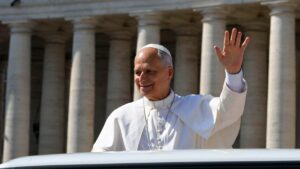
The welfare of families has been a constant theme in Benedict XVI's speeches in recent months. Last Saturday, in his speech to participants in the plenary assembly of the Pontifical Council for the Family, the Pope termed the family based on marriage as a basic building block for society.
The state, he continued, needed to recognize the importance of the family and help it carry out its functions. The Holy Father also called upon families to place God at the center of their lives. God will help the married couple in their task of bringing up their children, he said.
Family life is particularly at risk in today's world, and to safeguard it couples often must overcome the prevailing cultural forces. This requires patience, effort, sacrifice and an incessant search for mutual understanding. In spite of these difficulties it is still possible for couples today to be faithful to their vocation, with God's help, Benedict XVI said.

The Pope also expressed the hope that a solid family life can help society by providing it with examples of how to live authentic human and Gospel values. Families, therefore, not only receive support but they also provide an essential contribution to society. How quickly that message takes root, remains to be seen.
Contact
Catholic Online
https://www.catholic.org
CA, US
Catholic Online - Publisher, 661 869-1000
info@yourcatholicvoice.org
Keywords
Family, Children, Europe, EU

More Catholic PRWire
Showing 1 - 50 of 4,716
A Recession Antidote
Randy Hain
Monaco & The Vatican: Monaco's Grace Kelly Exhibit to Rome--A Review of Monegasque-Holy See Diplomatic History
Dna. Maria St. Catherine Sharpe, t.o.s.m., T.O.SS.T.
The Why of Jesus' Death: A Pauline Perspective
Jerom Paul
A Royal Betrayal: Catholic Monaco Liberalizes Abortion
Dna. Maria St.Catherine De Grace Sharpe, t.o.s.m., T.O.SS.T.
Embrace every moment as sacred time
Mary Regina Morrell
My Dad
JoMarie Grinkiewicz
Letting go is simple wisdom with divine potential
Mary Regina Morrell
Father Lombardi's Address on Catholic Media
Catholic Online
Pope's Words to Pontifical Latin American College
Catholic Online
Prelate: Genetics Needs a Conscience
Catholic Online
State Aid for Catholic Schools: Help or Hindrance?
Catholic Online
Scorsese Planning Movie on Japanese Martyrs
Catholic Online
2 Nuns Kidnapped in Kenya Set Free
Catholic Online
Holy See-Israel Negotiation Moves Forward
Catholic Online
Franchising to Evangelize
Catholic Online
Catholics Decry Anti-Christianity in Israel
Catholic Online
Pope and Gordon Brown Meet About Development Aid
Catholic Online
Pontiff Backs Latin America's Continental Mission
Catholic Online
Cardinal Warns Against Anti-Catholic Education
Catholic Online
Full Circle
Robert Gieb

Three words to a deeper faith
Paul Sposite
Relections for Lent 2009
chris anthony
Wisdom lies beyond the surface of life
Mary Regina Morrell
World Food Program Director on Lent
Catholic Online
Moral Clarity
DAN SHEA
Pope's Lenten Message for 2009
Catholic Online
A Prayer for Monaco: Remembering the Faith Legacy of Prince Rainier III & Princess Grace and Contemplating the Moral Challenges of Prince Albert II
Dna. Maria St. Catherine Sharpe
Keeping a Lid on Permissiveness
Sally Connolly
Glimpse of Me
Sarah Reinhard
The 3 stages of life
Michele Szekely
Sex and the Married Woman
Cheryl Dickow
A Catholic Woman Returns to the Church
Cheryl Dickow
Modernity & Morality
Dan Shea
Just a Minute
Sarah Reinhard
Catholic identity ... triumphant reemergence!
Hugh McNichol
Edging God Out
Paul Sposite
Burying a St. Joseph Statue
Cheryl Dickow
George Bush Speaks on Papal Visit
Catholic Online
Sometimes moving forward means moving the canoe
Mary Regina Morrell
Action Changes Things: Teaching our Kids about Community Service
Lisa Hendey
Easter... A Way of Life
Paul Spoisite
Papal initiative...peace and harmony!
Hugh McNichol
Proclaim the mysteries of the Resurrection!
Hugh McNichol
Jerusalem Patriarch's Easter Message
Catholic Online
Good Friday Sermon of Father Cantalamessa
Catholic Online
Papal Address at the End of the Way of the Cross
Catholic Online
Cardinal Zen's Meditations for Via Crucis
Catholic Online
Interview With Vatican Aide on Jewish-Catholic Relations
Catholic Online
Pope Benedict XVI On the Easter Triduum
Catholic Online
Holy Saturday...anticipation!
Hugh McNichol
Come Grow With Us
Sign up and walk the Catholic journey with millions around the world.
Receive inspiring emails on saints, daily readings, and free faith-building resources—no cost, ever.
World Catholic Education Alliance
Your Child Needs Help Tonight—Could the Answer Be Right Here?
Watch the Video.
- 7 Morning Prayers
- Mysteries of the Rosary
- Litany of the Bl. Virgin Mary
- Popular Saints
- Popular Prayers
- Female Saints
- Saint Feast Days by Month
- Stations of the Cross
- St. Francis of Assisi
- St. Michael the Archangel
- The Apostles' Creed
- Unfailing Prayer to St. Anthony
- Pray the Rosary









Copyright 2026 Catholic Online. All materials contained on this site, whether written, audible or visual are the exclusive property of Catholic Online and are protected under U.S. and International copyright laws, © Copyright 2026 Catholic Online. Any unauthorized use, without prior written consent of Catholic Online is strictly forbidden and prohibited.
Catholic Online is a Project of Your Catholic Voice Foundation, a Not-for-Profit Corporation. Your Catholic Voice Foundation has been granted a recognition of tax exemption under Section 501(c)(3) of the Internal Revenue Code. Federal Tax Identification Number: 81-0596847. Your gift is tax-deductible as allowed by law.
