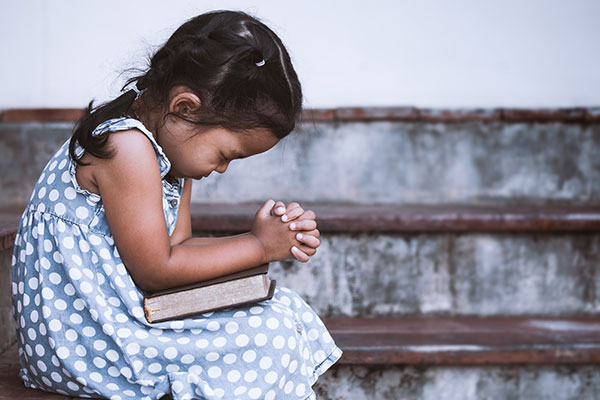
 Millions of people turn to Catholic Online for prayers, Daily Readings, saints, Catholic education and answers about their Faith. Most will never donate. But if Catholic Online has given you more than $5 worth of value this year, we're asking you to do something very simple: Give $5 today.
Your Catholic Voice Foundation also supports Catholic Online School, which has served 2.2 million student enrollments in 193 countries. We don't believe a family's ability to pay should determine whether a child can receive a Catholic education. If we've given you something of value, please give something back.
DONATE TODAY >>Lex Orandi, Lex Credendi: As We Worship, So we will Live
FREE Catholic Classes
Deacon Keith Fournier
© Third Millennium, LLC
Catholic Online
There is a Latin maxim that addresses the centrality of worship in the life, identity and mission of the Church; "Lex Orandi, Lex Credendi". The phrase in Latin literally means the law of prayer ("the way we worship"), and the law of belief ("what we believe"). It is sometimes written as, "lex orandi, lex credendi, lex vivendi", further deepening the implications of this truth - how we worship reflects what we believe and determines how we will live. The law of prayer or worship is the law of life. Or, even more popularly rendered, as we worship, so will we live...and as we worship, so will we become!
The Church has long understood that part of her role as mother and teacher is to watch over worship, for the sake of the faithful and in obedience to the God whom she serves. How we worship not only reveals and guards what we believe but guides us in how we live our Christian faith and fulfill our Christian mission in the world.
Worship is not an "add on" for a Catholic Christian. It is the foundation of Catholic identity; expressing our highest purpose. Worship reveals what we truly believe and how we view ourselves in relationship to God, one another and the world into which we are sent to carry forward the redemptive mission of Jesus Christ. How the Church worships is a prophetic witness to the truth of what it professes. Good worship becomes a dynamic means of drawing the entire human community into the fullness of life in Jesus Christ. It attracts - through beauty to Beauty. Worship informs and transforms both the person and the faith community which participates in it. There is reciprocity between worship and life.
Last week, a working document on the celebration and centrality of the Eucharist was released to the public. The document is entitled "The Eucharist: Source and Summit of the Life and Mission of the Church." It will be used by the Bishops who gather for the upcoming global Synod on the Eucharist in October. This Synod will conclude this year that has been especially dedicated to the Eucharist.
Some press reports concerning this document were quite negative. They presented it as though it were an effort on behalf of what they referred to as "the Vatican" to "clamp down" on Catholics in their worship. Nothing could be further from the truth. In preparation for this pivotal global gathering of Bishops, the Church is, at this critical time in human history, addressese the centrality, beauty and heart of Eucharistic worship. As mother and teacher, she is continuing her mission of guiding the faithful into the fullness and beauty of true and pure worship, by giving clear instruction concerning the "Divine Liturgy" or "the Mass", which is the summit of all Catholic worship.
Some press reports focused on some elements of the document that grate against this relativistic age. They attempted in their reporting to make the document seem "mean" because it reaffirmed what the Catholic Church has taught for two thousand years. There are two particular examples that appeared in most of the critical reports. The first concerned the insistence that when anyone participating in the Eucharistic celebration goes forward to receive the Body and Blood of Jesus Christ, they must fully embrace all that the Catholic Church teaches. Yet, that is simply what it means to be in "full communion" with the "magisterium", or teaching office. The second concerns the documents' reaffirmation of the need for people to be free from serious or mortal sin before receiving the Body and Blood of the Lord. That is simply reminding the faithful of what has always been taught.
There is nothing new in these two affirmations. They are rooted in the Bible and have been reaffirmed in all Church Councils. If someone is in a state of serious sin, the Church offers the fullness of forgiveness in Jesus Christ and the means to find complete reconciliation. Then, they are welcomed back to the table. If someone does not accept the teaching of the Catholic Church, for example on the inviolable dignity of every human life, then coming forward to receive the Sacrament of full communion is wrong and disingenuous. They are not in "full communion" and should not receive. Of course, the Church provides ample opportunities for that person to come to understand the truths that she protects and proclaims. Once that teaching is embraced, that person can come back to the table.
The document mentions some other issues that seem to be "hot buttons". Last Sunday I was greeted by a priest friend who, though he had not even read the document, critically complained about its "insistence on using Latin". All the document does is to encourage the use of Latin in international liturgical celebrations in order to emphasize the universality of the Catholic faith. It also encourages the memorization of some of our common prayers in Latin for the same reason. I think it is a great direction. I will never forget my journey back to my Catholic faith. I was deeply influenced by the story of a young Thomas Merton which he recorded in "Seven Storey Mountain". He traveled to the Churches in Europe and always heard, no matter what Nation he was in or what language they spoke, "Credo". This helped to draw him into the Catholic Church. There is a beauty to this universal worship language and what it symbolizes that will never lose its value.
The document also addresses the decline in sacred music, suggesting that parishes consider using Gregorian chant and other forms of beautiful sacred music instead of the more "profane" music that have taken their place at the Divine Liturgy. It cautions against priests becoming "showmen"- thus drawing attention to them-selves, encouraging them instead to demonstrate the dignity of their office in presiding over the Divine Liturgy. It reaffirms the importance of the experience of the Sacred in the sanctuary and suggests that the tabernacle should have a prominent place and not be shunted off to a corner.
I welcome this document. I hope that the final document to which it points, which will be issued after the Synod in October, is even more direct. The Church is desperately in need of such direction. I live and serve in a Diocese that needs both the direction and the correction that this document provides. The liturgical worship, in at least some of our parishes, has been devastated by some of the worst trends that have weakened the worship of the contemporary Catholic Church.
Having spent decades in ecumenical work, I find it odd that right when so many of our Christian friends in other confessions and communities are searching for a deeper encounter with the beauty of the Lord in formal worship; for sign, symbol and mystery, for a connection with the ancient Church in her divine worship, some parts of the Catholic Church are discarding the very treasures that make her formal liturgical worship so beautiful, full of mystery and so compelling and attractive to those seeking a deeper experience of worship and Christian life.
Along with moving the tabernacle out of the sanctuary, the renovation "experts" in too many Dioceses moved many of the symbols of uniquely Catholic worship, practice and expression out of the sanctuary. What the faithful are forced to accept in its place is pitiful, the bad fruit of what one writer aptly referred to as changing "Sacred Places to Meeting Spaces". Oh, don't get me wrong. The basics are still there, thank God. The Word is still proclaimed from what still resembles an Ambo. There is an altar, although it is often stripped down and has little of the grandeur befitting the eternal sacrifice made wonderfully present in the timeless mystery re-presented at every consecration in every Mass.
The priest still wears vestments; even though they sometimes seem to have such a casual nature to them that one does not quickly grasp why he even wears them, or the connection that they bring between the eternal heavenly liturgy and the beauty of the worship of the Holy Church throughout the world. They sometimes seem so "ordinary" that one can fail to discern that they speak symbolically, crossing the span of more than two thousand years and reaching back into the temple worship.
Then there are the "rubrics", the rules, the norms, of the liturgy. Sometimes, they are simply discarded. More often they are marginally followed. What a shame. The extraordinary depth and beauty of the Divine Liturgy is the heart of Catholic worship. It is an invitation to enter into the heavenly mysteries and participate in the very life and love of a God who gives Himself to us. There at the altar, "in persona Christi", the celebrant mediates the gift of heaven, the mystery hidden from the ages...and there we encounter the Lamb of God, slain for us. At that moment all the angels of God bow in profound reverence and we are invited to join them!
Why all this minimalism?
The minimalism begins when you enter the "worship space" of some contemporary church buildings. There is absolutely no sign or symbol anywhere. There are no icons or images reflecting the heavenly touching the earth, drawing you into a transcendent encounter with the God who we receive and in whom we are invited to live and move and have our being. The "worship space" is filled with people conversing about the week - no screaming mind you, but nothing that sets it apart as the place where God will manifest Himself and give Himself away, body, blood, soul and divinity, to we who are mere mortals invited into His throne room. The tabernacle is often in a separate small nondescript room outside of the "worship space".
I am not a "traditionalist" Catholic, although I understand and respect those who are. I am just a Catholic Christian; a "revert", drawn back to the fullness of Christianity that is dynamic, orthodox, faithful Catholic life and practice. I have the utmost respect for my brethren who are Protestants in each of their various confessions and communities. However, I am not one, by choice. I do not want a Protestant looking church building or a stripped down Catholicism whose worship seems more protestant than Catholic. I do not want barren liturgy and symbol-less Catholicism.
Too many "experts", those who think they "know better" have taken the richness, the depth that draws so many to the treasure that is Catholic worship and life. Their efforts will not endure. Their numbers and influence are dwindling. The Catholic seminaries that are full are filled with candidates who want the vibrant, symbolic, magisterium following, richly liturgical, devout fullness of Catholic faith and life. The ecclesial movements are flourishing, drawing men and women who also want the fullness of Catholic worship, faith and life in all of its rich beauty. The "new" Catholics, coming into full communion from other Christian communities, are flocking to the "dynamically orthodox" and faithful Catholic parishes. The symbols are coming back and new ones are emerging.
There was a movement called Iconoclasm ("Image-breaking") in the eighth and ninth centuries in the Eastern Church. It became a full scale heresy. The term has come to be associated with those who rejected icons, but it speaks now to a broader contemporary problem. Icons are meant to put us in touch with the transcendent mysteries of our faith. I pray with icons and have for many years. I cherish their liturgical role in the Eastern Church. In fact, one would never find an Eastern Church, Catholic or Orthodox, without icons. The contemporary "iconoclasts" are those who seek to de-mystify Christian faith, life, worship and practice. They are not the future of the Catholic Church but the past.
They actually think that the symbols of our worship, our faith and our life are a problem. While they strip our sanctuaries and make our liturgical experiences barren, they think they have helped us by somehow making the faith more 'relevant", "meaningful" or "contemporary". They are sadly mistaken and have done the Church and her mission a disservice. They fail to grasp that, by nature and grace, human persons are symbolic. Man (and woman) is created in the image of God, and is a divine icon. Jesus Christ is the Icon of the Father. Symbols touch us at a much deeper level than words or emotive or affective participation can. They touch us at the level where authentic religion and deep worship truly begins. It is there where we hunger the most for God.

"The Eucharist: Source and Summit of the Life and Mission of the Church" is a good beginning. We need much more. I sincerely hope that in its final document the Synod gives clear, specific direction that exposes the liturgical abuses and minimalism that have crept into the sanctuaries and helps us to build a future of beauty in our Liturgical life. It is time for a reform of the reform.
Too many times, directions like those found in this document are painted as "backward". Those who write and speak to the need for authentic liturgical reform are often ridiculed. For example, I have a dear priest friend who celebrates one of the most reverent and beautiful Masses one could ever experience. He was recently called "retro" by a colleague in a meeting of the liturgical committee of our Diocese. In fact, he and his approach are the future. The directions that have been given to the faithful in this document point us to the future and not to the past. All one has to do is read the last book of the Bible, the Apocalypse, or Revelation to John, to see where we are all headed in worship. Beautiful Liturgy is not a thing of the past but the path to our future.
In closing, one of the specific recommendations in this document concerns the placement of the tabernacle. It is time to acknowledge that the moving of the tabernacle out of the sanctuary has been an abysmal failure and was a huge mistake. Along with the Tabernacle, it is time to bring back the signs and symbols of our worship, and to create new ones that are truly beautiful because they participate in the beauty that is true worship. Fill the walls of our sanctuaries with the beauty of icons bringing heaven to earth. Bring back reverence, transcendence and beauty to the presidency of the priest and the responses of the faithful in the Divine Liturgy. In so doing, we will all be changed and, we will change the world.
"Lex Orandi, Lex Credendi". As We Worship, So we will Live
___________________
Deacon Keith Fournier is a Catholic Deacon of the Diocese of Richmond, Virginia who has been married for thirty years. A graduate of Franciscan University of Steubenville, the John Paul II Institute of the Lateran University and the University Of Pittsburgh School Of Law, He served as a human rights and constitutional lawyer for twenty five years. He currently serves as the Senior Editor for Catholic Online and is a Contributing Editor of Traditional Catholic Reflections and Reports. His latest book, "The Prayer of Mary: Living the Surrendered Life", from Thomas Nelson Publishers, will be available in book stores at the end of the month

Contact
Third Millennium, LLC
https://www.catholic.org
VA, US
Deacon Keith Fournier - Deacon, 757 546-9580
keithfournier@cox.net
Keywords
Worship
More Catholic PRWire
Showing 1 - 50 of 4,716
A Recession Antidote
Randy Hain
Monaco & The Vatican: Monaco's Grace Kelly Exhibit to Rome--A Review of Monegasque-Holy See Diplomatic History
Dna. Maria St. Catherine Sharpe, t.o.s.m., T.O.SS.T.
The Why of Jesus' Death: A Pauline Perspective
Jerom Paul
A Royal Betrayal: Catholic Monaco Liberalizes Abortion
Dna. Maria St.Catherine De Grace Sharpe, t.o.s.m., T.O.SS.T.
Embrace every moment as sacred time
Mary Regina Morrell
My Dad
JoMarie Grinkiewicz
Letting go is simple wisdom with divine potential
Mary Regina Morrell
Father Lombardi's Address on Catholic Media
Catholic Online
Pope's Words to Pontifical Latin American College
Catholic Online
Prelate: Genetics Needs a Conscience
Catholic Online
State Aid for Catholic Schools: Help or Hindrance?
Catholic Online
Scorsese Planning Movie on Japanese Martyrs
Catholic Online
2 Nuns Kidnapped in Kenya Set Free
Catholic Online
Holy See-Israel Negotiation Moves Forward
Catholic Online
Franchising to Evangelize
Catholic Online
Catholics Decry Anti-Christianity in Israel
Catholic Online
Pope and Gordon Brown Meet About Development Aid
Catholic Online
Pontiff Backs Latin America's Continental Mission
Catholic Online
Cardinal Warns Against Anti-Catholic Education
Catholic Online
Full Circle
Robert Gieb

Three words to a deeper faith
Paul Sposite
Relections for Lent 2009
chris anthony
Wisdom lies beyond the surface of life
Mary Regina Morrell
World Food Program Director on Lent
Catholic Online
Moral Clarity
DAN SHEA
Pope's Lenten Message for 2009
Catholic Online
A Prayer for Monaco: Remembering the Faith Legacy of Prince Rainier III & Princess Grace and Contemplating the Moral Challenges of Prince Albert II
Dna. Maria St. Catherine Sharpe
Keeping a Lid on Permissiveness
Sally Connolly
Glimpse of Me
Sarah Reinhard
The 3 stages of life
Michele Szekely
Sex and the Married Woman
Cheryl Dickow
A Catholic Woman Returns to the Church
Cheryl Dickow
Modernity & Morality
Dan Shea
Just a Minute
Sarah Reinhard
Catholic identity ... triumphant reemergence!
Hugh McNichol
Edging God Out
Paul Sposite
Burying a St. Joseph Statue
Cheryl Dickow
George Bush Speaks on Papal Visit
Catholic Online
Sometimes moving forward means moving the canoe
Mary Regina Morrell
Action Changes Things: Teaching our Kids about Community Service
Lisa Hendey
Easter... A Way of Life
Paul Spoisite
Papal initiative...peace and harmony!
Hugh McNichol
Proclaim the mysteries of the Resurrection!
Hugh McNichol
Jerusalem Patriarch's Easter Message
Catholic Online
Good Friday Sermon of Father Cantalamessa
Catholic Online
Papal Address at the End of the Way of the Cross
Catholic Online
Cardinal Zen's Meditations for Via Crucis
Catholic Online
Interview With Vatican Aide on Jewish-Catholic Relations
Catholic Online
Pope Benedict XVI On the Easter Triduum
Catholic Online
Holy Saturday...anticipation!
Hugh McNichol
Come Grow With Us
Sign up and walk the Catholic journey with millions around the world.
Receive inspiring emails on saints, daily readings, and free faith-building resources—no cost, ever.
Catholic Online Is Free. But We Need Your Help.
Please Watch
- 7 Morning Prayers
- Mysteries of the Rosary
- Litany of the Bl. Virgin Mary
- Popular Saints
- Popular Prayers
- Female Saints
- Saint Feast Days by Month
- Stations of the Cross
- St. Francis of Assisi
- St. Michael the Archangel
- The Apostles' Creed
- Unfailing Prayer to St. Anthony
- Pray the Rosary




Copyright 2026 Catholic Online. All materials contained on this site, whether written, audible or visual are the exclusive property of Catholic Online and are protected under U.S. and International copyright laws, © Copyright 2026 Catholic Online. Any unauthorized use, without prior written consent of Catholic Online is strictly forbidden and prohibited.
Catholic Online is a Project of Your Catholic Voice Foundation, a Not-for-Profit Corporation. Your Catholic Voice Foundation has been granted a recognition of tax exemption under Section 501(c)(3) of the Internal Revenue Code. Federal Tax Identification Number: 81-0596847. Your gift is tax-deductible as allowed by law.
